Sponsored
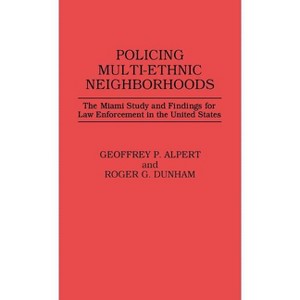
Policing Multi-Ethnic Neighborhoods - (Contributions in Criminology and Penology) by Geoffrey P Alpert & Roger G Dunham (Hardcover)
In Stock
Sponsored
About this item
Highlights
- A fascinating and well-written book by an established researcher in the field.
- About the Author: GEOFFREY P. ALPERT is Professor in the College of Criminal Justice at the University of South Carolina.
- 180 Pages
- Social Science, Criminology
- Series Name: Contributions in Criminology and Penology
Description
About the Book
A fascinating and well-written book by an established researcher in the field. Alpert treats problems faced by police in rapidly changing multiethnic communities such as Miami-Dade County, the locus of the study. The focus on the relationship of informal and formal social control systems provides more insight into the vicissitudes of ethnic neighborhoods and their support of the police than might ever be gained from hours of Miami Vice. The book offers sociohistorical background material, conceptual and analytical frameworks, methods, data, analysis, and data interpretation. Alpert finds that neither police nor members of black communities perceived the degree of congruence in these areas with policing reported for Cuban and Anglo communities. Residence in specific neighborhoods was more significant than ethnicity or gender in perceptions of policing. . . . Excellent bibliography. Upper-division undergraduates and above. Choice
In the past twenty-five years, the Miami metropolitan area has undergone a dramatic ethnic transformation that has brought with it complex challenges to the existing social order. The study grew out of an attempt to find workable and effective solutions to the problems faced by the area's police force in the wake of serious rioting and conflict between the populace and police. Alpert and Dunham argue that only by understanding the various ethnic groups' attitudes toward police and policing can beneficial means of maintaining order and controlling crime be planned and implemented. In developing their argument, the authors introduce the concepts of neighborhood as a conceptual and analytical unit, and they construct an interaction model that focuses on the interplay between the informal system of social control within the neighborhoods and the formal system of social control of the police.
Book Synopsis
A fascinating and well-written book by an established researcher in the field. Alpert treats problems faced by police in rapidly changing multiethnic communities such as Miami-Dade County, the locus of the study. The focus on the relationship of informal and formal social control systems provides more insight into the vicissitudes of ethnic neighborhoods and their support of the police than might ever be gained from hours of Miami Vice. The book offers sociohistorical background material, conceptual and analytical frameworks, methods, data, analysis, and data interpretation. Alpert finds that neither police nor members of black communities perceived the degree of congruence in these areas with policing reported for Cuban and Anglo communities. Residence in specific neighborhoods was more significant than ethnicity or gender in perceptions of policing. . . . Excellent bibliography. Upper-division undergraduates and above. Choice
In the past twenty-five years, the Miami metropolitan area has undergone a dramatic ethnic transformation that has brought with it complex challenges to the existing social order. The study grew out of an attempt to find workable and effective solutions to the problems faced by the area's police force in the wake of serious rioting and conflict between the populace and police. Alpert and Dunham argue that only by understanding the various ethnic groups' attitudes toward police and policing can beneficial means of maintaining order and controlling crime be planned and implemented. In developing their argument, the authors introduce the concepts of neighborhood as a conceptual and analytical unit, and they construct an interaction model that focuses on the interplay between the informal system of social control within the neighborhoods and the formal system of social control of the police.Review Quotes
?. . . Alpert and Dunham present in rich detail the data of this research. It is an interesting, well-conceived and important study. Scholars interested in issues of ethnicity as they relate to criminal justice policy are well advised to read this book. . . .?-International Migration Review
?. . . This study is certain to become one of the classics in the area of police-community relations. It is intended for an audience at an upper level in sociology (i.e., Sociology of Race Relations), as well as criminology and criminal justice courses. This book should be a part of every library. The authors did an excellent job in presenting the information in a manner that is easily understood.?-American Journal of Police
?A fascinating and well-written book by an established researcher in the field. Alpert treats problems faced by police in rapidly changing multiethnic communities such as Miami-Dade County, the locus of the study. The focus on the relationship of informal and formal social control systems provides more insight into the vicissitudes of ethnic neighborhoods and their support of the police than might ever be gained from hours of Miami Vice. The book offers sociohistorical background material, conceptual and analytical frameworks, methods, data, analysis, and data interpretation. Alpert finds that neither police nor members of black communities perceived the degree of congruence in these areas with policing reported for Cuban and Anglo communities. Residence in specific neighborhoods was more significant than ethnicity or gender in perceptions of policing. Styles of policing did not match the characteristics of communities. Those who supported police were not always those with positive attitudes for all institutions, yet negative attitudes were linked to negative ideas toward the larger system. Results support the work of James Q. Wilson and George Kelling and can be generalized to other urban areas. Excellent bibliography. Upper-division undergrduates and above.?-Choice
?In the past twenty-five years, the Miami metropolitan area has undergone a dramatic ethnic transformation that has brought with it complex challenges to the existing social order. This book grew out of an attempt to find workable, humane, and effective solutions to the problems faced by the area's police force in the wake of serious rioting and conflict between the populace and police. . . . The book is essential for policymakers with similar problems, all students of the social sciences, and anyone with civic interests.?-CJ the Americas
." . . Alpert and Dunham present in rich detail the data of this research. It is an interesting, well-conceived and important study. Scholars interested in issues of ethnicity as they relate to criminal justice policy are well advised to read this book. . . ."-International Migration Review
." . . This study is certain to become one of the classics in the area of police-community relations. It is intended for an audience at an upper level in sociology (i.e., Sociology of Race Relations), as well as criminology and criminal justice courses. This book should be a part of every library. The authors did an excellent job in presenting the information in a manner that is easily understood."-American Journal of Police
"In the past twenty-five years, the Miami metropolitan area has undergone a dramatic ethnic transformation that has brought with it complex challenges to the existing social order. This book grew out of an attempt to find workable, humane, and effective solutions to the problems faced by the area's police force in the wake of serious rioting and conflict between the populace and police. . . . The book is essential for policymakers with similar problems, all students of the social sciences, and anyone with civic interests."-CJ the Americas
"A fascinating and well-written book by an established researcher in the field. Alpert treats problems faced by police in rapidly changing multiethnic communities such as Miami-Dade County, the locus of the study. The focus on the relationship of informal and formal social control systems provides more insight into the vicissitudes of ethnic neighborhoods and their support of the police than might ever be gained from hours of Miami Vice. The book offers sociohistorical background material, conceptual and analytical frameworks, methods, data, analysis, and data interpretation. Alpert finds that neither police nor members of black communities perceived the degree of congruence in these areas with policing reported for Cuban and Anglo communities. Residence in specific neighborhoods was more significant than ethnicity or gender in perceptions of policing. Styles of policing did not match the characteristics of communities. Those who supported police were not always those with positive attitudes for all institutions, yet negative attitudes were linked to negative ideas toward the larger system. Results support the work of James Q. Wilson and George Kelling and can be generalized to other urban areas. Excellent bibliography. Upper-division undergrduates and above."-Choice
About the Author
GEOFFREY P. ALPERT is Professor in the College of Criminal Justice at the University of South Carolina.
ROGER G. DUNHAM is an Associate Professor of Sociology at the University of Miami.Shipping details
Return details
Trending Non-Fiction