Target New ArrivalsGift Ideas for DadFourth of JulyClothing, Shoes & AccessoriesHome & DecorKitchen & DiningOutdoor Living & GardenGroceryHousehold EssentialsBabyBeautyPersonal CareSports & OutdoorsHealthWellnessLuggageSchool & Office SuppliesToys & GamesElectronicsVideo GamesMovies, Music & BooksParty SuppliesGift IdeasGift CardsPetsUlta Beauty at TargetShop by CommunityTarget OpticalDealsClearanceNew ArrivalsGift Ideas for DadBack to SchoolCollegeTop DealsTarget Circle DealsWeekly AdShop Order PickupShop Same Day DeliveryRegistryRedCardTarget CircleFind Stores
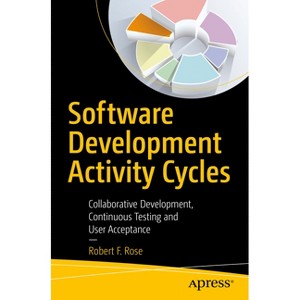
Software Development Activity Cycles - by  Robert F Rose (Paperback) - 1 of 1

Software Development Activity Cycles - by Robert F Rose (Paperback)

$54.99

In Stock

Free & easy returns

Free & easy returns

Return this item by mail or in store within 90 days for a full refund.
Eligible for registries and wish lists

About this item

Highlights

  • About the Author: Robert F. Rose has provided services to both private and public sectors including telecom and healthcare, NavAir, the Environmental Protection Agency (EPA) and Housing and Urban Development (HUD).
  • 279 Pages
  • Business + Money Management, Information Management

Description


From the Back Cover


Written from the perspective of a Technical Project Manager, this study presents a scenario for a complete "shift left" software development effort. It brings considerations for Test and Support as early as the Inception Stage. Based on an innovative model - Development Process Activity Cycles (DPAC) - this representation allows visualization of progress including recursive activities. The model is based on an interpretation of the Deming quality cycle of Plan Do, Check Act (PDCA). Periodic Management reports are generated using configuration management data generated during the Act phase of each iteration. There is no Test stage in the DPAC model; Test is represented in the back swing Check Phase of each iteration.

This approach allows the user or Subject Mater Expert (SME) to contemplate the face of the system through several iterations of design and development, using the triad principle ("Power of Three") matching a programmer, tester and member of the user community This approach incrementally reveals the best fit to the intent of the vision statement and iteratively uncovers the needs of the user while maintaining conceptual integrity.

This book provides a holistic and comprehensible view of the entire development process including ongoing evolution and support, staffing, and establishment of a comprehensive quality engineering program. It describes activity inside the "belly of the beast." By including support services as a part of the development model a complete return on investment (ROI) can be calculated and a value stream can be measured over the entire Application Life Cycle.

You will

- See how the various disciplines constituting the software development process come together

- Understand where in the iterative development process progress can be measured and control exercised

- Review how a quality engineering program will positively affect the quality of the development process

- Examine how the quality of the development process profoundly affects the quality of the software system

Who this book is for

Intended for a technical audience, this work should be of interest to all technical personnel including analysts, programmers, test and production, especially mid level managers and anyone familiar with the principles of a Lean, Agile approach to development.


About the Author


Robert F. Rose has provided services to both private and public sectors including telecom and healthcare, NavAir, the Environmental Protection Agency (EPA) and Housing and Urban Development (HUD). His experience includes pioneering design and development of a warehouse system for storing and analyzing medical records, design and development of an early prototype logistics tracking system for the V22 Osprey, and design and implementation of a complex enterprise wide web based directory system. Among his accomplishments he was Technical Project Manager for the Presidential Commission's Inquiry on the Challenger Disaster. The DPAC model is the product of independent efforts both in management and in preparation of the technical approach section for various responses to Requests for Proposals (RFP). Now retired, Robert has pulled together the sum of his experience with the process of developing software into the DPAC framework. It is entirely original work not derivativefrom other approaches.
Dimensions (Overall): 9.21 Inches (H) x 6.14 Inches (W) x .65 Inches (D)
Weight: .97 Pounds
Suggested Age: 22 Years and Up
Number of Pages: 279
Genre: Business + Money Management
Sub-Genre: Information Management
Publisher: Apress
Format: Paperback
Author: Robert F Rose
Language: English
Street Date: July 22, 2022
TCIN: 1011991179
UPC: 9781484282380
Item Number (DPCI): 247-23-1701
Origin: Made in the USA or Imported
If the item details aren’t accurate or complete, we want to know about it.

Shipping details

Estimated ship dimensions: 0.65 inches length x 6.14 inches width x 9.21 inches height
Estimated ship weight: 0.97 pounds
We regret that this item cannot be shipped to PO Boxes.
This item cannot be shipped to the following locations: American Samoa (see also separate entry under AS), Guam (see also separate entry under GU), Northern Mariana Islands, Puerto Rico (see also separate entry under PR), United States Minor Outlying Islands, Virgin Islands, U.S., APO/FPO, Alaska, Hawaii

Return details

This item can be returned to any Target store or Target.com.
This item must be returned within 90 days of the date it was purchased in store, delivered to the guest, delivered by a Shipt shopper, or picked up by the guest.
See the return policy for complete information.

Q: What innovative model does the book introduce?

submitted by AI Shopping Assistant - today
  • A: It introduces the Development Process Activity Cycles (DPAC) model, which visualizes progress and integrates testing into the development phases.

    submitted byAI Shopping Assistant - today
    Ai generated

Q: What is the main focus of the book?

submitted by AI Shopping Assistant - today
  • A: The book focuses on a complete shift left software development effort, emphasizing early testing and support in the development process.

    submitted byAI Shopping Assistant - today
    Ai generated

Q: Who is the intended audience for this book?

submitted by AI Shopping Assistant - today
  • A: The book is aimed at technical personnel, including analysts, programmers, and mid-level managers familiar with Lean and Agile principles.

    submitted byAI Shopping Assistant - today
    Ai generated

Q: How does the book address quality engineering?

submitted by AI Shopping Assistant - today
  • A: It reviews how a quality engineering program can positively impact the development process and the overall quality of the software system.

    submitted byAI Shopping Assistant - today
    Ai generated

Q: What experience does the author bring to the book?

submitted by AI Shopping Assistant - today
  • A: Robert F. Rose has extensive experience in both private and public sectors, including significant projects in telecom, healthcare, and government agencies.

    submitted byAI Shopping Assistant - today
    Ai generated

Additional product information and recommendations

Discover more options

Best-selling Business & Law Books

Get top deals, latest trends, and more.

Privacy policy