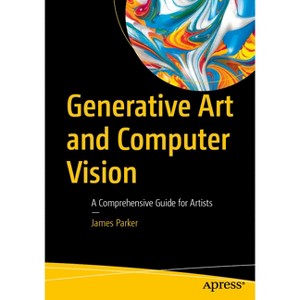
Understand how to combine computer vision and generative art.
About the Author: James R Parker has a BSc in Mathematics, an MSc in Computer Science, and a PhD in Informatics (with greatest distinction) from the State University of Gent.
436 Pages
Computers, Software Development & Engineering
Description
Book Synopsis
Understand how to combine computer vision and generative art. The book shows how computer vision methods can be applied to art.
The book will start with an introductory chapter on computer vision and generative art followed by chapters on specific means of producing genre artworks generatively. The following seven chapters deal with the seven traditional bases for art education(i.e., elements of art: line, value, color, shape, texture, form, and space); each will show specifically how machine vision and computer graphic methods can be applied to that element.
The book provides a comprehensive view of combining machine vision and art; some of the code provided has no analogy elsewhere. The book is intended to explain:
What exactly is generative art?
What does a generative artist do and know?
How does one start creating generative artwork?
What resources are out there to help artists who are not really programmers, or programmers who are not really artist?
You Will
Find out about extracting line data from images as well as drawing lines
Understand contrast and brightness enhancements
Learn about subtractive color schemes and Munsell color in a practical way
Who Is This Book For
Generative artists who don't program well or at all will greatly appreciate this book. There will be plenty of material for those who do not code, including simple code and an appendix to help them get started.
From the Back Cover
Understand how to combine computer vision and generative art. The book shows how computer vision methods can be applied to art. It is an effort to walk a middle path between what artists need to know about computers and what computer programmers need to know about art.
The book will start with an introductory chapter on computer vision and generative art followed by chapters on specific means of producing genre artworks generatively. The following seven chapters deal with the seven traditional bases for art education(i.e., elements of art: line, value, color, shape, texture, form, and space); each will show specifically how machine vision and computer graphic methods can be applied to that element.
The book provides a comprehensive view of combining machine vision and art; some of the code provided has no analogy elsewhere. The book is intended to explain:
What exactly is generative art?
What does a generative artist do and know?
How does one start creating generative artwork?
What resources are out there to help artists who are not really programmers, or programmers who are not really artists?
You Will
Find out about extracting line data from images as well as drawing lines
Understand contrast and brightness enhancements
Learn about subtractive color schemes and Munsell color in a practical way
Learn about combining colors in an artwork
See how computers and artists produce 3D works on 2D canvases
Learn about how to use the space on a canvas to best advantage
About the Author
James R Parker has a BSc in Mathematics, an MSc in Computer Science, and a PhD in Informatics (with greatest distinction) from the State University of Gent. He was a professor of Computer Science for 27 years and has been a professor of Art for 14 years. He teaches a generative art course at the University of Calgary (as well as programming for artists, electronics for artists, game design). He specializes in computer vision and has published multiple books on that subject. James has participated in many art exhibitions and sold works. He is a juried member of the Alberta Society of Artists for professional artists. James has written and published 16 books on subjects like computer vision, video game creation, generative art, and others. He also writes fiction, was the original bass player for the band Detour, and is a pretty fair cook.
Dimensions (Overall): 10.0 Inches (H) x 7.0 Inches (W) x .92 Inches (D)
Weight: 1.72 Pounds
Suggested Age: 22 Years and Up
Number of Pages: 436
Genre: Computers
Sub-Genre: Software Development & Engineering
Publisher: Apress
Theme: Computer Graphics
Format: Paperback
Author: James Parker
Language: English
Street Date: January 3, 2026
TCIN: 1012979736
UPC: 9798868821479

Item Number (DPCI): 247-59-0400
Origin: Made in the USA or Imported
If the item details aren’t accurate or complete, we want to know about it.
Shipping details
Estimated ship dimensions: 0.92 inches length x 7 inches width x 10 inches height
Estimated ship weight: 1.72 pounds
We regret that this item cannot be shipped to PO Boxes.
This item cannot be shipped to the following locations: American Samoa (see also separate entry under AS), Guam (see also separate entry under GU), Northern Mariana Islands, Puerto Rico (see also separate entry under PR), United States Minor Outlying Islands, Virgin Islands, U.S., APO/FPO, Alaska, Hawaii
Return details
This item can be returned to any Target store or Target.com.
This item must be returned within 90 days of the date it was purchased in store, delivered to the guest, delivered by a Shipt shopper, or picked up by the guest.