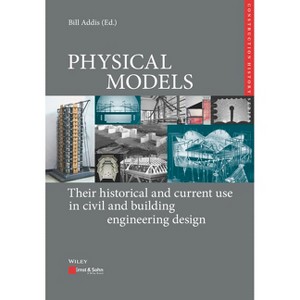
Physical models have been, and continue to be used by engineers when faced with unprecedented challenges, when engineering science has been inadequate or even non-existent, and in any other situation when engineers have needed to raise their confidence in a design proposal to a sufficient level in order to begin construction.
About the Author: Bill Addis, born in 1949, studied engineering sciences and philosophy at the University of Cambridge before working as an engineer in the aerospace industry.
1114 Pages
Technology, Civil
Description
Book Synopsis
Physical models have been, and continue to be used by engineers when faced with unprecedented challenges, when engineering science has been inadequate or even non-existent, and in any other situation when engineers have needed to raise their confidence in a design proposal to a sufficient level in order to begin construction. For this reason, models have mostly been used by designers and constructors of highly innovative projects, when previous experience has not been available. The book covers the history of using physical models in the design and development of civil and building engineering projects including Robert Stephenson's Britannia Bridge in the 1840s, the masonry Aswan Dam in the 1890s and the Boulder Dam in the 1930s; tidal flow in estuaries and wind and seismic loads on structures from the 1890s, the acoustics of concert halls and the design of thin concrete shell roofs from the 1920s, and the dynamic behaviour of tall buildings from the 1930s, as well as and cable-net and membrane structures in the 1960s. Individual designers featured include Eduardo Torroja, Pier Luigi Nervi, Heinz Hossdorf, Heinz Isler, Frei Otto, Sergio Musmeci and Mamoru Kawaguchi. The book concludes with overviews of the current use of physical models alongside computer models, for example in boundary layer wind tunnels, seismic engineering, hydrology, soil mechanics, and air flow in buildings. Traditionally, progress in engineering has been attributed to the creation and use of engineering science, the understanding of materials properties and the development of new construction methods. The book argues that the use of reduced-scale models has played an equally important part in the development of civil and building engineering. However, like the history of engineering design itself, this crucial contribution has not been widely reported or celebrated. The book includes 39 chapters written by 29 authors from ten different countries.
About the Author
Bill Addis, born in 1949, studied engineering sciences and philosophy at the University of Cambridge before working as an engineer in the aerospace industry. He later spent over 15 years in the Department of Construction Management at the University of Reading, and then 15 years as a consulting engineering with the firm Buro Happold in London. He developed his interest in building and civil engineering history, and in the use of model testing during five decades, including work on his doctorate on the history and philosophy of engineering. He has written several books and over a hundred academic papers on the history of building engineering and construction, and has recently been enjoying lecturing and research as a visiting professor in universities in Rome, Innsbruck, San Sebastian, Zurich, Brussels and Munich.
Dimensions (Overall): 9.8 Inches (H) x 7.1 Inches (W) x 2.1 Inches (D)
Weight: 4.55 Pounds
Suggested Age: 22 Years and Up
Number of Pages: 1114
Genre: Technology
Sub-Genre: Civil
Publisher: Ernst & Sohn
Theme: General
Format: Hardcover
Author: Bill Addis
Language: English
Street Date: September 9, 2020
TCIN: 1011495593
UPC: 9783433032572
Item Number (DPCI): 247-30-4265
Origin: Made in the USA or Imported
If the item details aren’t accurate or complete, we want to know about it.
Shipping details
Estimated ship dimensions: 2.1 inches length x 7.1 inches width x 9.8 inches height
Estimated ship weight: 4.55 pounds
We regret that this item cannot be shipped to PO Boxes.
This item cannot be shipped to the following locations: American Samoa (see also separate entry under AS), Guam (see also separate entry under GU), Northern Mariana Islands, Puerto Rico (see also separate entry under PR), United States Minor Outlying Islands, Virgin Islands, U.S., APO/FPO, Alaska, Hawaii
Return details
This item can be returned to any Target store or Target.com.
This item must be returned within 90 days of the date it was purchased in store, delivered to the guest, delivered by a Shipt shopper, or picked up by the guest.