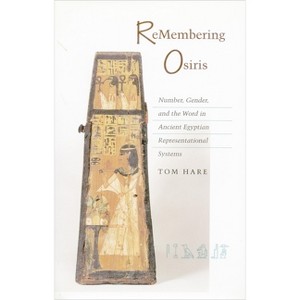
The texts and visual arts of ancient Egypt reveal a persistent and sophisticated engagement with problems of language, the body, and multiplicity.
About the Author: Tom Hare is Associate Professor of Japanese and Comparative Literature at Stanford University.
344 Pages
History, Ancient
Description
About the Book
The texts and visual arts of ancient Egypt reveal a persistent and sophisticated engagement with problems of language, the body, and multiplicity. This innovative book shows how these issues were represented and how Egyptian approaches to them continue to influence the way we think about them today.
Book Synopsis
The texts and visual arts of ancient Egypt reveal a persistent and sophisticated engagement with problems of language, the body, and multiplicity. This innovative book shows how these issues were represented in ancient Egypt and how Egyptian approaches to them continue to influence the way we think about them today.
The story of Osiris is one of the central cultural myths of ancient Egypt, a story of dismemberment and religious passion that also exemplifies attitudes about personal identity, sexuality, and the transfer of royal power. It is, moreover, a story of death and the overcoming of death, and in this it lies at the center of our own means of engagement with ancient Egypt.
This book focuses on the story of Osiris as it is recorded in Egyptian texts and memorialized on the walls of temples and tombs. Since such a focus is attainable only through Egyptian representational systems, especially hieroglyphs, the book also engages broader questions of writing and visual representation: decipherment, controversies about the "ideograph," and the relation between visual images and writing.
This analysis of Egyptian representation leads to a consideration of the phallic body and the problem of multiplicity in Egyptian religion, two nets of Egyptian discourse that, though integrated into the writing system itself, reach toward broader Egyptian discourses of gender, subjectivity, piety, and cosmogenesis. The concluding chapter considers, in specific terms, the question of a persisting Egyptian legacy in the West, from the Greeks and Israelites to Augustine, Hegel, and Lacan.
From the Back Cover
The texts and visual arts of ancient Egypt reveal a persistent and sophisticated engagement with problems of language, the body, and multiplicity. This innovative book shows how these issues were represented in ancient Egypt and how Egyptian approaches to them continue to influence the way we think about them today. The story of Osiris is one of the central cultural myths of ancient Egypt, a story of dismemberment and religious passion that also exemplifies attitudes about personal identity, sexuality, and the transfer of royal power. It is, moreover, a story of death and the overcoming of death, and in this it lies at the center of our own means of engagement with ancient Egypt. This book focuses on the story of Osiris as it is recorded in Egyptian texts and memorialized on the walls of temples and tombs. Since such a focus is attainable only through Egyptian representational systems, especially hieroglyphs, the book also engages broader questions of writing and visual representation: decipherment, controversies about the "ideograph," and the relation between visual images and writing. This analysis of Egyptian representation leads to a consideration of the phallic body and the problem of multiplicity in Egyptian religion, two nets of Egyptian discourse that, though integrated into the writing system itself, reach toward broader Egyptian discourses of gender, subjectivity, piety, and cosmogenesis. The concluding chapter considers, in specific terms, the question of a persisting Egyptian legacy in the West, from the Greeks and Israelites to Augustine, Hegel, and Lacan.
About the Author
Tom Hare is Associate Professor of Japanese and Comparative Literature at Stanford University. He is the author of Zeami's Style: The Noh Plays of Zeami Motokiyo (Stanford, 1986).
Dimensions (Overall): 9.25 Inches (H) x 6.15 Inches (W) x .79 Inches (D)
Weight: 1.06 Pounds
Suggested Age: 22 Years and Up
Number of Pages: 344
Genre: History
Sub-Genre: Ancient
Publisher: Stanford University Press
Theme: Egypt
Format: Paperback
Author: Tom Hare
Language: English
Street Date: July 1, 1999
TCIN: 1013513851
UPC: 9780804731799
Item Number (DPCI): 247-07-6323
Origin: Made in the USA or Imported
If the item details aren’t accurate or complete, we want to know about it.
Shipping details
Estimated ship dimensions: 0.79 inches length x 6.15 inches width x 9.25 inches height
Estimated ship weight: 1.06 pounds
We regret that this item cannot be shipped to PO Boxes.
This item cannot be shipped to the following locations: American Samoa (see also separate entry under AS), Guam (see also separate entry under GU), Northern Mariana Islands, Puerto Rico (see also separate entry under PR), United States Minor Outlying Islands, Virgin Islands, U.S., APO/FPO, Alaska, Hawaii
Return details
This item can be returned to any Target store or Target.com.
This item must be returned within 90 days of the date it was purchased in store, delivered to the guest, delivered by a Shipt shopper, or picked up by the guest.