Target New ArrivalsGift Ideas for MomClothing, Shoes & AccessoriesHome & DecorKitchen & DiningOutdoor Living & GardenGroceryHousehold EssentialsBabyBeautyPersonal CareHealthWellnessLuggageSports & OutdoorsToysElectronicsVideo GamesMovies, Music & BooksSchool & Office SuppliesParty SuppliesGift IdeasGift CardsPetsUlta Beauty at TargetShop by CommunityTarget OpticalDealsClearanceTarget New ArrivalsSpring OutfitsGift Ideas for MomWomen’s Festival OutfitsTop DealsTarget Circle DealsWeekly AdShop Order PickupShop Same Day DeliveryRegistryRedCardTarget CircleFind Stores
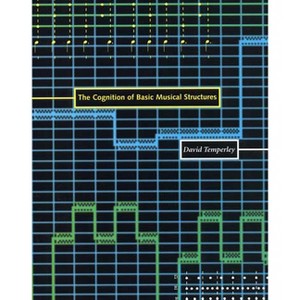
The Cognition of Basic Musical Structures - by  David Temperley (Paperback) - 1 of 1

The Cognition of Basic Musical Structures - by David Temperley (Paperback)

$40.49

In Stock

Free & easy returns

Free & easy returns

Return this item by mail or in store within 90 days for a full refund.
Eligible for registries and wish lists

About this item

Highlights

  • In this book, David Temperley addresses a fundamental question about music cognition: how do we extract basic kinds of musical information, such as meter, phrase structure, counterpoint, pitch spelling, harmony, and key from music as we hear it?
  • About the Author: David Temperley is Associate Professor of Music Theory at the Eastman School of Music, University of Rochester, and the author of The Cognition of Basic Musical Structures (MIT Press, 2001).
  • 404 Pages
  • Music, Genres & Styles

Description


About the Book


A computational framework, based on preference rules, for studying musical cognition.


Book Synopsis


In this book, David Temperley addresses a fundamental question about music cognition: how do we extract basic kinds of musical information, such as meter, phrase structure, counterpoint, pitch spelling, harmony, and key from music as we hear it? Taking a computational approach, Temperley develops models for generating these aspects of musical structure. The models he proposes are based on preference rules, which are criteria for evaluating a possible structural analysis of a piece of music. A preference rule system evaluates many possible interpretations and chooses the one that best satisfies the rules.

After an introductory chapter, Temperley presents preference rule systems for generating six basic kinds of musical structure: meter, phrase structure, contrapuntal structure, harmony, and key, as well as pitch spelling (the labeling of pitch events with spellings such as A flat or G sharp). He suggests that preference rule systems not only show how musical structures are inferred, but also shed light on other aspects of music. He substantiates this claim with discussions of musical ambiguity, retrospective revision, expectation, and music outside the Western canon (rock and traditional African music). He proposes a framework for the description of musical styles based on preference rule systems and explores the relevance of preference rule systems to higher-level aspects of music, such as musical schemata, narrative and drama, and musical tension.


Review Quotes


"This book makes substantial progress in the computer modeling of basic aspects of musical cognition. The author's presentation of complex subject matter is as direct and straightforward as one could wish. His writing is natural, clear, and unfailingly logical."--Fred Lerdahl, Fritz Reiner Professor of Music, Columbia University

" This book makes substantial progress in the computer modeling of basic aspects of musical cognition. The author's presentation of complex subject matter is as direct and straightforward as one could wish. His writing is natural, clear, and unfailingly logical." -- Fred Lerdahl, Fritz Reiner Professor of Music, Columbia University

" This book makes substantial progress in the computer modeling of basic aspects of musical cognition. The author's presentation of complex subject matter is as direct and straightforward as one could wish. His writing is natural, clear, and unfailingly logical." -- Fred Lerdahl, Fritz Reiner Professor of Music, Columbia University

-- Fred Lerdahl, Fritz Reiner Professor of Music, Columbia University


About the Author


David Temperley is Associate Professor of Music Theory at the Eastman School of Music, University of Rochester, and the author of The Cognition of Basic Musical Structures (MIT Press, 2001).
Dimensions (Overall): 8.88 Inches (H) x 6.94 Inches (W) x .86 Inches (D)
Weight: 1.45 Pounds
Suggested Age: 22 Years and Up
Number of Pages: 404
Genre: Music
Sub-Genre: Genres & Styles
Publisher: MIT Press
Theme: Electronic
Format: Paperback
Author: David Temperley
Language: English
Street Date: August 20, 2004
TCIN: 1010328055
UPC: 9780262701051
Item Number (DPCI): 247-04-0861
Origin: Made in the USA or Imported
If the item details aren’t accurate or complete, we want to know about it.

Shipping details

Estimated ship dimensions: 0.86 inches length x 6.94 inches width x 8.88 inches height
Estimated ship weight: 1.45 pounds
We regret that this item cannot be shipped to PO Boxes.
This item cannot be shipped to the following locations: American Samoa (see also separate entry under AS), Guam (see also separate entry under GU), Northern Mariana Islands, Puerto Rico (see also separate entry under PR), United States Minor Outlying Islands, Virgin Islands, U.S., APO/FPO, Alaska, Hawaii

Return details

This item can be returned to any Target store or Target.com.
This item must be returned within 90 days of the date it was purchased in store, delivered to the guest, delivered by a Shipt shopper, or picked up by the guest.
See the return policy for complete information.

Q: What is the main focus of this book?

submitted by AI Shopping Assistant - 1 month ago
  • A: The book focuses on how we extract fundamental musical information such as meter and harmony from music.

    submitted byAI Shopping Assistant - 1 month ago
    Ai generated

Q: What kind of approach does the author use in the book?

submitted by AI Shopping Assistant - 1 month ago
  • A: Temperley employs a computational framework based on preference rules to study musical cognition.

    submitted byAI Shopping Assistant - 1 month ago
    Ai generated

Q: Who is the author of this book?

submitted by AI Shopping Assistant - 1 month ago
  • A: David Temperley, an Associate Professor of Music Theory at the Eastman School of Music.

    submitted byAI Shopping Assistant - 1 month ago
    Ai generated

Q: Does the book explore non-Western music styles?

submitted by AI Shopping Assistant - 1 month ago
  • A: Yes, it discusses music outside the Western canon, including rock and traditional African music.

    submitted byAI Shopping Assistant - 1 month ago
    Ai generated

Q: How many pages does the book contain?

submitted by AI Shopping Assistant - 1 month ago
  • A: The book consists of 404 pages, full of detailed analysis on music cognition.

    submitted byAI Shopping Assistant - 1 month ago
    Ai generated

Additional product information and recommendations

Discover more options

Trending Music & Performing Arts

Get top deals, latest trends, and more.

Privacy policy