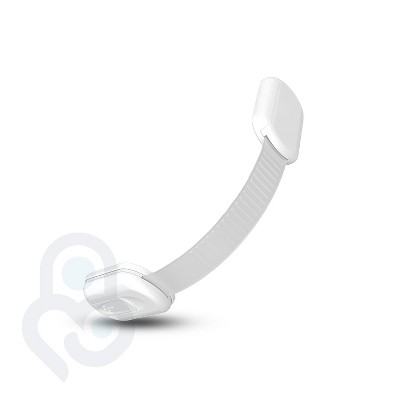
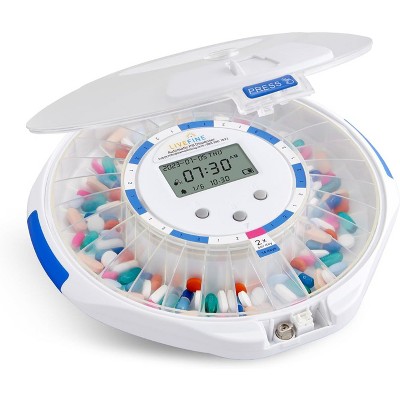
Common locking/closure types include: resealable sliding/zipper locks on pouches; snap or airtight snap‑lock lids on daily/weekly boxes; magnetic closures on foldable cases; two‑way zippered closures on storage bags (lock not included); and keyed or locking covers on some electronic dispensers.
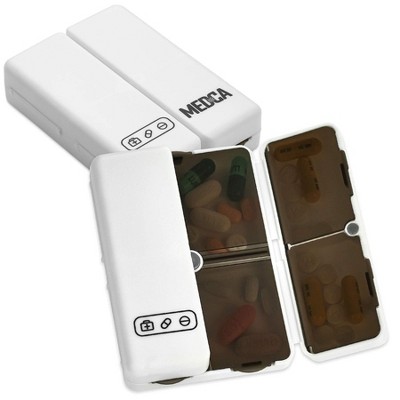
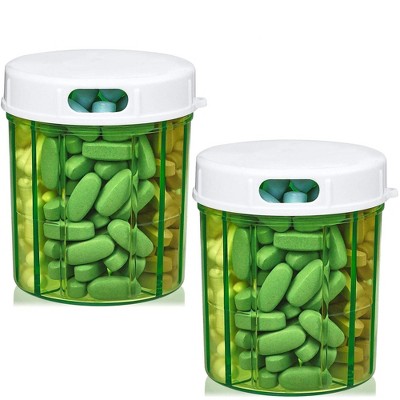
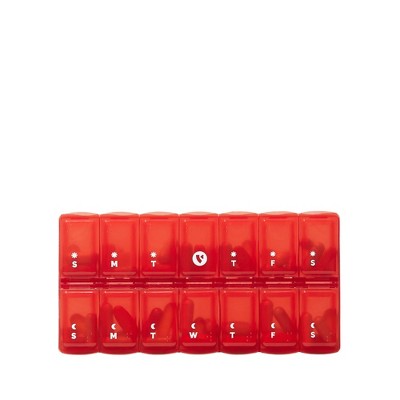
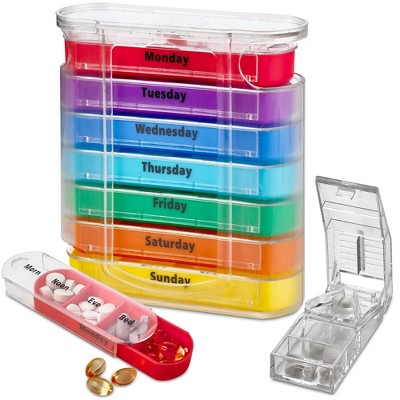
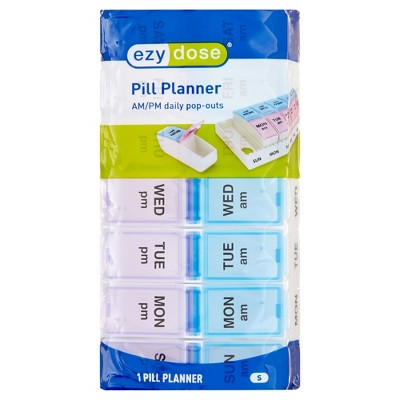
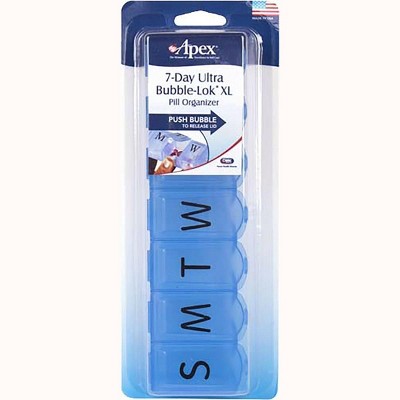
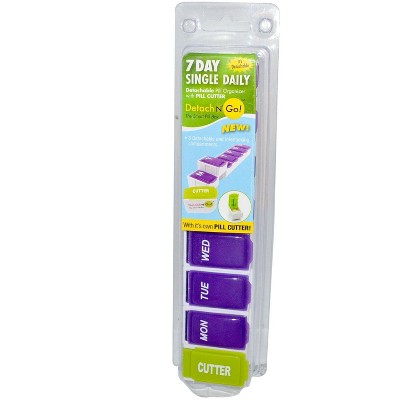
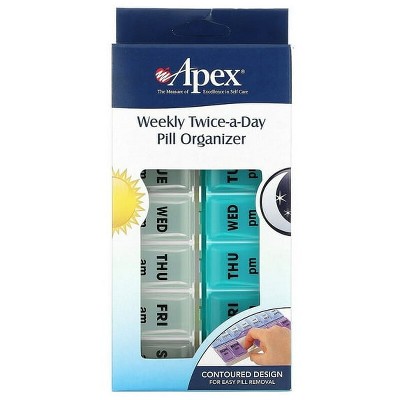
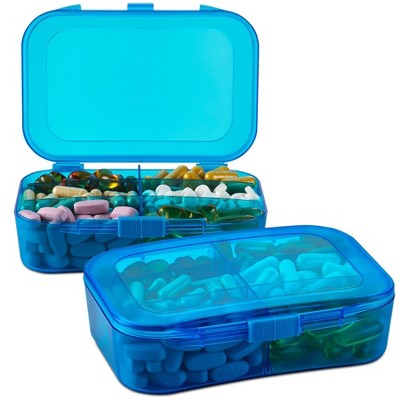
Typical counts found in listings: 4 compartments for twice‑a‑day organizers, 7 compartments for weekly organizers, and foldable cases that combine multiple small compartments with a larger compartment (for example, six small plus one large).
Common features include adjustable interior dividers, elastic loops to secure bottles, two‑way lockable zippers (lock not included), waterproof/scratch‑resistant polyester construction, and a top handle for carrying.
Care guidance varies by product: some listings specify hand wash, some list the item as disposable, and at least one listing provides no care instructions. Check the product details or manufacturer guidance for the specific item you buy.
Common materials include EVA (BPA‑free, food‑grade), food‑grade polypropylene (PP) plastic, vinyl and other plastics, and fabric materials used for storage bags.
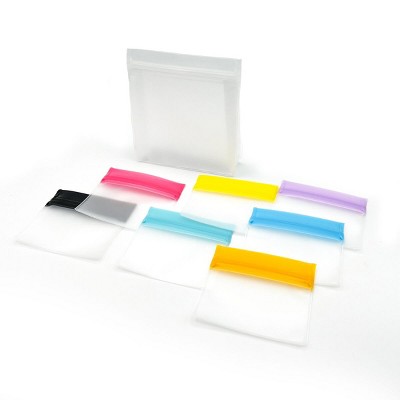
The self‑sealing zippered pouches are listed at about 2.75″ x 3″ (also shown as 3″ x 2.75″) and are described as 7 mils thick.
Different closures work in different ways: sliding‑lock seals on zippered pouches are described as spill-, water- and leak‑proof; weekly and travel boxes use snap or airtight snap‑lock lids to stay closed; and foldable cases use snap‑lock, see‑through lids that help protect contents from moisture and dust.
Power requirements vary by model: one electronic dispenser listed requires 4 AA batteries, while several other organizers are listed as "Battery: No Battery Used." Check the specific product listing for exact power requirements.
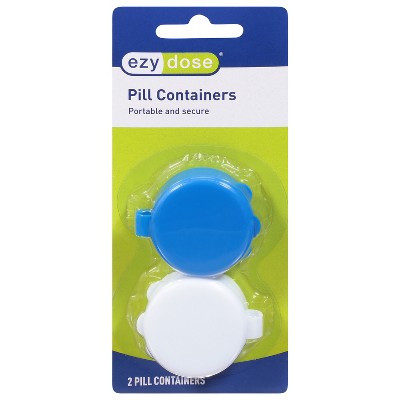
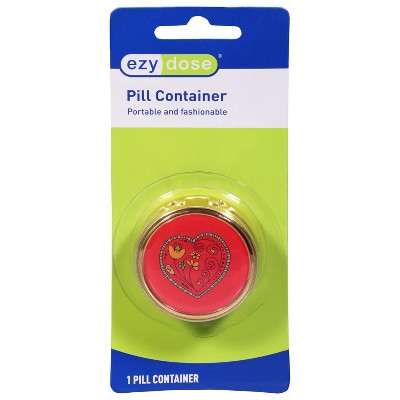
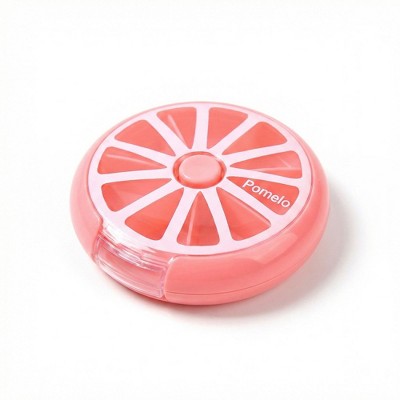






 + 2
+ 2