Target New ArrivalsFourth of JulyBack to SchoolCollegeClothing, Shoes & AccessoriesHome & DecorKitchen & DiningOutdoor Living & GardenGroceryHousehold EssentialsBabyBeautyPersonal CareSports & OutdoorsHealthWellnessSchool & Office SuppliesToys & GamesElectronicsVideo GamesMovies, Music & BooksParty SuppliesGift IdeasGift CardsPetsUlta Beauty at TargetShop by CommunityTarget OpticalDealsClearanceNew ArrivalsBack to SchoolCollegeTop DealsTarget Circle DealsWeekly AdShop Order PickupShop Same Day DeliveryRegistryRedCardTarget CircleFind Stores
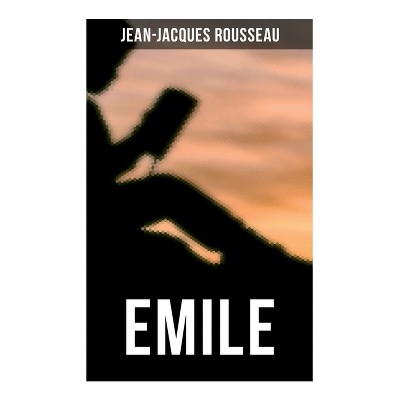
Emile - by  Jean-Jacques Rousseau (Paperback) - 1 of 1

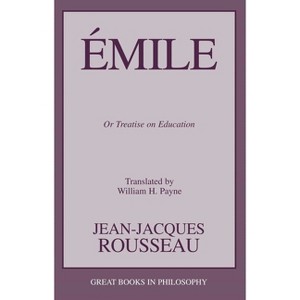
Emile - by Jean-Jacques Rousseau (Paperback)

$15.99

In Stock

Free & easy returns
Free & easy returns
Return this item by mail or in store within 90 days for a full refund.
Eligible for registries and wish lists

About this item

Highlights

  • In his pioneering treatise on education the great French philosopher presented concepts that had a significant influence on the development of pedagogy, and yet many of his ideas still sound radical today.
  • About the Author: JEAN-JACQUES ROUSSEAU was born in Geneva on June 28, 1712, and raised by his father after his mother died giving him life.
  • 358 Pages
  • Philosophy, General

Description


About the Book


Originally published: Rousseau's Emile, or, Treatise on education. New York: D. Appleton, 1896 (International education series; v. 20).


Book Synopsis


In his pioneering treatise on education the great French philosopher presented concepts that had a significant influence on the development of pedagogy, and yet many of his ideas still sound radical today. Written in reaction to the stultifying system of rote learning and memorization prevalent throughout Europe in Rousseau's time, Emile is a utopian vision of child-centered education, full of the sentiments of Romanticism, which Rousseau himself inspired.Imagining a typical boy named Emile, Rousseau creates an ideal model of one-on-one tutelage from infancy to manhood with himself as the child's mentor. "Everything is good as it comes from the hands of the Author of Nature; but everything degenerates in the hands of man." This is the first of many provocative statements that characterize this work and are a hallmark of Rousseau's arresting rhetoric. As in so many of his other famous works, here too Rousseau asserts his main thesis that human beings by nature are good; it is only the distorting influences of civilization that have corrupted them.If this is true, then in educating children one must do nothing to interfere with human nature in its natural course. Far from being the chief means by which society inculcates its rules and principles, education should be the method of helping youths discover the inherent truths of their own human nature. From infancy to young adulthood learning should come purely from personal experience. Rather than imparting facts, teachers should foster self-discovery, so that knowledge is acquired through following innate curiosity, not vicariously through the statements of others.Educators as well as students of philosophy will find much to admire in Rousseau's original and still radical ideas.


About the Author


JEAN-JACQUES ROUSSEAU was born in Geneva on June 28, 1712, and raised by his father after his mother died giving him life. The reproachment Rousseau experienced at his father's hand produced feelings of guilt and inferiority that were to haunt him throughout his life. During his youth, Rousseau wandered throughout Europe from job to job. Having moved to Paris from the city of Lyon in 1742, Rousseau sought the intellectual life and soon became associated with Denis Diderot and the philosophes.

Rousseau's literary career began with his entry in an essay contest in 1749 on the subject of the relationship of science and the arts to morals. His winning essay, Discourses on Sciences and the Arts, soon became the foundation for his later work entitled the Discourse on the Origin of Inequality (1753). With its publication, he became a figure of some controversy in France. Ideological differences between his views and those of his Enlightenment contemporaries soon surfaced, and Rousseau once again found himself alienated from the intellectual establishment.

His differences with the philosophes proved to be the impetus for Rousseau's future work on the content of human nature and man's rela-tionship to society and the state. Contrary to the individualism and intel-lectual enlightenment advocated by his contemporaries, Rousseau sought to sublimate individuality in the security of the collective per-sonality known as the general will. This new society would be typified by concern for the community and would be ruled by laws developed through a plan of controlled participation. Rousseau's social theory was developed in his work Julie, ou la Nouvelle Heloise (1761) and in Emile (1762). The institutional structure was constructed in The Social Con-tract (1761).

In Emile, Rousseau presents his utopian vision of child-centered education, full of the sentiments of Romanticism, a movement that Rousseau inspired.

Rousseau's later years were spent fighting off persecution, both real and imaginary. He died near Paris on July 2, 1778.

Dimensions (Overall): 8.38 Inches (H) x 6.38 Inches (W) x .76 Inches (D)
Weight: .9 Pounds
Suggested Age: 22 Years and Up
Number of Pages: 358
Genre: Philosophy
Sub-Genre: General
Publisher: Prometheus Books
Format: Paperback
Author: Jean-Jacques Rousseau
Language: English
Street Date: August 1, 2003
TCIN: 1012278424
UPC: 9781591021117
Item Number (DPCI): 247-37-9516
Origin: Made in the USA or Imported
If the item details aren’t accurate or complete, we want to know about it.

Shipping details

Estimated ship dimensions: 0.76 inches length x 6.38 inches width x 8.38 inches height
Estimated ship weight: 0.9 pounds
We regret that this item cannot be shipped to PO Boxes.
This item cannot be shipped to the following locations: American Samoa (see also separate entry under AS), Guam (see also separate entry under GU), Northern Mariana Islands, Puerto Rico (see also separate entry under PR), United States Minor Outlying Islands, Virgin Islands, U.S., APO/FPO, Alaska, Hawaii

Return details

This item can be returned to any Target store or Target.com.
This item must be returned within 90 days of the date it was purchased in store, delivered to the guest, delivered by a Shipt shopper, or picked up by the guest.
See the return policy for complete information.

Additional product information and recommendations

Discover more options

Best-selling Philosophy

Get top deals, latest trends, and more.