Target New ArrivalsBack to SchoolCollegeClothing, Shoes & AccessoriesHome & DecorKitchen & DiningOutdoor Living & GardenGroceryHousehold EssentialsBabyBeautyPersonal CareSports & OutdoorsHealthWellnessSchool & Office SuppliesToys & GamesElectronics & TechVideo GamesMovies, Music & BooksParty SuppliesGift IdeasGift CardsPetsUlta Beauty at TargetShop by CommunityTarget OpticalDealsClearanceNew ArrivalsBack to SchoolCollegeTop DealsTarget Circle DealsWeekly AdShop Order PickupShop Same Day DeliveryRegistryRedCardTarget CircleFind Stores
Mere Materialism - (Lit Z) by Steven Goldsmith - 1 of 1

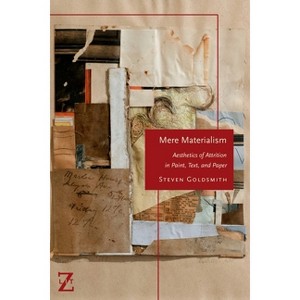
Mere Materialism - (Lit Z) by Steven Goldsmith (Paperback)

New at  target 
$35.00

FormatPaperback

In Stock

Free & easy returns
Free & easy returns
Return this item by mail or in store within 90 days for a full refund.
Eligible for registries and wish lists

About this item

Highlights

  • Mere Materialism challenges us to recognize a neglected, transhistorical aesthetics of loss.
  • About the Author: Steven Goldsmith is Professor Emeritus of English at the University of California, Berkeley.
  • 310 Pages
  • Literary Criticism, Semiotics & Theory
  • Series Name: Lit Z

Description


About the Book


Shows how art and literature can both describe and instantiate the slow, unredeemed violence of physical deterioration.


Book Synopsis


Mere Materialism challenges us to recognize a neglected, transhistorical aesthetics of loss. Against the affirmative materialisms prevalent in cultural criticism today, mere materialism in art and literature documents the slow, ordinary violence of routine physical deterioration, including art's own. It inhabits a space where loss can remain nothing but loss, without having to serve any productive or redemptive purpose.

Attending to material surfaces and the processes of attrition Goldsmith examines works from Rembrandt to the present that that stand in counterpoint to the typical materialist emphasis on dynamic, generative possibility. These works turn aside from such future horizons to pose a central question: Amid the urgent purposes we ask art to serve, and amid the many values we invest in the concept of materialism, is it possible for art to occupy the everyday damage of erosion and, on occasion, simply let loss be?

Wide-ranging in philosophical reference and in discussions of specific materials, conservation theory, and reception histories, the book draws out the phenomenon of mere materialism through a series of extended case studies: a Rembrandt portrait of Saint Bartholomew; Melville's slave-revolt novella Benito Cereno; a Dada collage by Kurt Schwitters; and recent "gray" writings by Karl Ove Knausgaard and C. S. Giscombe. Together, these works index an aesthetics of fragility and decay, without presupposing that material vulnerability is in a dialectical relationship with deeper meaning, and without assuming that an encounter with it has a redeeming cognitive, affective, political or social function.


From the Back Cover


"Mere Materialism is a rare thing that appears every so often, capturing the reader with its intelligence, clarity, and sober lyricism. It is stylistically wondrous and strange, thoughtfully argued, urgent, movingly personal and yet rigorous in its scholarship that spans historical periods, genres, and media."--Jacques Khalip, Brown University

"Goldsmith deepens the concept of 'mere materialism' by bringing it to bear on elemental philosophy and the contemporary concern with climate change and geological perspective. The book deftly bridges disciplinary gaps as it captures the legacies of slavery and resource extraction that inflect the precarity of human existence and embodiment."--Amanda Boetzkes, author of Plastic Capitalism: Contemporary Art and the Drive to Waste

Mere Materialism challenges us to recognize a neglected, transhistorical aesthetics of loss. Against the affirmative materialisms prevalent in cultural criticism today, mere materialism in art and literature documents the slow, ordinary violence of routine physical deterioration, including art's own. It inhabits a space where loss can remain nothing but loss, without having to serve any productive or redemptive purpose.

Attending to material surfaces and the processes of attrition Goldsmith examines works from Rembrandt to the present that that stand in counterpoint to the typical materialist emphasis on dynamic, generative possibility. These works turn aside from such future horizons to pose a central question: Amid the urgent purposes we ask art to serve, and amid the many values we invest in the concept of materialism, is it possible for art to occupy the everyday damage of erosion and, on occasion, simply let loss be?

Wide-ranging in philosophical reference and in discussions of specific materials, conservation theory, and reception histories, the book draws out the phenomenon of mere materialism through a series of extended case studies: a Rembrandt portrait of Saint Bartholomew; Melville's slave-revolt novella Benito Cereno; a Dada collage by Kurt Schwitters; and recent "gray" writings by Karl Ove Knausgaard and C. S. Giscombe. Together, these works index an aesthetics of fragility and decay, without presupposing that material vulnerability is in a dialectical relationship with deeper meaning, and without assuming that an encounter with it has a redeeming cognitive, affective, political or social function.

Steven Goldsmith is Professor Emeritus of English at the University of California, Berkeley.


Review Quotes


Mere Materialism is a rare thing that appears every so often, capturing the reader with its intelligence, clarity, and sober lyricism. It is stylistically wondrous and strange, thoughtfully argued, urgent, movingly personal and yet rigorous in its scholarship that spans historical periods, genres, and media.---Jacques Khalip, Brown University

Goldsmith deepens the concept of 'mere materialism' by bringing it to bear on elemental philosophy and the contemporary concern with climate change and geological perspective. The book deftly bridges disciplinary gaps as it captures the legacies of slavery and resource extraction that inflect the precarity of human existence and embodiment.---Amanda Boetzkes, author of Plastic Capitalism: Contemporary Art and the Drive to Waste


About the Author


Steven Goldsmith is Professor Emeritus of English at the University of California, Berkeley. He is the author of Blake's Agitation: Criticism and the Emotions (2013) and Unbuilding Jerusalem: Apocalypse and Romantic Representation (1993).
Dimensions (Overall): 9.0 Inches (H) x 6.0 Inches (W) x .84 Inches (D)
Weight: 1.23 Pounds
Suggested Age: 22 Years and Up
Number of Pages: 310
Genre: Literary Criticism
Sub-Genre: Semiotics & Theory
Series Title: Lit Z
Publisher: Fordham University Press
Format: Paperback
Author: Steven Goldsmith
Language: English
Street Date: June 2, 2026
TCIN: 1012555372
UPC: 9781531514167
Item Number (DPCI): 247-55-8068
Origin: Made in the USA or Imported
If the item details aren’t accurate or complete, we want to know about it.

Shipping details

Estimated ship dimensions: 0.84 inches length x 6 inches width x 9 inches height
Estimated ship weight: 1.23 pounds
We regret that this item cannot be shipped to PO Boxes.
This item cannot be shipped to the following locations: American Samoa (see also separate entry under AS), Guam (see also separate entry under GU), Northern Mariana Islands, Puerto Rico (see also separate entry under PR), United States Minor Outlying Islands, Virgin Islands, U.S., APO/FPO, Alaska, Hawaii

Return details

This item can be returned to any Target store or Target.com.
This item must be returned within 90 days of the date it was purchased in store, delivered to the guest, delivered by a Shipt shopper, or picked up by the guest.
See the return policy for complete information.

Additional product information and recommendations

Discover more options

Skip to next section

Best-selling Target New Arrivals

Skip to next section

Get top deals, latest trends, and more.