Target New ArrivalsChristmasTarget Black FridayGift IdeasHoliday Kids CatalogHome & DecorKitchen & DiningToys & GamesElectronics & TechVideo GamesGift CardsClothing, Shoes & AccessoriesGroceryBabyBeautyTarget Beauty StudioPersonal CareHousehold EssentialsHealthWellnessBooks, Music & MoviesSports & OutdoorsPetsSchool & Office SuppliesParty SuppliesAutomotiveTarget OpticalClearanceNew ArrivalsChristmasGift IdeasTop DealsTarget Circle DealsWeekly AdShop Order PickupShop Same Day DeliveryRegistryRedCardTarget CircleFind Stores
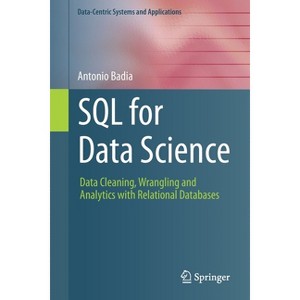
SQL for Data Science - (Data-Centric Systems and Applications) by  Antonio Badia (Paperback) - 1 of 1

SQL for Data Science - (Data-Centric Systems and Applications) by Antonio Badia (Paperback)

$64.99
 

In Stock

Free & easy returns
Free & easy returns
Return this item by mail or in store within 90 days for a full refund.
Eligible for registries and wish lists
Save 5% every day
With Target Circle™ Card (restrictions apply)

About this item

Highlights

  • This textbook explains SQL within the context of data science and introduces the different parts of SQL as they are needed for the tasks usually carried out during data analysis.
  • About the Author: Antonio Badia is Associate Professor in the Department of Computer Science and Engineering at the University of Louisville, KY, USA.
  • 285 Pages
  • Computers, Database Administration & Management
  • Series Name: Data-Centric Systems and Applications

Description


Book Synopsis


This textbook explains SQL within the context of data science and introduces the different parts of SQL as they are needed for the tasks usually carried out during data analysis. Using the framework of the data life cycle, it focuses on the steps that are very often given the short shift in traditional textbooks, like data loading, cleaning and pre-processing.

The book is organized as follows. Chapter 1 describes the data life cycle, i.e. the sequence of stages from data acquisition to archiving, that data goes through as it is prepared and then actually analyzed, together with the different activities that take place at each stage. Chapter 2 gets into databases proper, explaining how relational databases organize data. Non-traditional data, like XML and text, are also covered. Chapter 3 introduces SQL queries, but unlike traditional textbooks, queries and their parts are described around typical data analysis tasks like data exploration, cleaning and transformation.Chapter 4 introduces some basic techniques for data analysis and shows how SQL can be used for some simple analyses without too much complication. Chapter 5 introduces additional SQL constructs that are important in a variety of situations and thus completes the coverage of SQL queries. Lastly, chapter 6 briefly explains how to use SQL from within R and from within Python programs. It focuses on how these languages can interact with a database, and how what has been learned about SQL can be leveraged to make life easier when using R or Python. All chapters contain a lot of examples and exercises on the way, and readers are encouraged to install the two open-source database systems (MySQL and Postgres) that are used throughout the book in order to practice and work on the exercises, because simply reading the book is much less useful than actually using it.

This book is for anyone interested in data science and/or databases. It just demands a bit of computer fluency, butno specific background on databases or data analysis. All concepts are introduced intuitively and with a minimum of specialized jargon. After going through this book, readers should be able to profitably learn more about data mining, machine learning, and database management from more advanced textbooks and courses.


From the Back Cover


This textbook explains SQL within the context of data science and introduces the different parts of SQL as they are needed for the tasks usually carried out during data analysis. Using the framework of the data life cycle, it focuses on the steps that are very often given the short shift in traditional textbooks, like data loading, cleaning and pre-processing.

The book is organized as follows. Chapter 1 describes the data life cycle, i.e. the sequence of stages from data acquisition to archiving, that data goes through as it is prepared and then actually analyzed, together with the different activities that take place at each stage. Chapter 2 gets into databases proper, explaining how relational databases organize data. Non-traditional data, like XML and text, are also covered. Chapter 3 introduces SQL queries, but unlike traditional textbooks, queries and their parts are described around typical data analysis tasks like data exploration, cleaning and transformation.Chapter 4 introduces some basic techniques for data analysis and shows how SQL can be used for some simple analyses without too much complication. Chapter 5 introduces additional SQL constructs that are important in a variety of situations and thus completes the coverage of SQL queries. Lastly, chapter 6 briefly explains how to use SQL from within R and from within Python programs. It focuses on how these languages can interact with a database, and how what has been learned about SQL can be leveraged to make life easier when using R or Python. All chapters contain a lot of examples and exercises on the way, and readers are encouraged to install the two open-source database systems (MySQL and Postgres) that are used throughout the book in order to practice and work on the exercises, because simply reading the book is much less useful than actually using it.

This book is for anyone interested in data science and/or databases. It just demands a bit of computer fluency, butno specific background on databases or data analysis. All concepts are introduced intuitively and with a minimum of specialized jargon. After going through this book, readers should be able to profitably learn more about data mining, machine learning, and database management from more advanced textbooks and courses.


About the Author


Antonio Badia is Associate Professor in the Department of Computer Science and Engineering at the University of Louisville, KY, USA. He has taught both introductory and advanced college database courses for more than 20 years, and created and taught a course on data management and analysis for non-computer science students. His research on database systems has been funded by NSF and others, and produced more than 50 publications in conferences and technical journals.


Dimensions (Overall): 9.21 Inches (H) x 6.14 Inches (W) x .63 Inches (D)
Weight: .93 Pounds
Suggested Age: 22 Years and Up
Number of Pages: 285
Genre: Computers
Sub-Genre: Database Administration & Management
Series Title: Data-Centric Systems and Applications
Publisher: Springer
Format: Paperback
Author: Antonio Badia
Language: English
Street Date: November 10, 2020
TCIN: 1016011337
UPC: 9783030575915
Item Number (DPCI): 247-68-2821
Origin: Made in the USA or Imported
If the item details aren’t accurate or complete, we want to know about it.

Shipping details

Estimated ship dimensions: 0.63 inches length x 6.14 inches width x 9.21 inches height
Estimated ship weight: 0.93 pounds
We regret that this item cannot be shipped to PO Boxes.
This item cannot be shipped to the following locations: American Samoa (see also separate entry under AS), Guam (see also separate entry under GU), Northern Mariana Islands, Puerto Rico (see also separate entry under PR), United States Minor Outlying Islands, Virgin Islands, U.S., APO/FPO, Alaska, Hawaii

Return details

This item can be returned to any Target store or Target.com.
This item must be returned within 90 days of the date it was purchased in store, delivered to the guest, delivered by a Shipt shopper, or picked up by the guest.
See the return policy for complete information.

Additional product information and recommendations

Discover more options

Skip to next section

Best-selling Computers & Technology Books

Skip to next section

Get top deals, latest trends, and more.