New ArrivalsHealth & WellnessClothing, Shoes & AccessoriesHomeParty SuppliesKitchen & DiningGroceryHousehold EssentialsFurnitureBabyToysVideo GamesElectronicsMovies, Music & BooksBeautyPersonal CareGift IdeasGift CardsCharacter ShopSports & OutdoorsBackpacks & LuggageSchool & Office SuppliesPetsUlta Beauty at TargetTarget OpticalBullseye’s PlaygroundDealsClearanceTarget New Arrivals Target Finds #TargetStyleHanukkahStore EventsAsian-Owned Brands at TargetBlack-Owned or Founded Brands at TargetLatino-Owned Brands at TargetWomen-Owned Brands at TargetLGBTQIA+ ShopTop DealsTarget Circle DealsWeekly AdShop Order PickupShop Same Day DeliveryRegistryRedCardTarget CircleFind Stores
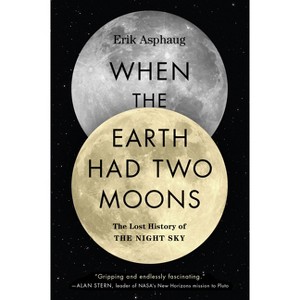
When the Earth Had Two Moons - by  Erik Asphaug (Paperback) - 1 of 1

When the Earth Had Two Moons - by Erik Asphaug (Paperback)

$15.29Save $3.70 (19% off)

In Stock

Eligible for registries and wish lists

Sponsored

About this item

Highlights

  • An astonishing exploration of planet formation and the origins of life by one of the world's most innovative planetary geologists.In 1959, the Soviet probe Luna 3 took the first photos of the far side of the moon.
  • Author(s): Erik Asphaug
  • 368 Pages
  • Science, Space Science

Description


About the Book


"In 1959, the Soviet probe Luna 3 took the first photos of the far side of the moon. Even in their poor resolution, the images stunned scientists: the far side is an enormous mountainous expanse, not the vast lava-plains seen from Earth. Subsequent missions have confirmed this in much greater detail. How could this be, and what might it tell us about our own place in the universe? As it turns out, quite a lot. Fourteen billion years ago, the universe exploded into being, creating galaxies and stars. Planets formed out of the leftover dust and gas that coalesced into larger and larger bodies orbiting around each star. In a sort of heavenly survival of the fittest, planetary bodies smashed into each other until solar systems emerged. Curiously, instead of being relatively similar in terms of composition, the planets in our solar system, and the comets, asteroids, satellites and rings, are bewitchingly distinct. So, too, the halves of our moon. In When the Earth Had Two Moons, esteemed planetary geologist Erik Asphaug takes us on an exhilarating tour through the farthest reaches of time and our galaxy to find out why. Beautifully written and provocatively argued, When the Earth Had Two Moons is not only a mind-blowing astronomical tour but a profound inquiry into the nature of life here--and billions of miles from home."--Publisher's description.


Book Synopsis


An astonishing exploration of planet formation and the origins of life by one of the world's most innovative planetary geologists.

In 1959, the Soviet probe Luna 3 took the first photos of the far side of the moon. Even in their poor resolution, the images stunned scientists: the far side is an enormous mountainous expanse, not the vast lava-plains seen from Earth. Subsequent missions have confirmed this in much greater detail.

How could this be, and what might it tell us about our own place in the universe? As it turns out, quite a lot.

Fourteen billion years ago, the universe exploded into being, creating galaxies and stars. Planets formed out of the leftover dust and gas that coalesced into larger and larger bodies orbiting around each star. In a sort of heavenly survival of the fittest, planetary bodies smashed into each other until solar systems emerged. Curiously, instead of being relatively similar in terms of composition, the planets in our solar system, and the comets, asteroids, satellites and rings, are bewitchingly distinct. So, too, the halves of our moon.

In When the Earth Had Two Moons, esteemed planetary geologist Erik Asphaug takes us on an exhilarating tour through the farthest reaches of time and our galaxy to find out why. Beautifully written and provocatively argued, When the Earth Had Two Moons is not only a mind-blowing astronomical tour but a profound inquiry into the nature of life here--and billions of miles from home.


Review Quotes


"A gripping and endlessly fascinating account of how planets formed." - Alan Stern, planetary scientist and leader of NASA's New Horizons mission to Pluto
"When the Earth Had Two Moons is a lyrical exploration of our solar system, introducing not just the facts of its formation and nature but the implications for all of us living on Earth." - Amy Mainzer, visiting scientist at the Jet Propulsion Laboratory and professor of planetary science at the University of Arizona
"An enthusiast as well as a fine writer, Asphaug lays it out from the beginning. . . . An expert, entertaining review of what's known about the solar system." - Kirkus Reviews
"The story swings from the birth of the universe, through the history of astronomy, to the modern understanding of the piece-by-piece building of the planets. There are delightful sidetracks into feasting monks, desert meditations and how a technobillionaire could (and should) launch an exploration of Saturn's hydrocarbon-rich moon Titan. ... [Asphaug's] writing is peppered with playful images... He is at his most charming when he is not just telling how scientists currently think about the chaotic formation of the solar system but relaying his own part in the story, as with the idea of that second moon. He perfectly captures the way that so many scientific insights occur: while sitting listening to something else and having your mind wander. ... Embracing the chaos around us, as Mr. Asphaug does, ultimately makes the solar system an even weirder and more wonderful place than it seemed before." - Wall Street Journal
"Asphaug draws upon his years of research and expertise to provide the reader with a truly wondrous and surprising exploration of planet formation and the origins of life. A meticulous and expertly presented work of science, When the Earth Had Two Moons is unreservedly and enthusiastically recommended."
- Midwest Book Review
"An enthusiastic and erudite guide." - Publishers Weekly
"If the planets were born out of material orbiting the Sun, like raindrops condensing from a cloud, why do they differ so much in structure and chemical composition? This detailed book assesses the astronomical and geological evidence on the origin of planetary diversity." - Nature. "Best Science Picks of the week"
"Delightful. ... The story swings from the birth of the universe, through the history of astronomy, to the modern understanding of the piece-by-piece building of the planets. ... Makes the solar system an even weirder and more wonderful place than it seemed before." - Wall Street Journal

Dimensions (Overall): 7.9 Inches (H) x 5.3 Inches (W) x .9 Inches (D)
Weight: .7 Pounds
Suggested Age: 22 Years and Up
Number of Pages: 368
Genre: Science
Sub-Genre: Space Science
Publisher: Mariner Books
Format: Paperback
Author: Erik Asphaug
Language: English
Street Date: October 6, 2020
TCIN: 1008294286
UPC: 9780062657930
Item Number (DPCI): 247-50-8878
Origin: Made in the USA or Imported
If the item details aren’t accurate or complete, we want to know about it.

Shipping details

Estimated ship dimensions: 0.9 inches length x 5.3 inches width x 7.9 inches height
Estimated ship weight: 0.7 pounds
We regret that this item cannot be shipped to PO Boxes.
This item cannot be shipped to the following locations: American Samoa (see also separate entry under AS), Guam (see also separate entry under GU), Northern Mariana Islands, Puerto Rico (see also separate entry under PR), United States Minor Outlying Islands, Virgin Islands, U.S., APO/FPO

Return details

This item can be returned to any Target store or Target.com.
This item must be returned within 90 days of the date it was purchased in store, shipped, delivered by a Shipt shopper, or made ready for pickup.
See the return policy for complete information.

Related Categories

Get top deals, latest trends, and more.

Privacy policy

Footer

About Us

About TargetCareersNews & BlogTarget BrandsBullseye ShopSustainability & GovernancePress CenterAdvertise with UsInvestorsAffiliates & PartnersSuppliersTargetPlus

Help

Target HelpReturnsTrack OrdersRecallsContact UsFeedbackAccessibilitySecurity & FraudTeam Member ServicesLegal & Privacy

Stores

Find a StoreClinicPharmacyTarget OpticalMore In-Store Services

Services

Target Circle™Target Circle™ CardTarget Circle 360™Target AppRegistrySame Day DeliveryOrder PickupDrive UpFree 2-Day ShippingShipping & DeliveryMore Services
PinterestFacebookInstagramXYoutubeTiktokTermsCA Supply ChainPrivacy PolicyCA Privacy RightsYour Privacy ChoicesInterest Based AdsHealth Privacy Policy