Target New ArrivalsBack to SchoolCollegeHalloweenClothing, Shoes & AccessoriesHome & DecorKitchen & DiningOutdoor Living & GardenGroceryHousehold EssentialsBabyBeautyPersonal CareSports & OutdoorsPetsHealthWellnessSchool & Office SuppliesToys & GamesElectronics & TechVideo GamesMovies, Music & BooksParty SuppliesGift IdeasGift CardsShop by CommunityTarget OpticalDealsClearanceNew ArrivalsBack to SchoolCollegeTop DealsTarget Circle DealsWeekly AdShop Order PickupShop Same Day DeliveryRegistryRedCardTarget CircleFind Stores
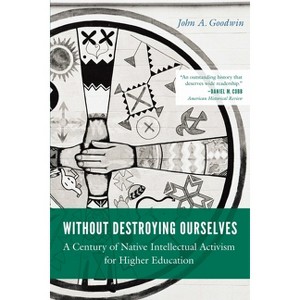
Without Destroying Ourselves - (Indigenous Education) by  John A Goodwin (Paperback) - 1 of 1

Without Destroying Ourselves - (Indigenous Education) by John A Goodwin (Paperback)

$28.49Save $1.51 (5% off)

In Stock

Free & easy returns
Free & easy returns
Return this item by mail or in store within 90 days for a full refund.
Eligible for registries and wish lists
Save 5% every day
With Target Circle™ Card (restrictions apply)

About this item

Highlights

  • Without Destroying Ourselves is an intellectual history of Native activism seeking greater access to and control of higher education in the twentieth century.
  • About the Author: John A. Goodwin teaches U.S. history at BASIS Phoenix in Arizona.
  • 268 Pages
  • Social Science, Native American Studies
  • Series Name: Indigenous Education

Description


About the Book


Without Destroying Ourselves is an intellectual history of Native activism seeking greater access to and control of higher education in the twentieth century.


Book Synopsis


Without Destroying Ourselves is an intellectual history of Native activism seeking greater access to and control of higher education in the twentieth century. John A. Goodwin traces themes of Henry Roe Cloud's (Ho-Chunk) vision for Native intellectual leadership and empowerment in the early 1900s to the later missions of tribal colleges and universities (TCUs) and education-based self-determination movements of the 1960s onward.

Vital to Cloud's work was the idea of how to build from Native identity and adapt without destroying that identity. As the central themes of the movement for Native control in higher education developed over the course of several decades, a variety of Native activists carried Cloud's vision forward. Goodwin explores how Elizabeth Bender Cloud (Ojibwe), D'Arcy McNickle (Salish Kootenai), Jack Forbes (Powhatan-Renapé, Delaware Lenape), and others built on and contributed to this common thread of Native intellectual activism.

Goodwin demonstrates that Native activism for self-determination was never snuffed out by the swing of the federal government's pendulum away from tribal governance and toward termination. Moreover, efforts for Native control in education remained a vital aspect of that activism. Without Destroying Ourselves documents this period through the full accreditation of TCUs in the late 1970s and reinforces TCUs' continuing relevance in confronting the unique needs and challenges of Native communities today.


Review Quotes


"Without Destroying Ourselves makes a significant contribution to the historiographies of American education, American Indian education, and Native American studies. This book would also benefit Native and non-Native educators who work with Indigenous students at any level."--Miya Nadia Tom, New Mexico Historical Review


"Without Destroying Ourselves provides readers with a well-written and thoroughly researched exploration of how Indigenous people in the United States have negotiated settler educational institutions to advance goals of their own making over the course of the twentieth century. . . . An outstanding history that deserves wide readership."--Daniel M. Cobb, American Historical Review

"Without Destroying Oursevles is an exceptional addition to the Indigenous Education Series alongside other works on American Indian experiences in settler colonial education."--Teagan Dreyer, South Dakota History

"Goodwin's monograph goes above and beyond simple institutional histories of tribal colleges and universities by offering historical and intellectual contexts that led to their founding, growth, and development. His work gives attention and primacy to Native intellectual voices of the early and middle twentieth century by focusing on individuals whose names and work we are familiar with, but not perhaps in the context of higher education. Finally, Goodwin brings renewed attention to the intellectual activism that went alongside the Red Power Movement of the 1960s."--Majel Boxer, Journal of Arizona History

"Goodwin's sympathetic and insightful history underscores the importance of tribal colleges and universities as intellectual spaces that are educating, decolonizing, and sustaining the tribal communities they serve. This book fills a gaping void in American Indian historiography and will undoubtedly transform how scholars think about Indian education."--Bradley Shreve, editor of Tribal College Journal of American Indian Higher Education

"In the face of white colonialism, Native American leaders have long had to wrestle with the timeless question: how can we change without destroying ourselves? As John A. Goodwin demonstrates in this deeply researched and thoughtful study, answering this question has always been at the heart of Native intellectuals' efforts to create a model of higher education both by and for Indians. To understand the multiple struggles they encountered in this journey--a journey in which the issues of power and purpose were central--this study is must-reading."--David Wallace Adams, author of Education for Extinction: American Indians and the Boarding School Experience, 1875-1928

"This thorough exploration of the intellectual foundation upon which the tribal colleges and universities have been created would be appropriate assigned reading for courses on the history of higher education, Indigenous education, American history, and Indigenous studies."--Jarita Greyeyes, American Indian Quarterly


About the Author


John A. Goodwin teaches U.S. history at BASIS Phoenix in Arizona.
Dimensions (Overall): 9.0 Inches (H) x 6.0 Inches (W) x .61 Inches (D)
Weight: .8 Pounds
Suggested Age: 22 Years and Up
Number of Pages: 268
Genre: Social Science
Sub-Genre: Native American Studies
Series Title: Indigenous Education
Publisher: University of Nebraska Press
Format: Paperback
Author: John A Goodwin
Language: English
Street Date: January 1, 2026
TCIN: 1011430044
UPC: 9781496244994
Item Number (DPCI): 247-29-8466
Origin: Made in the USA or Imported
If the item details aren’t accurate or complete, we want to know about it.

Shipping details

Estimated ship dimensions: 0.61 inches length x 6 inches width x 9 inches height
Estimated ship weight: 0.8 pounds
We regret that this item cannot be shipped to PO Boxes.
This item cannot be shipped to the following locations: American Samoa (see also separate entry under AS), Guam (see also separate entry under GU), Northern Mariana Islands, Puerto Rico (see also separate entry under PR), United States Minor Outlying Islands, Virgin Islands, U.S., APO/FPO, Alaska, Hawaii

Return details

This item can be returned to any Target store or Target.com.
This item must be returned within 90 days of the date it was purchased in store, delivered to the guest, delivered by a Shipt shopper, or picked up by the guest.
See the return policy for complete information.

Additional product information and recommendations
Discover more options

Skip to next section

Best-selling All Book Genres

Skip to next section

Get top deals, latest trends, and more.