Align the punch over the marked spot, then strike the tool’s end with a mallet or other hard object to cut the hole. Many manual punches include a chip-removal slot to clear waste as you work.
They’re commonly used for belt adjustments, watch bands, straps, bags, leathercraft, DIY projects and repairs, and other leather or fabric work such as modifying clothing or accessories.
Listings typically show punches made from high-carbon steel, heat-treated/hardened (45#) steel, stainless steel, or other steel constructions, and they’re commonly described as durable or wear-resistant.
Descriptions list leather plus similar materials such as rubber, plastic and soft plastics, canvas, vinyl and clothing. Several tools also note they can cut through multiple fabric layers.
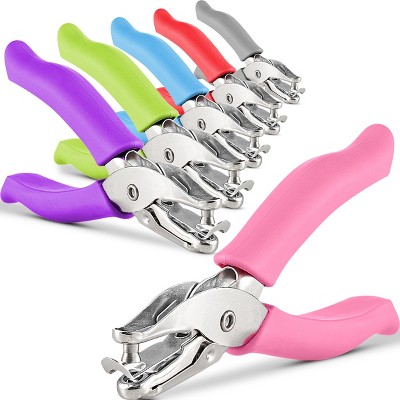
Common designs include single-piece manual punches that are tapped with a mallet and revolving (rotary-head) punches that let you select multiple hole sizes from a rotating head.
Dimensions vary by model: overall lengths range from about 0.75 inches up to 9 inches. Listed weights run from roughly 0.32 ounces up to about 12 ounces, depending on the tool.