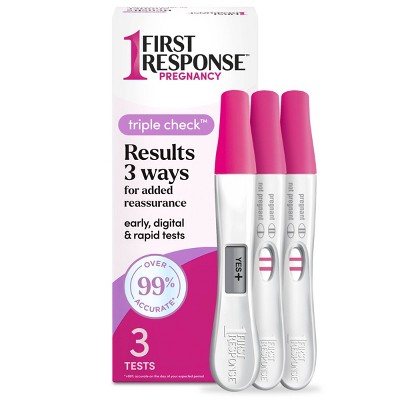
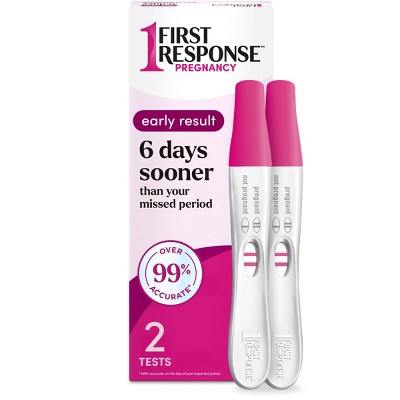
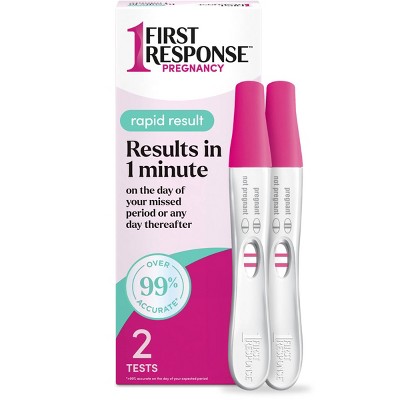
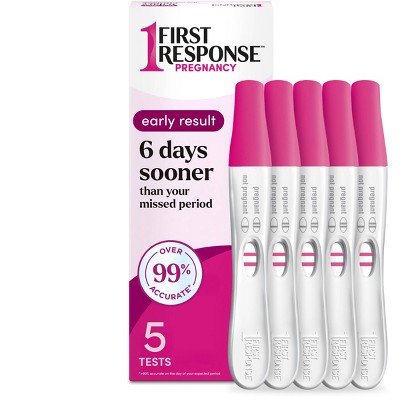
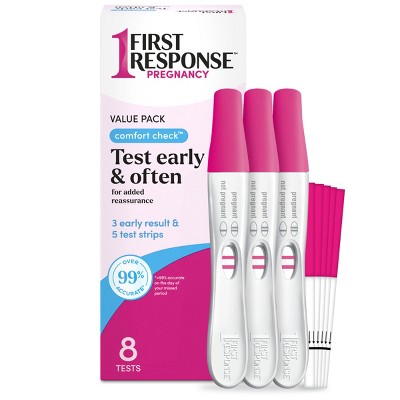
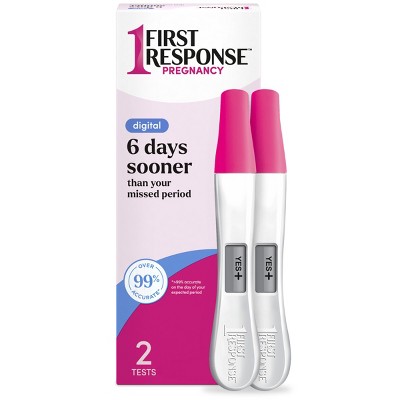
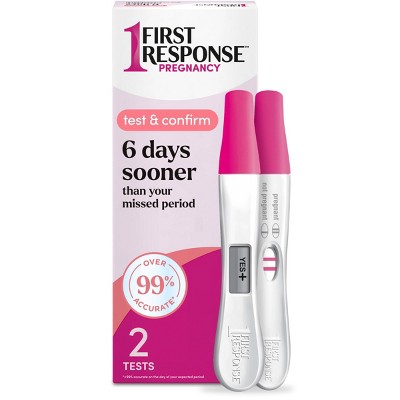
First Response tests state over 99% accuracy at detecting typical pregnancy hormone levels from the day of the expected (missed) period.
According to the instructions, two pink lines indicate pregnancy and a single line indicates not pregnant. A faint second line is still considered a positive (pregnant) result.
Digital First Response stick tests include a battery-powered screen; some packaging notes the battery type. Most stick and strip formats use color indicator lines and do not require a battery.
First Response advertises detection as early as 6 days before a missed period. Laboratory figures cited show detection rising from about 60–76% at 5 days before, to about 86% at 4 days, about 96% at 3 days, and greater than 99% by 2 days before, 1 day before, and on the expected day.
Most stick and strip tests use color indicator lines; digital stick tests show a clear digital readout (for example YES/NO). Some tests also include a separate indicator to show the test is working or ready.
The range includes Early Result and Rapid Result stick tests, pregnancy test strips, disposable collection-cup tests (e.g., EasyCup), and digital stick tests with a digital readout.
Common pack sizes include 2-, 3-, 5-, and 8-count packages. Some kits also combine multiple test types (for example mixes of Early Result sticks, digital tests, Rapid Result sticks, or strips).
Published lab figures report detection around 60–76% at 5 days before the expected period, about 86% at 4 days, 96% at 3 days, and greater than 99% by 2 days before, 1 day before, and on the expected day.