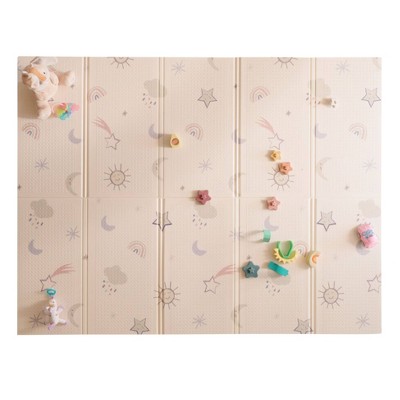
Foam play mat tiles are commonly made from foam materials such as EVA (ethylene vinyl acetate), polyethylene (PE) foam, or other generic foam types. Exact material varies by set, so check the product description for specifics.
Tile thicknesses commonly cluster around 0.4–0.5 inches (examples include 0.4 in, 0.47 in, and 0.5 in). Exact thickness varies by manufacturer and model.
Age guidance varies by set. Manufacturers list ranges such as newborn/0 months, 6–12 months, 10 months and up, 0–36 months, or 0–5 years, and some indicate suitability for all ages. Check the product’s age recommendation to match your child’s needs.
Many mats include textured or non-slip surfaces and other anti-slip features designed to help keep tiles stable during crawling and play. Feature specifics vary by model.
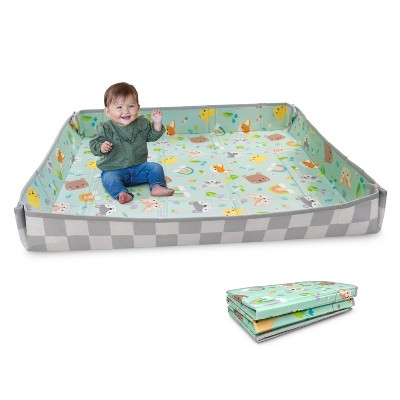
Tiles are typically interlocking for quick assembly and disassembly. Most sets are lightweight, stackable or foldable, and some include a carry case for transport, making them easy to store and move.
Tile counts vary widely by set. Examples include small sets of 6 tiles up through sets with 8, 9, 12, 16, 36, and as many as 48 tiles—roughly a range of 6 to 48 tiles depending on the product.
Most mats use interlocking edges so you can connect tiles and often join multiple sets to expand the play area. Check whether additional sets or replacement tiles are sold separately if you plan to enlarge the mat.