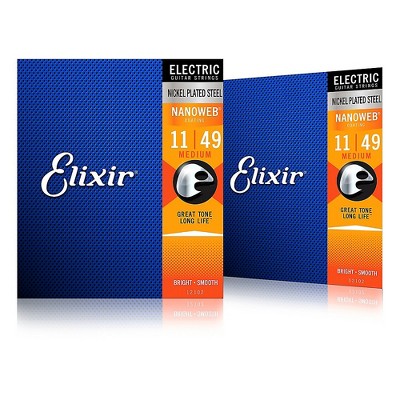
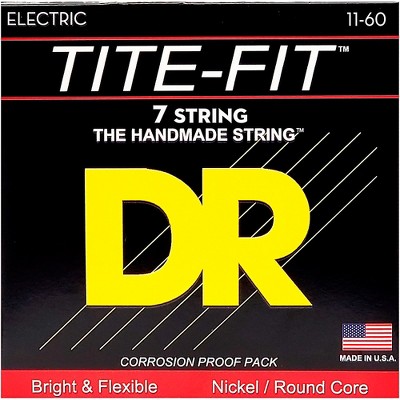
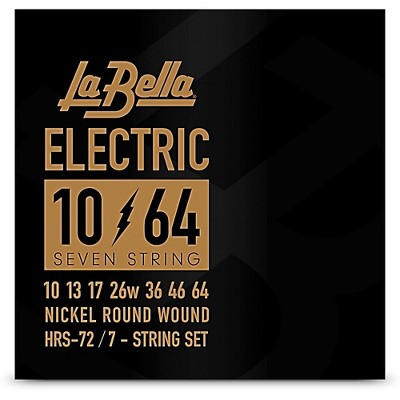
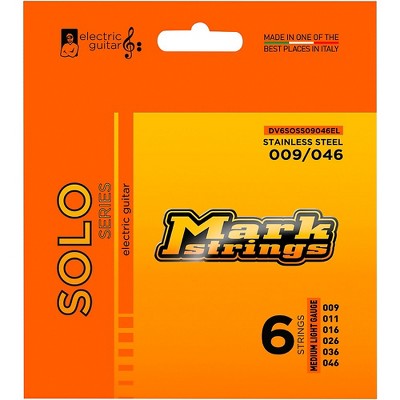
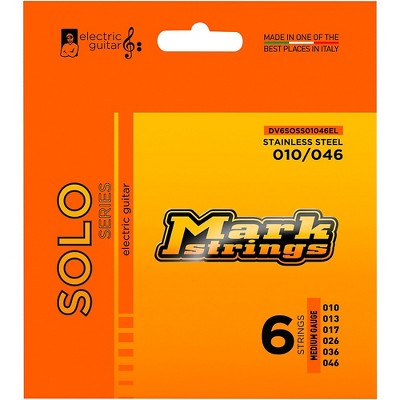
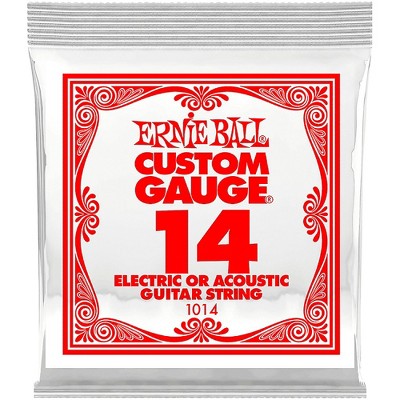
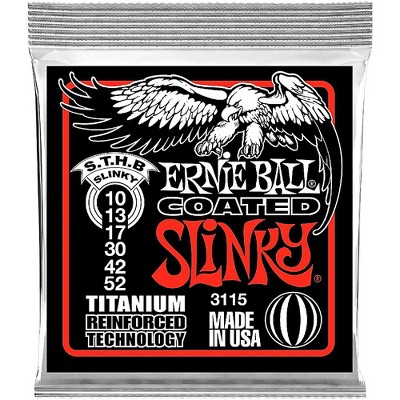
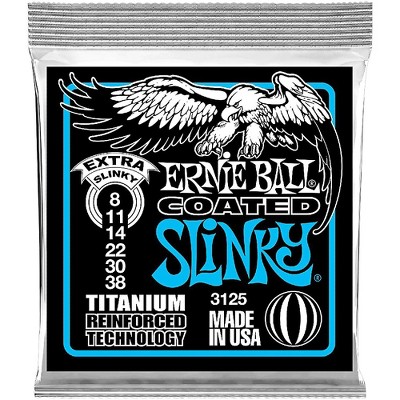
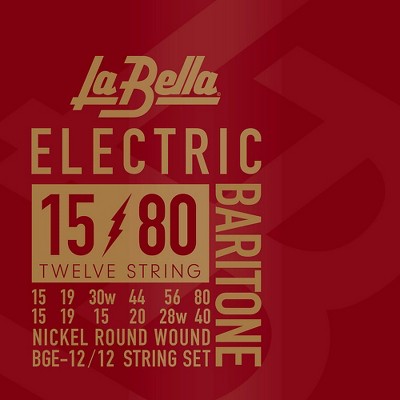
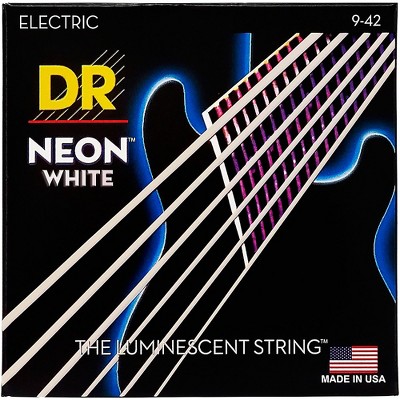
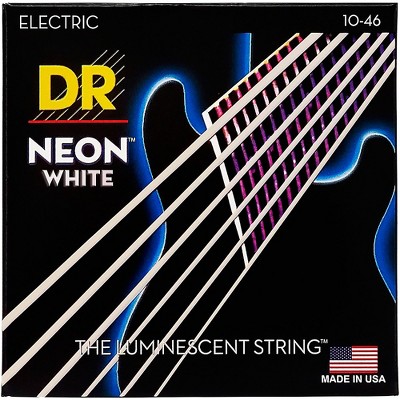
Beginner-friendly electric-string gauges typically range from about .009–.010 on the light side up through .046–.052 for standard light/heavy sets. Some players use heavier sets up to .056 for higher tension, but most beginners start with light (.010) or extra-light (.009–.010) gauges for easier fretting and bending.
Descriptions note two coating approaches: full or thicker coatings that offer strong corrosion and dirt protection, and ultrathin/microscopic coatings that protect while preserving a more natural, uncoated feel. Coated strings generally extend tonal life compared with uncoated sets, with ultrathin coatings aiming to balance longevity and a natural playing feel.
Most electric sets use nickel-plated steel windings over high-carbon steel cores, with plain (unwound) steel for the highest strings. These materials are commonly associated with a bright, crisp tone; wound strings (round or flatwound) add midrange presence and warmth compared with plain steel strings.
Electric strings commonly ship as single sets, paired sets (2-packs), and larger multi-packs such as 10-packs. This lets buyers choose individual sets, small backups, or bulk bundles depending on their needs.
Descriptions cite several features that can help tuning stability: tighter winding or methods that prevent slack in the string wrap, ultrathin coatings that reduce friction at the nut and bridge, and stronger high‑carbon alloys that resist stretching and breakage. Some product descriptions also claim noticeably improved tuning retention, though actual results vary by setup and playing style.
Coated strings—especially those with ultrathin finishes—are described as feeling closer to uncoated strings while offering a slightly smoother, slicker surface. Coatings can reduce finger‑noise and provide a more consistent feel over time compared with uncoated strings, which may feel brighter and more textured when new but wear faster.
Common descriptors include bright or crisp tone, punchy/dynamic presence, balanced clarity across strings, and a pronounced midrange or "crunch" that helps the guitar cut through a mix. Different materials and windings emphasize these qualities to varying degrees.