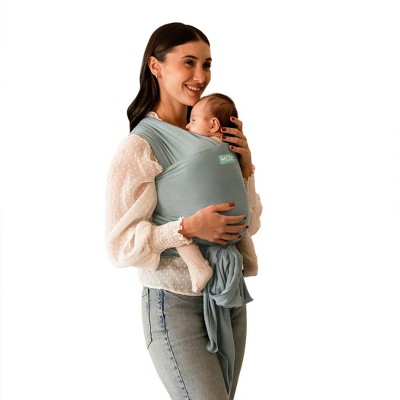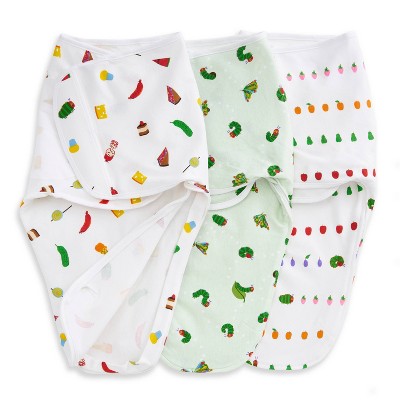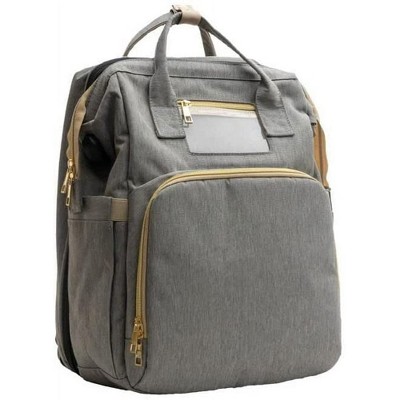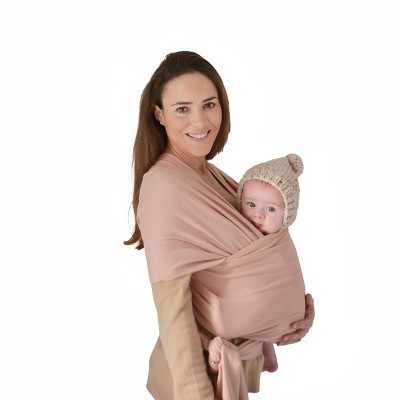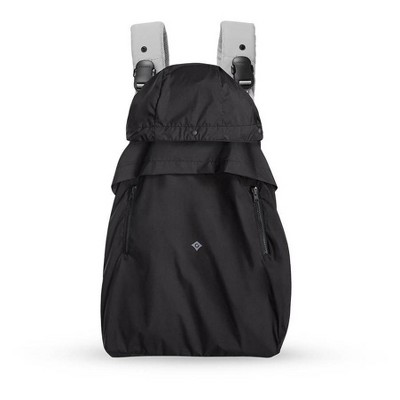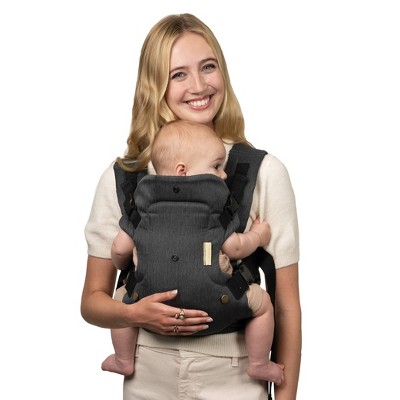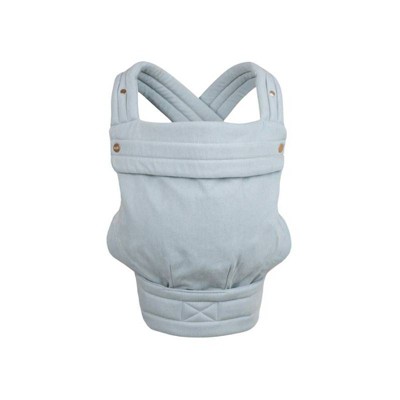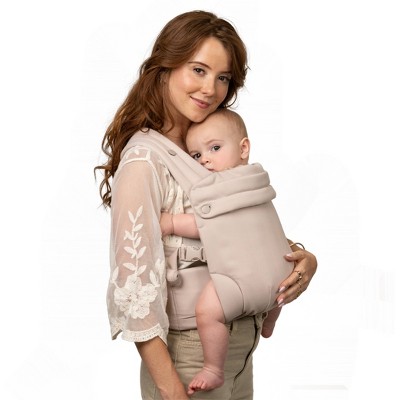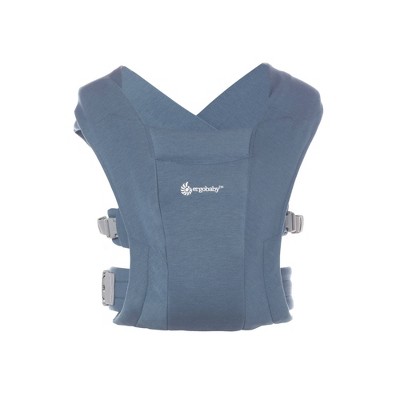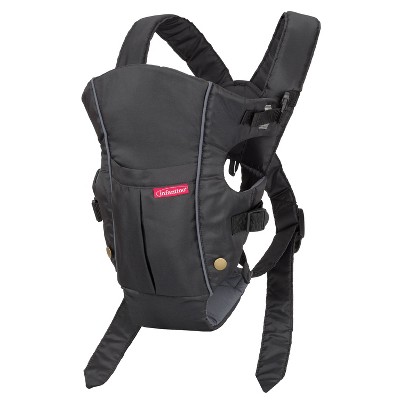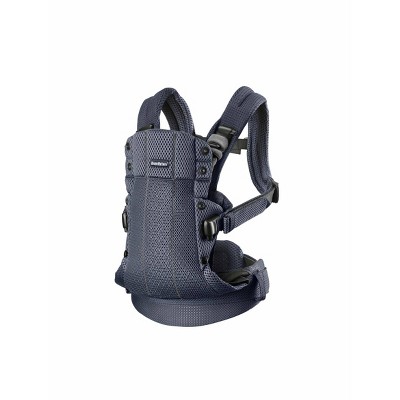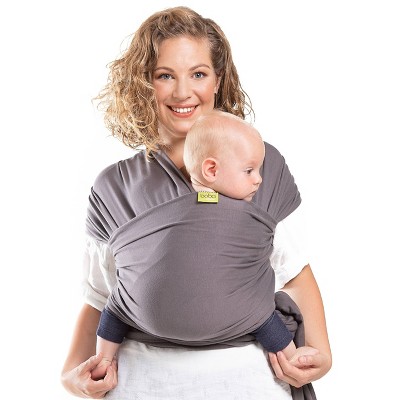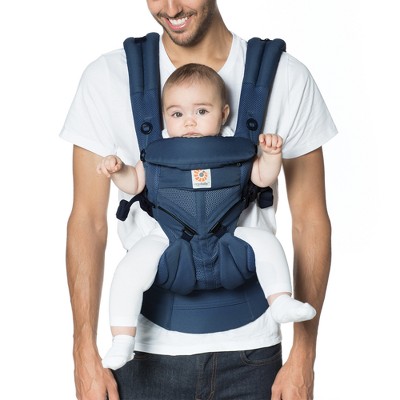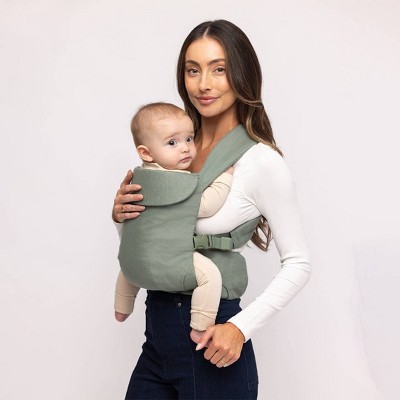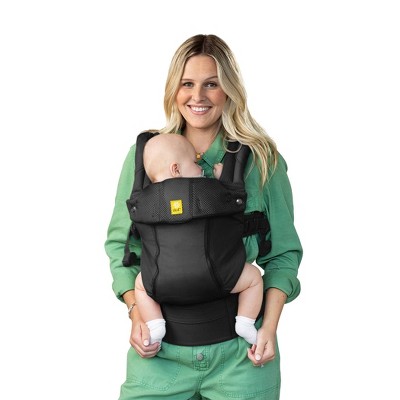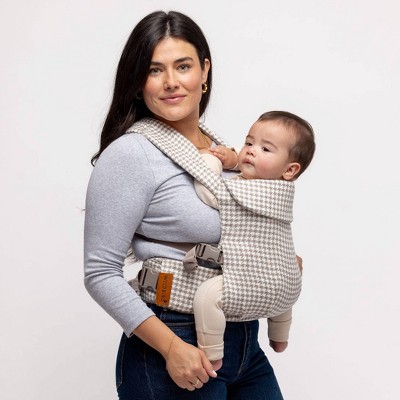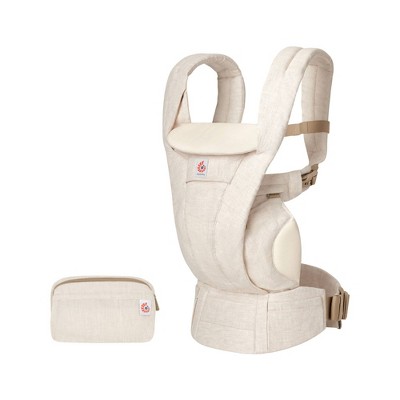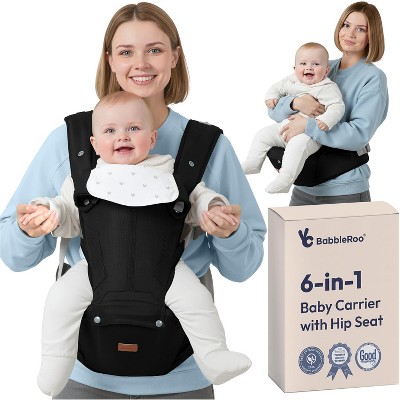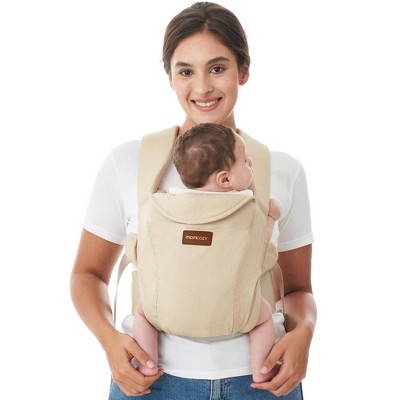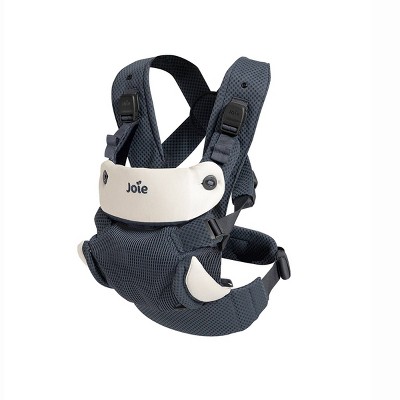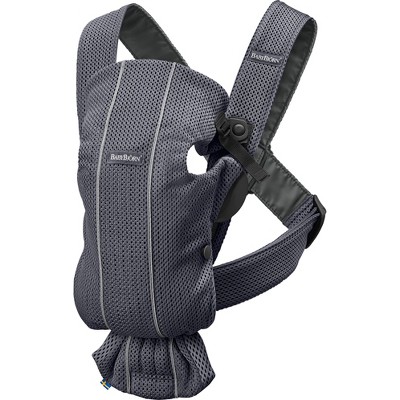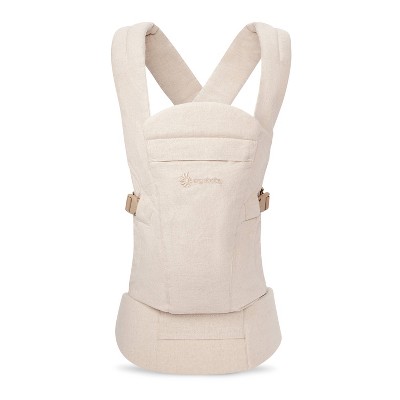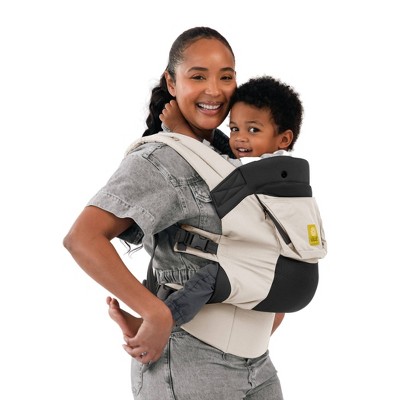
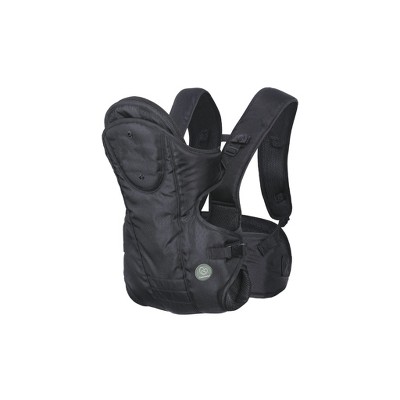
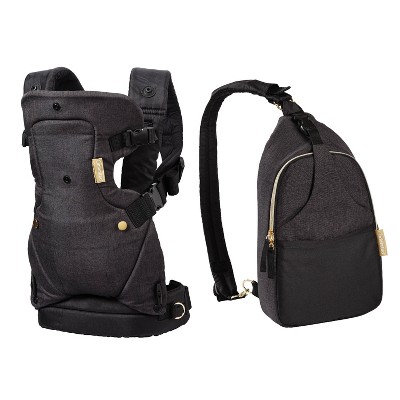
Most infant shoulder carriers list minimum weights around 7–10 lb and maximum capacities commonly between 26–35 lb. Exact limits vary by model, so check the manufacturer's stated minimum and maximum weight for any carrier.
Common materials include cotton and spandex blends and polyester for outer fabrics, with internal components such as polyurethane foam or expanded polyethylene foam for padding and support. Materials vary by model.
Care instructions vary: many carriers are machine washable (often with guidance to air-dry or hang to dry), some recommend spot or wipe cleaning, and others advise not to dry clean. Always follow the care label on your specific carrier.
Suggested age ranges differ by model: many carriers are labeled for newborn to about 18 months, some extend to around 24 months, and a few list coverage up to 36–42 months or '0–3 years.' Because brands use different age and weight guidance, check both the age and weight recommendations for any carrier.
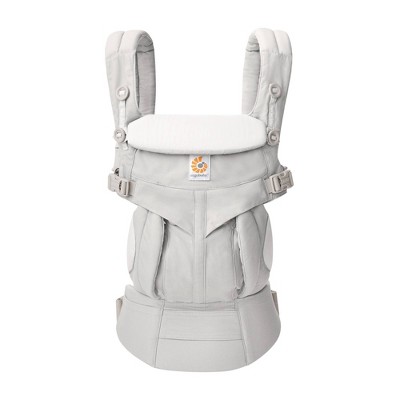
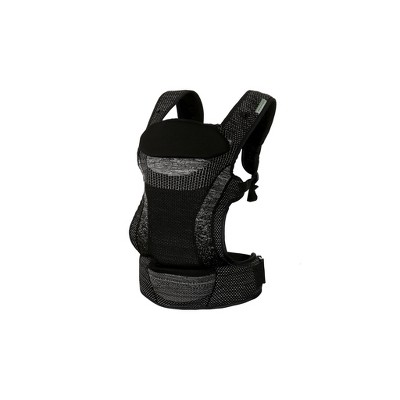
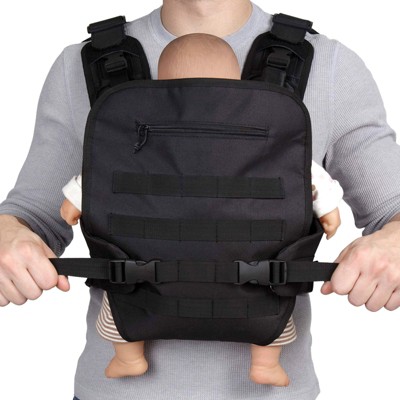
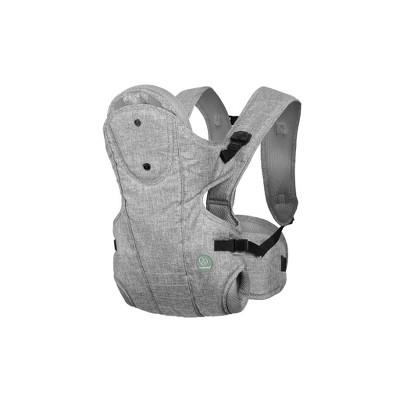
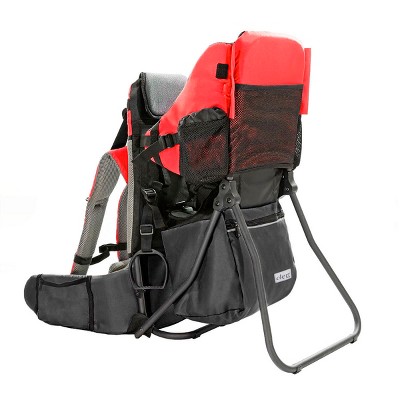
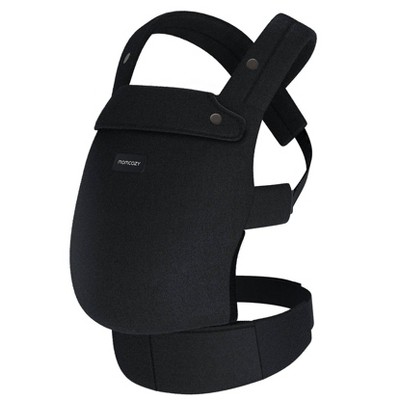
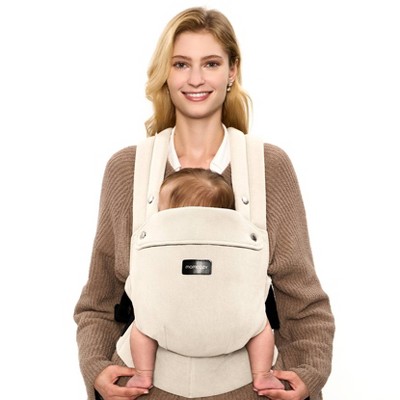
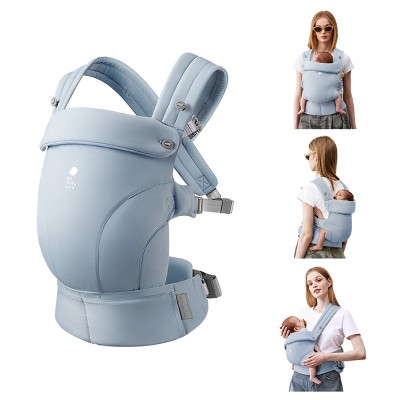
Many carriers support front-facing in (facing-in) and front-facing out (facing-out) positions, plus hip and back carries. Convertible or hybrid models may add reclined/cradle positions and multi-position systems (for example, four- or seven-position options).
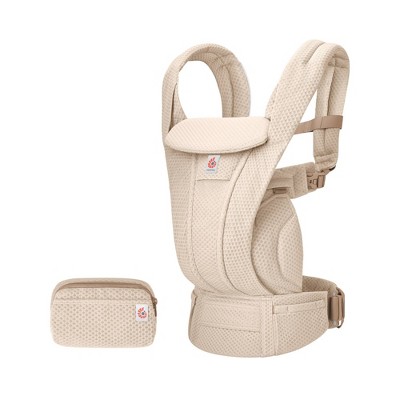
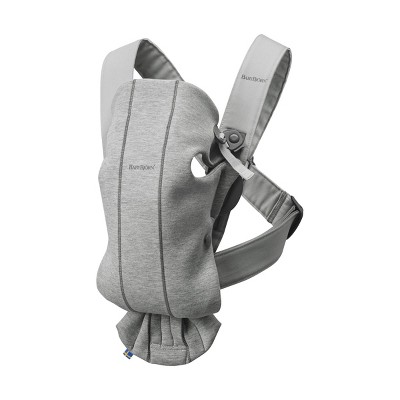
Typical wearer comforts include padded shoulder straps, adjustable harnesses or strap systems, and crisscross or supportive strap layouts that help distribute weight across the shoulders and back.
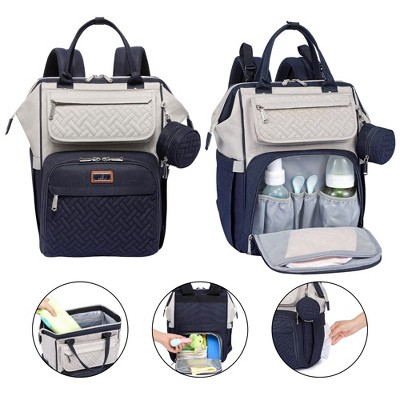
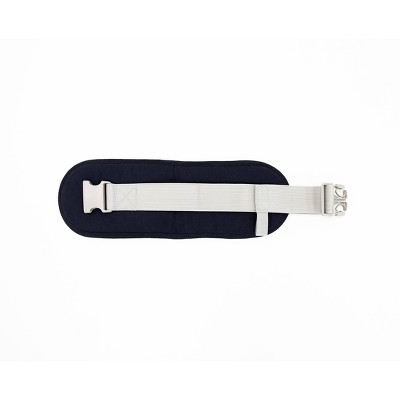
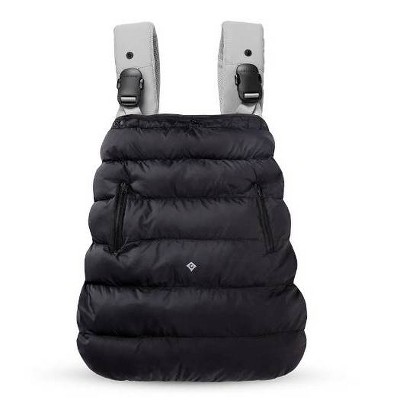
Extras can include infant inserts, removable hoods or privacy covers (some double as blankets or changing pads), storage pockets, and matching carry bags or straps for storage or added convenience.