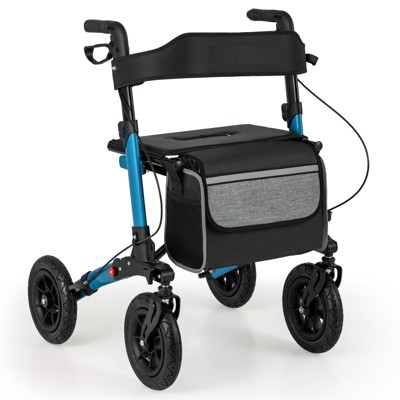
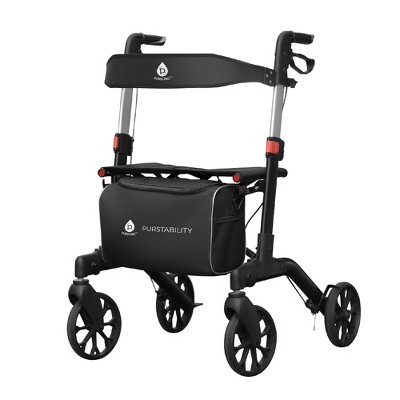
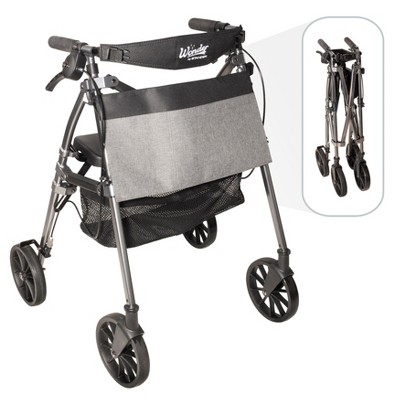
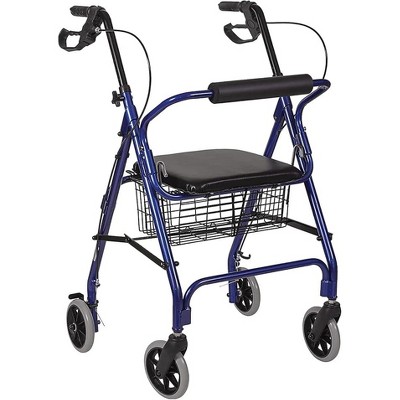
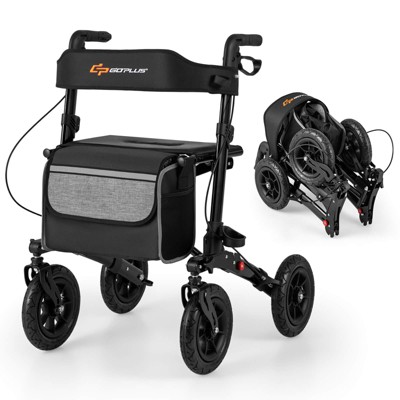
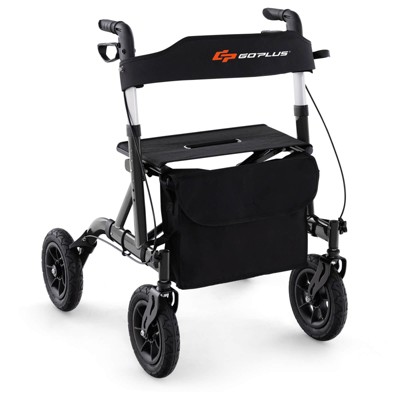
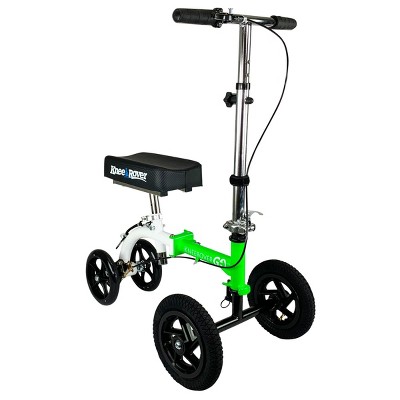
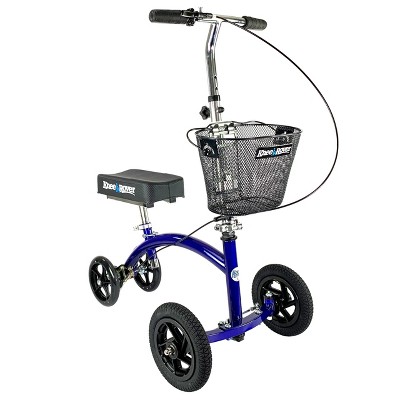
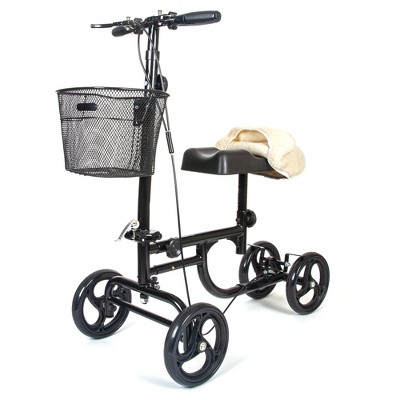
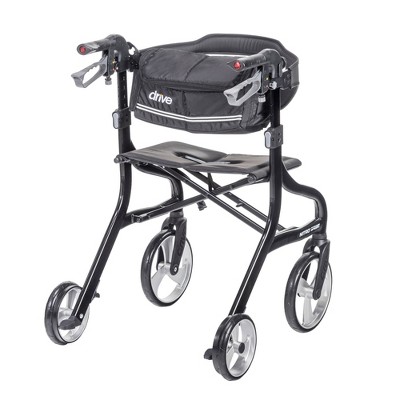
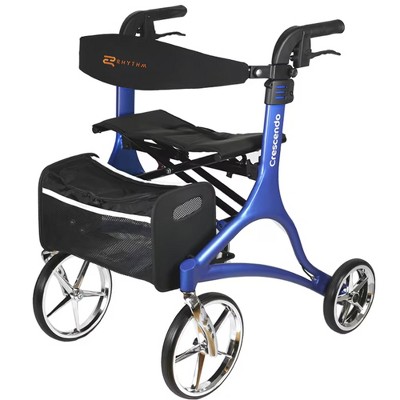
Knee walkers use a few common wheel setups depending on the model and intended terrain. Many use caster or solid rubber wheels around 7.5–8 inches for general indoor and smooth outdoor use. Models meant for rough surfaces often use larger inflatable (pneumatic) all‑terrain tires—examples include a 12" front tire and a 10" rear tire—to handle grass, gravel, and bumpy asphalt.
Most knee walkers offer adjustable handlebars and knee supports to fit different users. Example handlebar height ranges reported are about 33"–43" or 33"–40", and knee‑pad heights can range from roughly 15" up to about 23.6", depending on the model. Verify the specific adjustment ranges on the model you’re considering.
Most knee walkers are four‑wheeled for stable support, with steerable front wheels and a cushioned knee platform. This configuration offers stability plus front‑wheel steering for maneuvering; specific steering designs can vary by model.
Knee walker weights vary by model and features. Reported weights range from about 9.5 pounds up to around 23.3 pounds, with common examples including roughly 9.5 lb, 20 lb, 22 lb and 23.3 lb.
Assembly requirements vary by model. Some listings state “Adult assembly required, no tools needed” or “tool‑free” assembly, while others note that tools are provided or that some tools are required. Check the product’s assembly notes for the exact requirements.