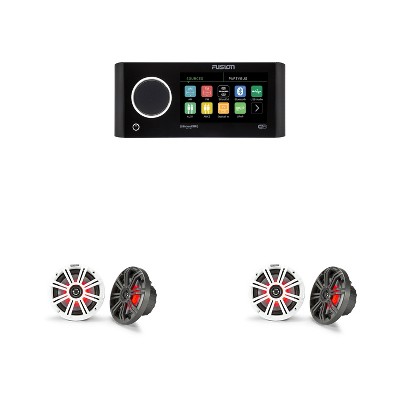
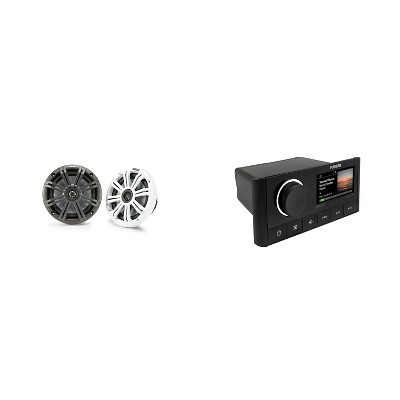
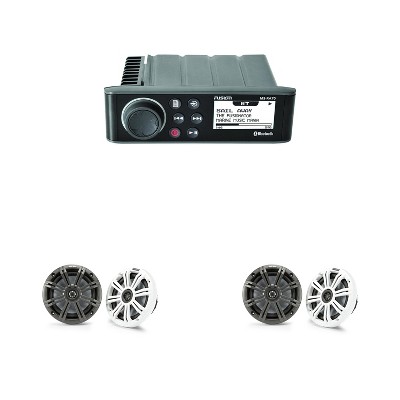
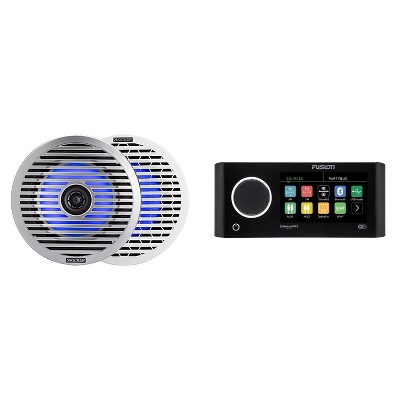
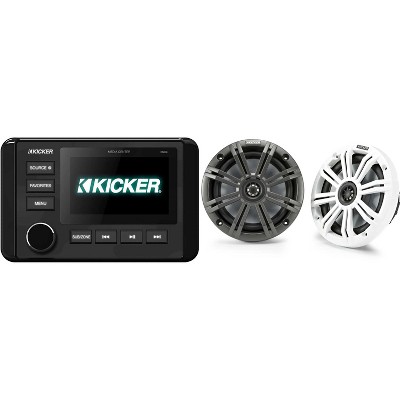
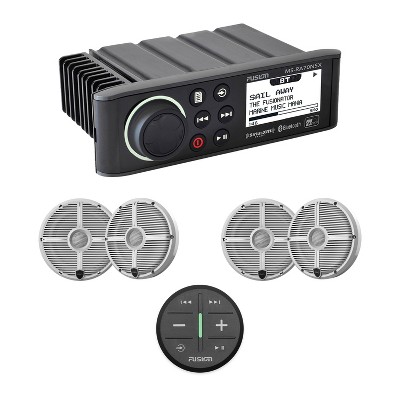
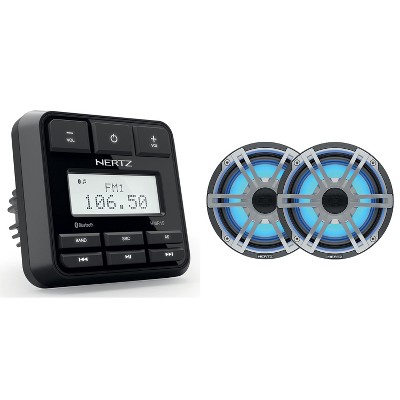
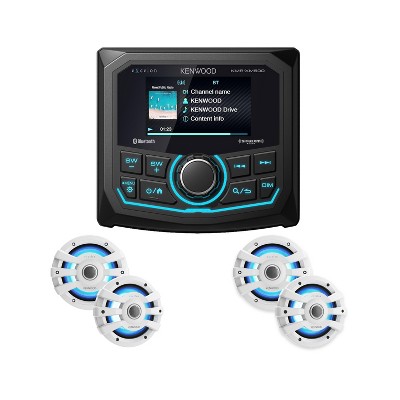
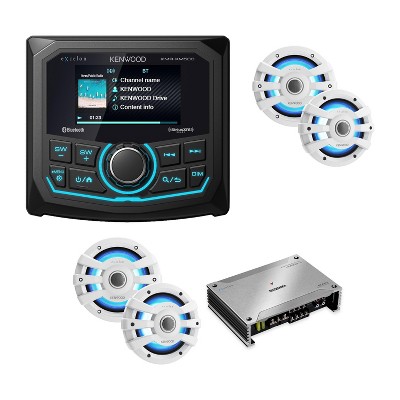
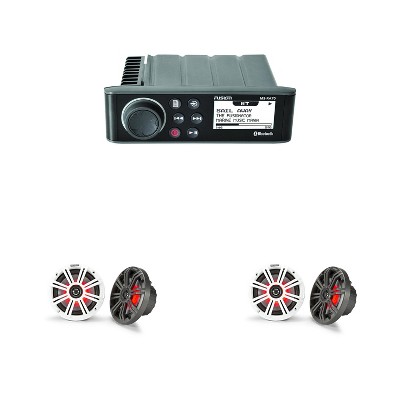
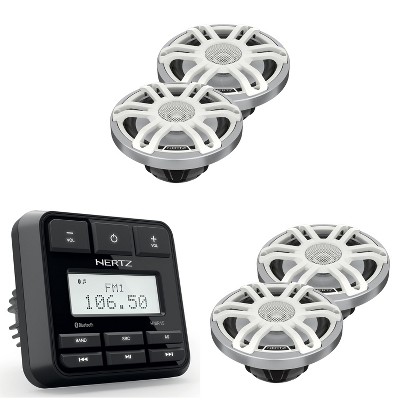
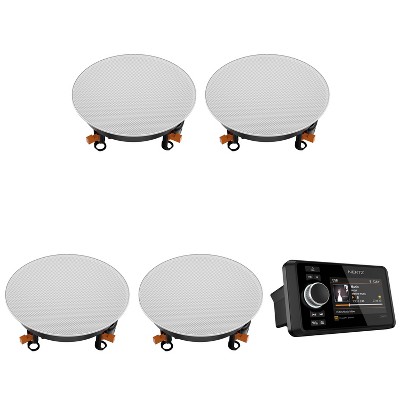
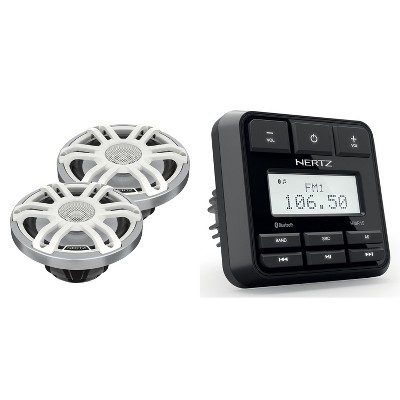
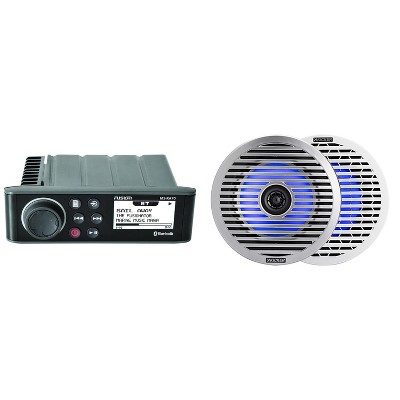
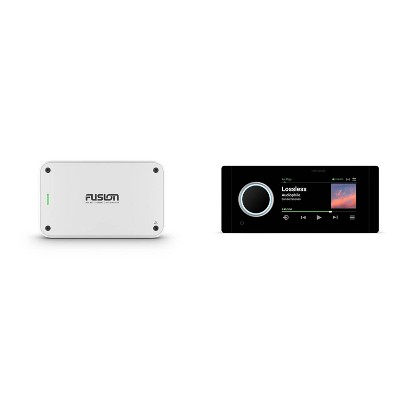
Built-in amplifier power varies by model but commonly falls in the ~18–25 W RMS per channel range. Many marine receivers list outputs such as 4 × 25 W RMS, while others are specified as 4 × 18 W or 4 × 22 W RMS—check each model’s spec sheet for exact per-channel RMS ratings.
Many marine stereos list weatherproof ratings such as IP66 and note salt-fog, UV and vibration testing. Manufacturers commonly apply conformal coatings or other moisture-resistant measures to circuit boards to reduce corrosion and improve durability in marine environments.
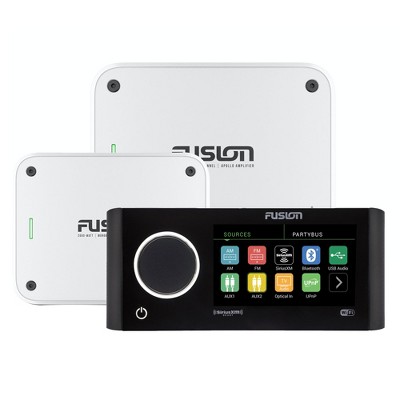
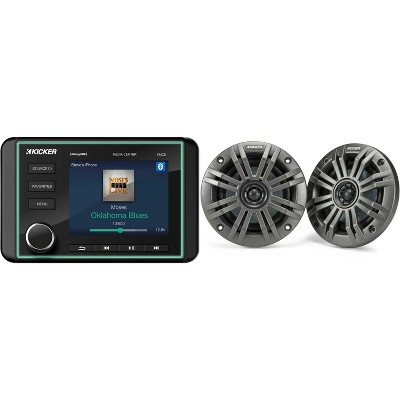
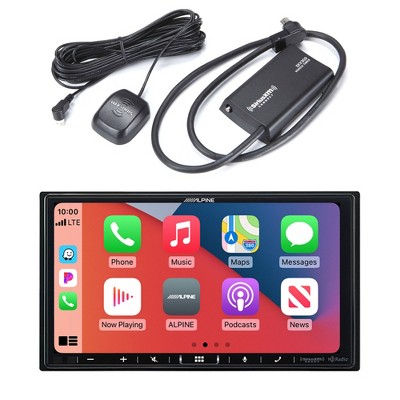
Displays range from small dimmable LCDs (about 2.37–3 inches) and 2-line VA LCDs up to larger anti-glare touchscreens. Controls commonly include large backlit buttons, rotary knobs, and detachable face panels, and many units offer dimmable displays for night use.
Preamp (line) output levels shown include roughly 1.5 V, 3.5 V and 4.0 V depending on the model. Many units provide multiple pre-outs and selectable outputs for subwoofers or additional zones (for example Zone 2/Zone 4 or a dedicated subwoofer output).
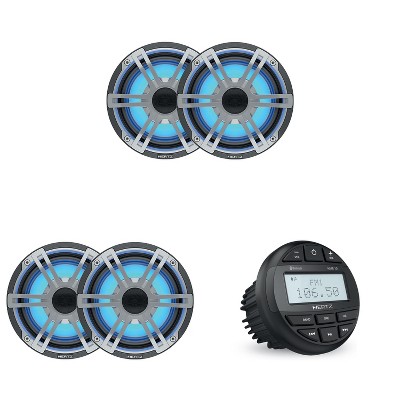
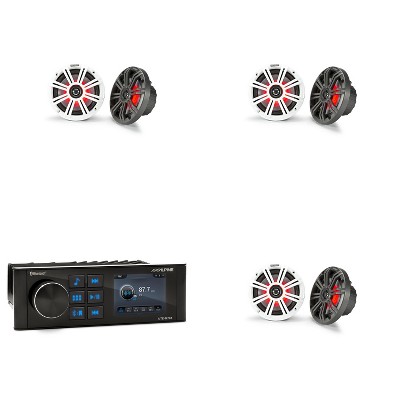
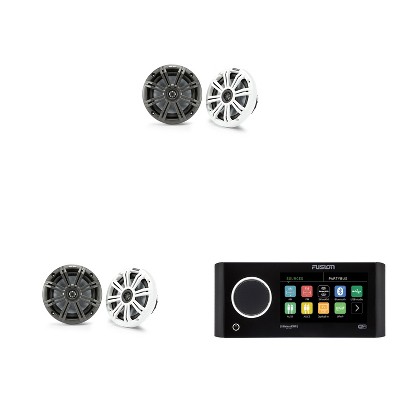
Marine stereo packages commonly include 6.5" marine-rated speakers and compact marine subwoofers. RMS power ratings in the results range from about 30 W to 100 W (with peak ratings up to ~300 W), sensitivity values around 87–92 dB, and frequency responses roughly from 40 Hz to ~22 kHz. Some speakers carry IP65 or similar water/dust resistance ratings.
Marine stereos are available as single-DIN shallow-chassis receivers (heights around 2.06 inches) and larger double-DIN or touchscreen units (heights around 3.9 inches). Several models advertise a short or shallow rear chassis to simplify installation in tight dash spaces.