midi keyboard controller
Guests also ask:
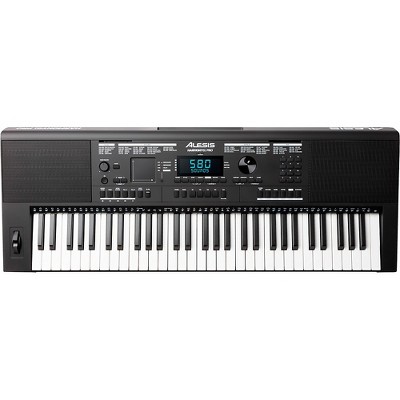
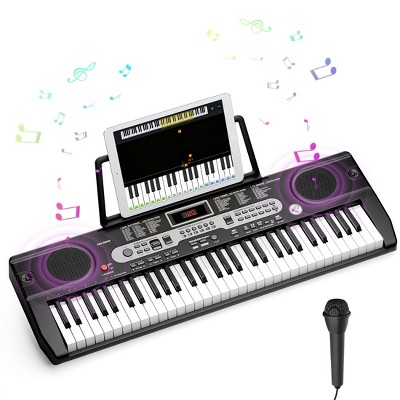
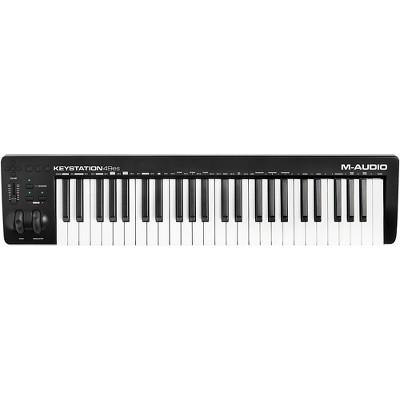
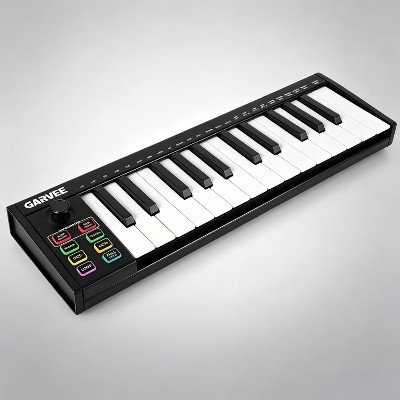
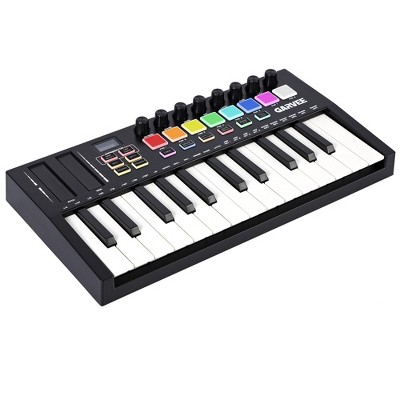
MIDI controllers commonly come in compact to full-size layouts: 25-key (very portable), 37- and 49-key (mid-size), and 61-key (five-octave/full-size). Many manufacturers offer those intermediate options to match portability and range needs.
Many controllers offer deep DAW integration with auto-mapping or pre-mapped templates for popular DAWs, plus transport and mixer controls. Several models also ship with bundled DAW-lite versions or collections of virtual instruments to help you get started right away.
Portability ranges from very compact 25-key controllers weighing just over 2 pounds to larger 49–61-key boards around 15 pounds. Smaller units have a compact desktop footprint for mobile setups; full-size controllers are larger and heavier for studio use.
Both semi-weighted and synth-action keybeds are common. Semi-weighted keybeds (sometimes waterfall-style) provide more resistance and a piano-like feel, while synth-action keybeds are lighter and often preferred on production-focused keyboards; some models also offer aftertouch.
Several controllers include built-in arpeggiators plus scale and chord modes or detectors. Common tools are multi-type arpeggiators, Smart Scale/Scale Mode options, and chord-mapping features that keep performances in-key or let you trigger complex voicings from single notes.