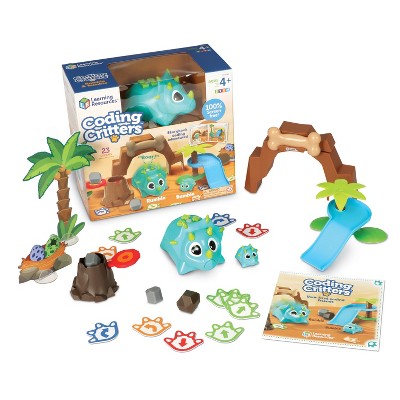
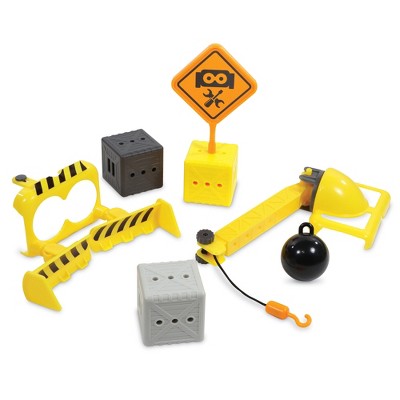
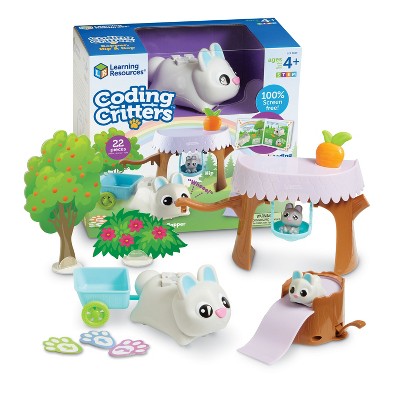
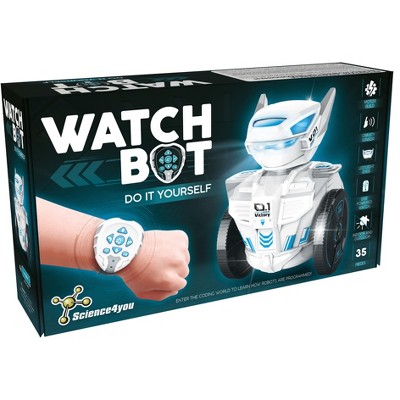
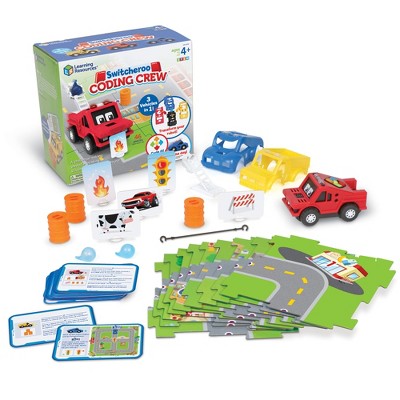
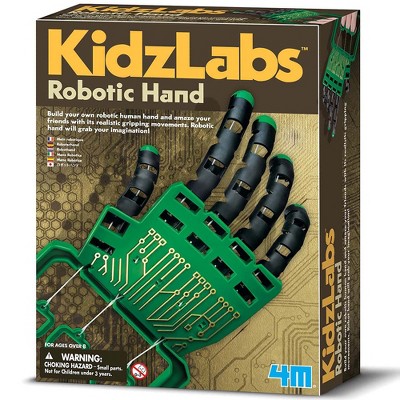
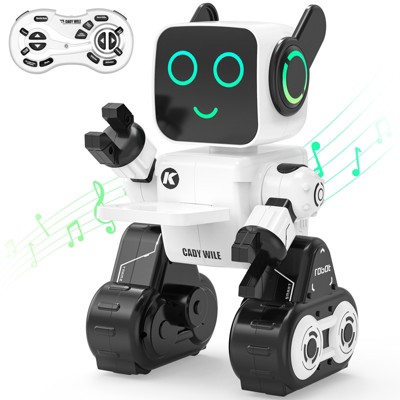
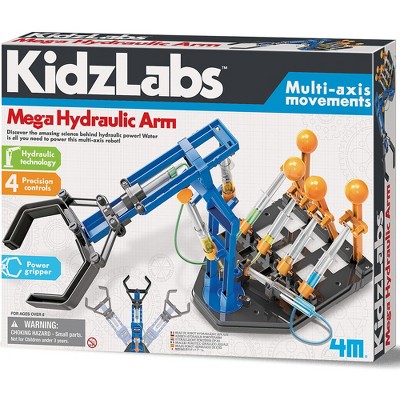
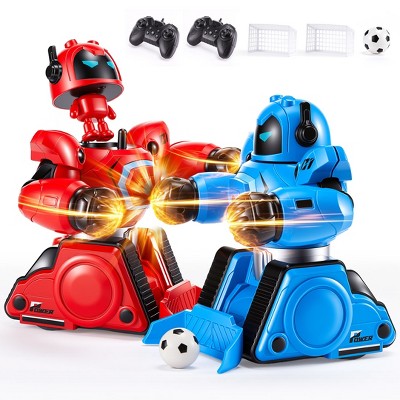
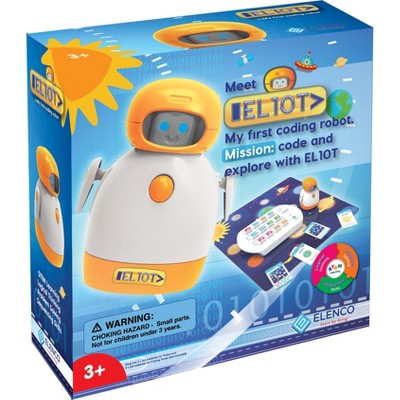
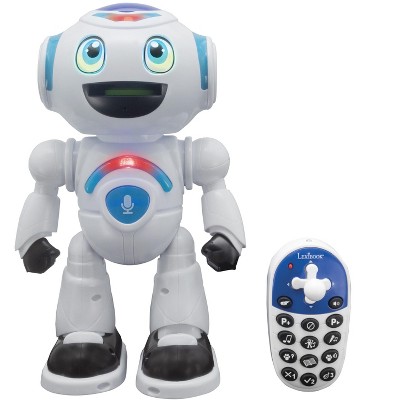
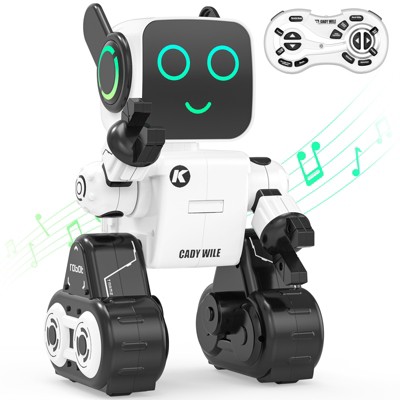
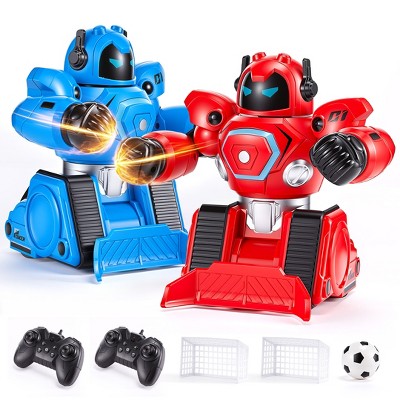
Many robot toys include articulated parts that enable posing and dynamic play: posable limbs and jointed arms (examples list 6 or 16 points of articulation), tails, opening mouths, and wings. These features support varied play poses and mechanical movement.
Transforms are handled by step-based mechanisms. Some smaller figures convert in a short, tool-free sequence (for example, a six-step flip-and-rotate process), while larger transforming figures may require longer multi-step sequences (one example lists a 30-step conversion to an alternate vehicle mode).
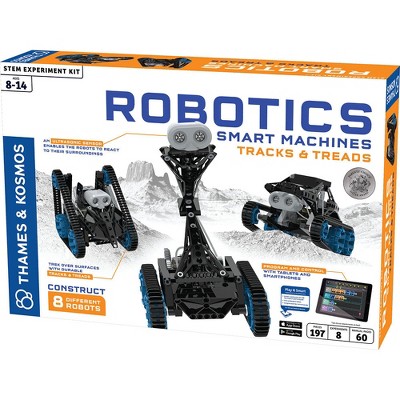
These toys display several motion types: forward/back movement and turning (including backup j-turns), multi-directional driving (left/right/forward), spinning (seen in some RC spiders), crawling and wall-climbing (wall-crawlers), articulated limb movement or walking-like motion on transforming figures, and mechanical conversions between modes.
The listings target a range of child ages from about 3 years up through 9 years and older. Labels include a 3–9 years range and single “X years and up” ages such as 4, 5, 6, 8 and 9 years.