Target New ArrivalsFourth of JulyGift Ideas for DadClothing, Shoes & AccessoriesHome & DecorKitchen & DiningOutdoor Living & GardenGroceryHousehold EssentialsBabyBeautyPersonal CareSports & OutdoorsHealthWellnessLuggageSchool & Office SuppliesToys & GamesElectronicsVideo GamesMovies, Music & BooksParty SuppliesGift IdeasGift CardsPetsUlta Beauty at TargetShop by CommunityTarget OpticalDealsClearanceNew ArrivalsGift Ideas for DadBack to SchoolCollegeTop DealsTarget Circle DealsWeekly AdShop Order PickupShop Same Day DeliveryRegistryRedCardTarget CircleFind Stores
Computer Vision Using Deep Learning - by  Vaibhav Verdhan (Paperback) - 1 of 1

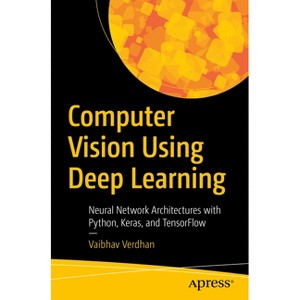
Computer Vision Using Deep Learning - by Vaibhav Verdhan (Paperback)

$40.24Save $14.75 (27% off)See 1 deal for this item

In Stock

Free & easy returns
Free & easy returns
Return this item by mail or in store within 90 days for a full refund.
Eligible for registries and wish lists

About this item

Highlights

  • Organizations spend huge resources in developing software that can perform the way a human does.
  • About the Author: Vaibhav Verdhan is a seasoned data science professional with rich experience spanning across geographies and retail, telecom, manufacturing, health-care and utilities domain.
  • 308 Pages
  • Computers + Internet, Artificial Intelligence

Description


Book Synopsis


Organizations spend huge resources in developing software that can perform the way a human does. Image classification, object detection and tracking, pose estimation, facial recognition, and sentiment estimation all play a major role in solving computer vision problems.

This book will bring into focus these and other deep learning architectures and techniques to help you create solutions using Keras and the TensorFlow library. You'll also review mutliple neural network architectures, including LeNet, AlexNet, VGG, Inception, R-CNN, Fast R-CNN, Faster R-CNN, Mask R-CNN, YOLO, and SqueezeNet and see how they work alongside Python code via best practices, tips, tricks, shortcuts, and pitfalls. All code snippets will be broken down and discussed thoroughly so you can implement the same principles in your respective environments.

Computer Vision Using Deep Learning offers a comprehensive yet succinct guide that stitches DL and CV together to automate operations, reduce human intervention, increase capability, and cut the costs.

What You'll Learn

  • Examine deep learning code and concepts to apply guiding principals to your own projects
  • Classify and evaluate various architectures to better understand your options in various use cases
  • Go behind the scenes of basic deep learning functions to find out how they work

Who This Book Is For

Professional practitioners working in the fields of software engineering and data science. A working knowledge of Python is strongly recommended. Students and innovators working on advanced degrees in areas related to computer vision and Deep Learning.


From the Back Cover


Organizations spend huge resources in developing software that can perform the way a human does. Image classification, object detection and tracking, pose estimation, facial recognition, and sentiment estimation all play a major role in solving computer vision problems.

This book will bring into focus these and other deep learning architectures and techniques to help you create solutions using Keras and the TensorFlow library. You'll also review mutliple neural network architectures, including LeNet, AlexNet, VGG, Inception, R-CNN, Fast R-CNN, Faster R-CNN, Mask R-CNN, YOLO, and SqueezeNet and see how they work alongside Python code via best practices, tips, tricks, shortcuts, and pitfalls. All code snippets will be broken down and discussed thoroughly so you can implement the same principles in your respective environments.

Computer Vision Using Deep Learning offers a comprehensive yet succinct guide that stitches DL and CV together to automate operations, reduce human intervention, increase capability, and cut the costs.

You will:

  • Examine deep learning code and concepts to apply guiding principles to your own projects
  • Classify and evaluate various architectures to better understand your options in various use cases
  • Go behind the scenes of basic deep learning functions to find out how they work


About the Author


Vaibhav Verdhan is a seasoned data science professional with rich experience spanning across geographies and retail, telecom, manufacturing, health-care and utilities domain. He is a hands-on technical expert and has led multiple engagements in Machine Learning and Artificial Intelligence. He is a leading industry expert, is a regular speaker at conferences and meet-ups and mentors students and professionals. Currently he resides in Ireland and is working as a Principal Data Scientist.

Dimensions (Overall): 9.21 Inches (H) x 6.14 Inches (W) x .69 Inches (D)
Weight: 1.03 Pounds
Suggested Age: 22 Years and Up
Number of Pages: 308
Genre: Computers + Internet
Sub-Genre: Artificial Intelligence
Publisher: Apress
Theme: General
Format: Paperback
Author: Vaibhav Verdhan
Language: English
Street Date: February 15, 2021
TCIN: 1006896089
UPC: 9781484266151
Item Number (DPCI): 247-22-3979
Origin: Made in the USA or Imported
If the item details aren’t accurate or complete, we want to know about it.

Shipping details

Estimated ship dimensions: 0.69 inches length x 6.14 inches width x 9.21 inches height
Estimated ship weight: 1.03 pounds
We regret that this item cannot be shipped to PO Boxes.
This item cannot be shipped to the following locations: American Samoa (see also separate entry under AS), Guam (see also separate entry under GU), Northern Mariana Islands, Puerto Rico (see also separate entry under PR), United States Minor Outlying Islands, Virgin Islands, U.S., APO/FPO, Alaska, Hawaii

Return details

This item can be returned to any Target store or Target.com.
This item must be returned within 90 days of the date it was purchased in store, delivered to the guest, delivered by a Shipt shopper, or picked up by the guest.
See the return policy for complete information.

Q: What programming language knowledge is recommended for readers?

submitted by AI Shopping Assistant - 25 days ago
  • A: A working knowledge of Python is strongly recommended for readers to effectively implement the concepts discussed in the book.

    submitted byAI Shopping Assistant - 25 days ago
    Ai generated

Q: Who is the target audience for this book?

submitted by AI Shopping Assistant - 25 days ago
  • A: The book is aimed at professional practitioners in software engineering and data science, as well as students pursuing advanced degrees.

    submitted byAI Shopping Assistant - 25 days ago
    Ai generated

Q: What practical skills can readers expect to gain?

submitted by AI Shopping Assistant - 25 days ago
  • A: Readers will learn to classify and evaluate neural network architectures and apply deep learning principles to their projects.

    submitted byAI Shopping Assistant - 25 days ago
    Ai generated

Q: What topics are covered in this book on computer vision?

submitted by AI Shopping Assistant - 25 days ago
  • A: The book covers image classification, object detection, pose estimation, facial recognition, and sentiment estimation using deep learning techniques.

    submitted byAI Shopping Assistant - 25 days ago
    Ai generated

Q: What deep learning architectures are discussed in the book?

submitted by AI Shopping Assistant - 25 days ago
  • A: The book reviews architectures like LeNet, AlexNet, VGG, Inception, R-CNN, and YOLO, among others.

    submitted byAI Shopping Assistant - 25 days ago
    Ai generated

Additional product information and recommendations

Discover more options

Frequently bought together

Best-selling Computers & Technology Books

Get top deals, latest trends, and more.

Privacy policy