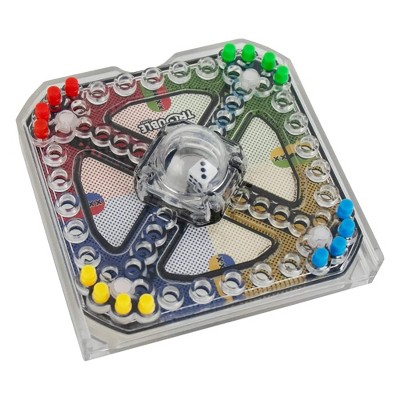
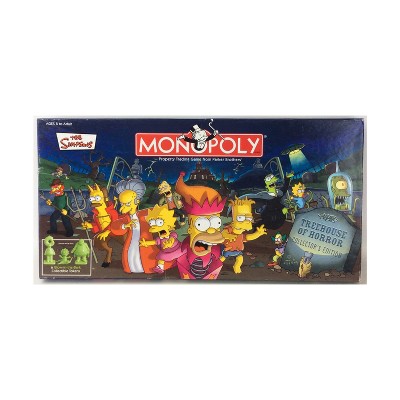
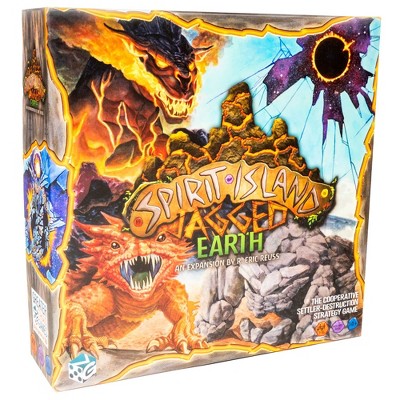
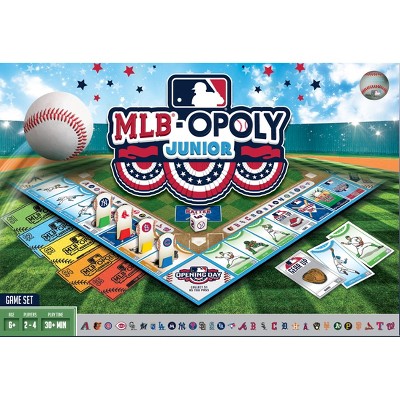
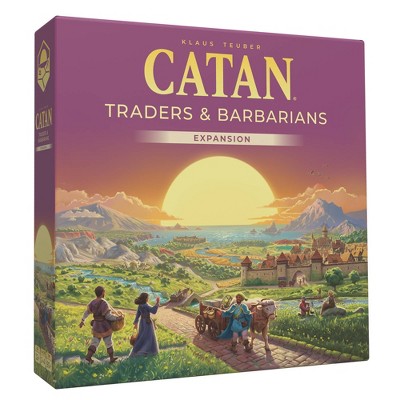
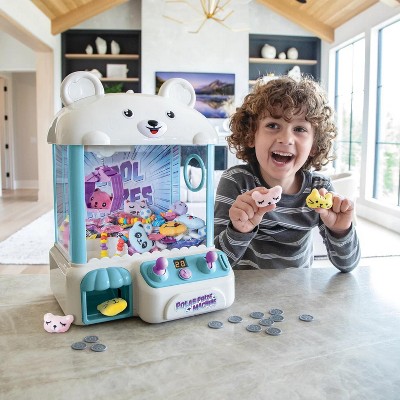
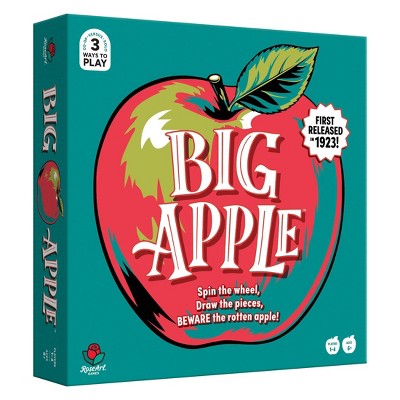
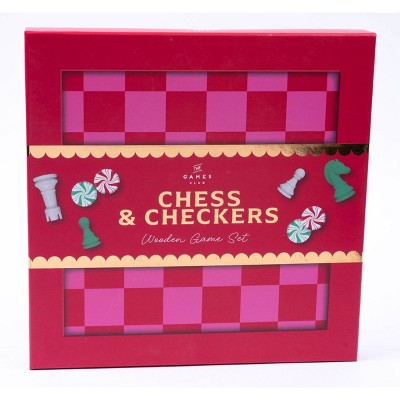
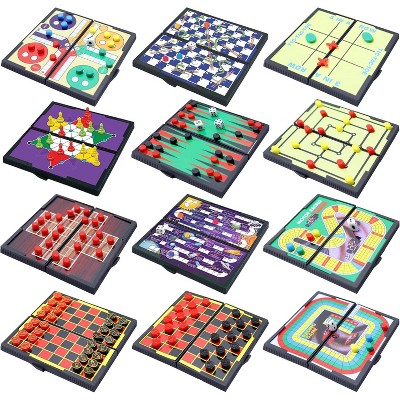
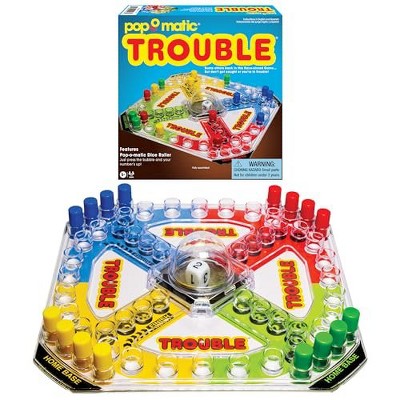
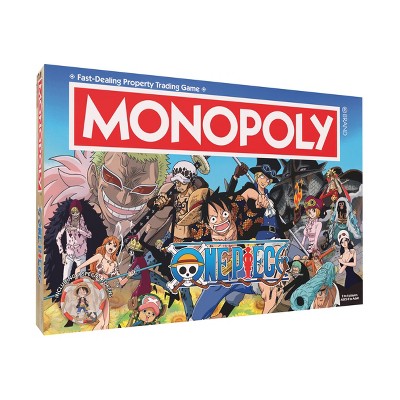
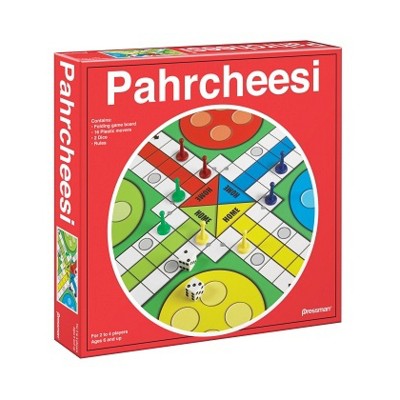
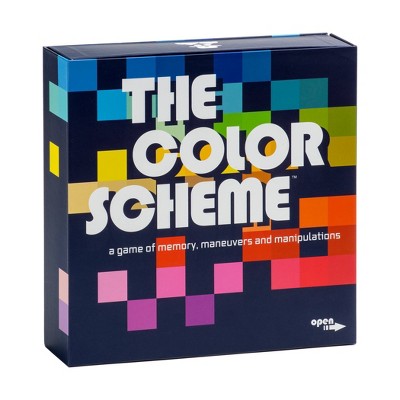
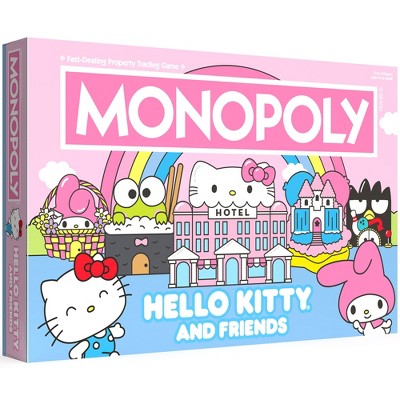
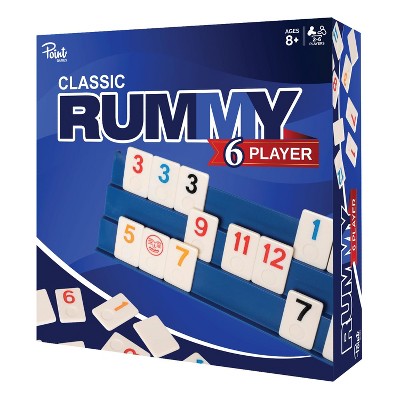
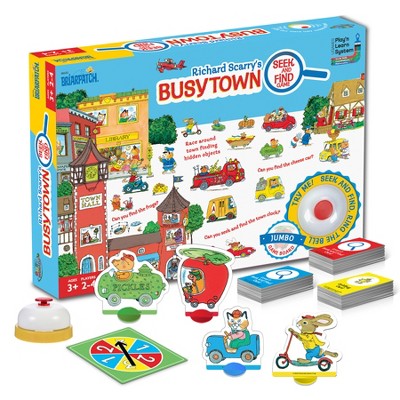
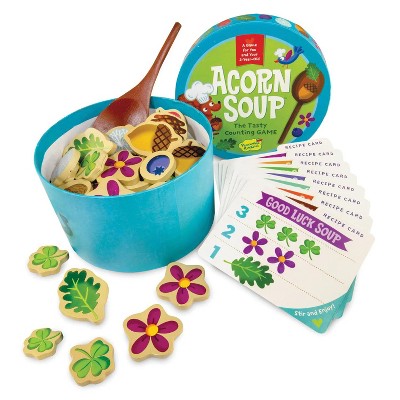
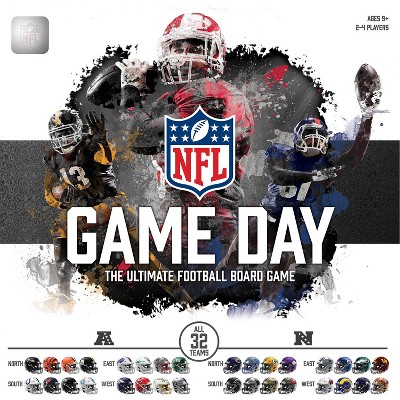
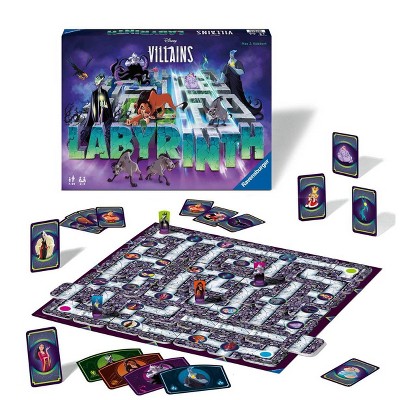
Common components include cards, dry-erase boards and markers, dice, spinners, figures or game pieces, and written instructions. Exact contents vary by title.
Depending on the title, gag games can support basic educational and developmental skills such as shape and color recognition, early math, fine-motor coordination, creative thinking, and social skills like turn-taking.
Many gag games are highly replayable—card-based sets often include large card decks and varied prompts, and reviews frequently note strong repeat-play and lasting party appeal.
Player counts vary by title; common labels include ranges like "2–6 players," "2 or more players," "3 or more players," "2–4 players," and "4–6 players," covering small to medium groups.
Playtime varies by type: many quick gag games run about 5–15 minutes, some list 15–30 minutes, and party-style versions often list 30 minutes or more (some show 30–90 minutes).