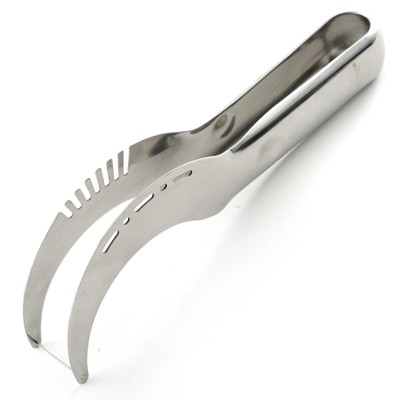
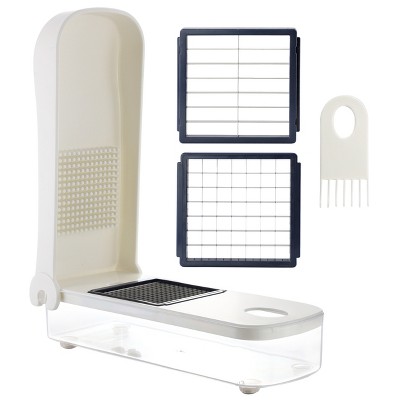
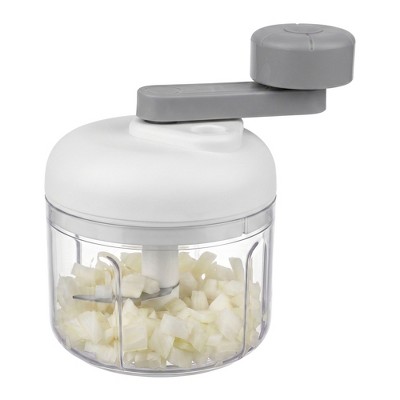
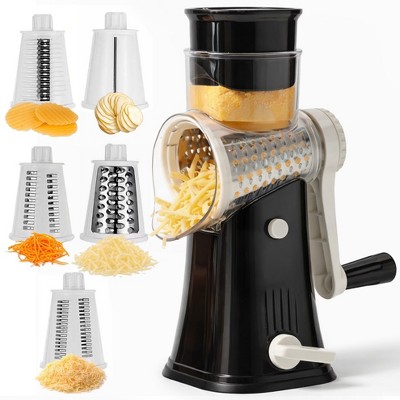
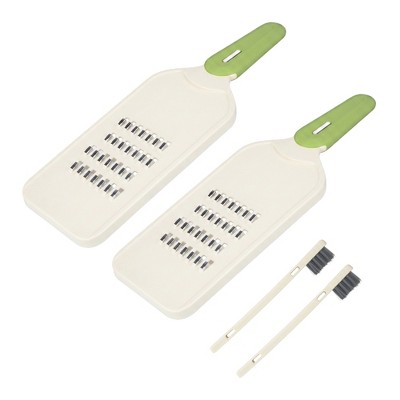
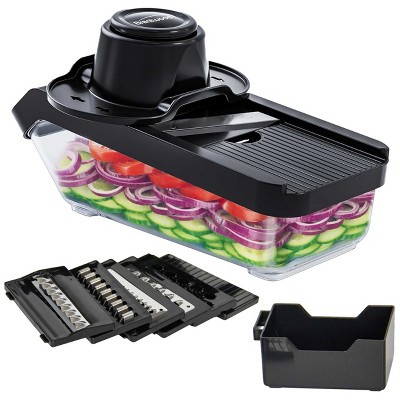
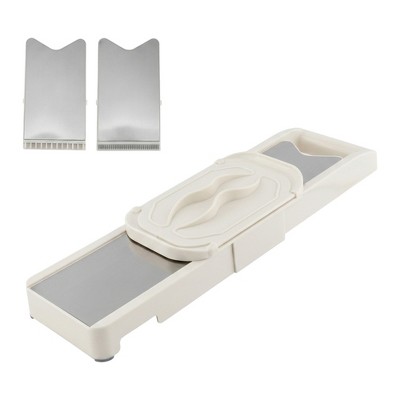
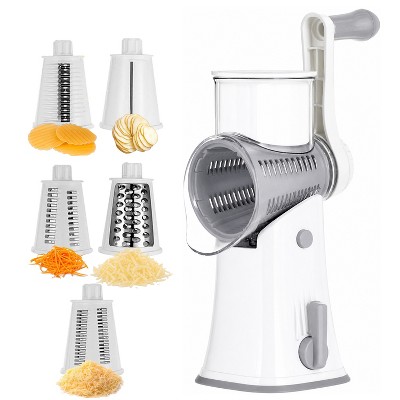
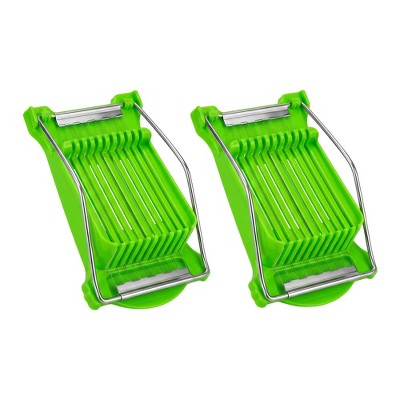
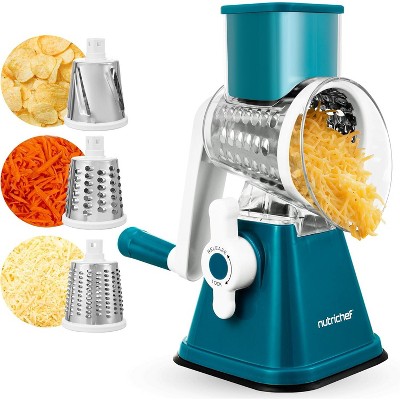
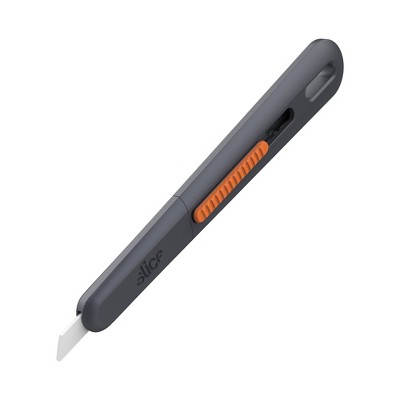
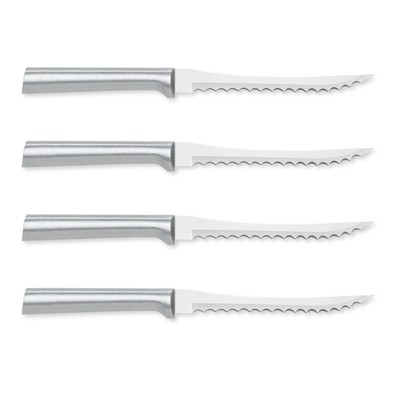
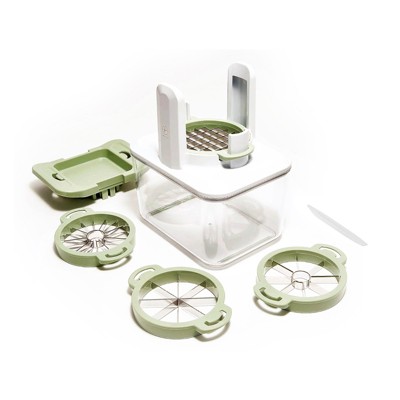
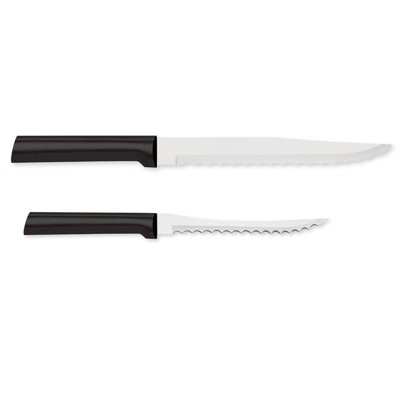
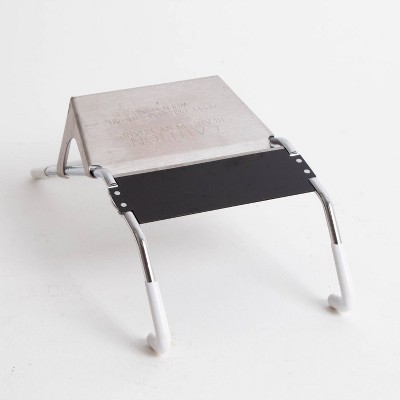
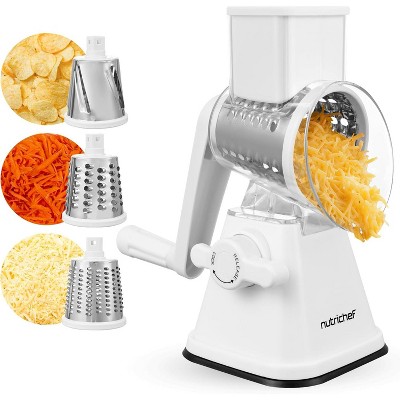
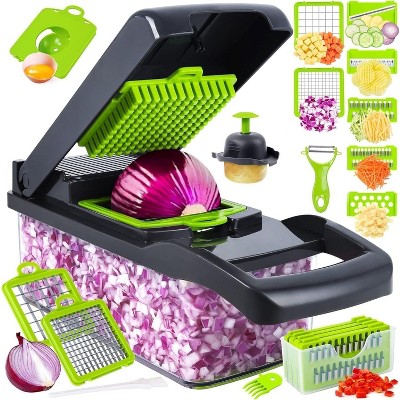
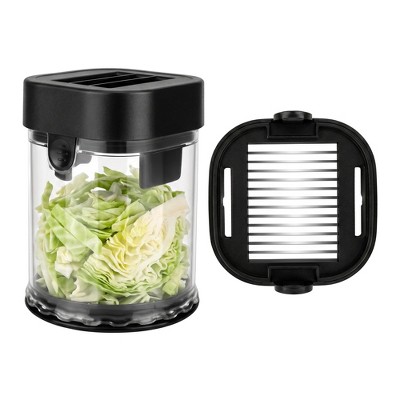
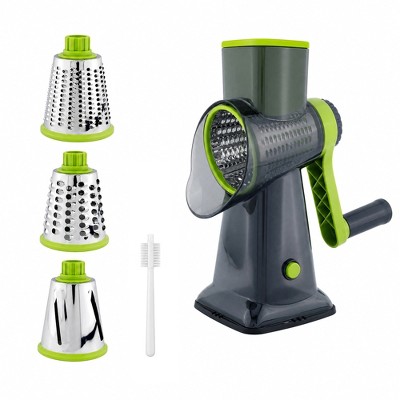
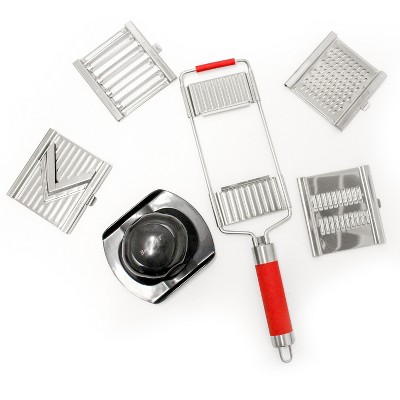
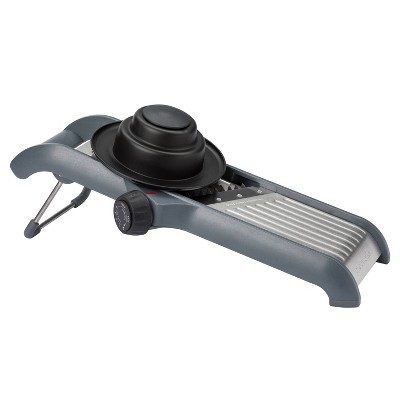
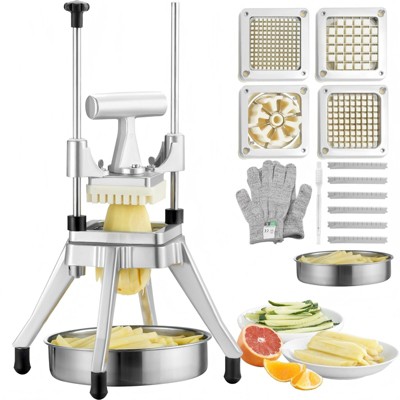
Thickness options vary by tool. Handheld mandolines commonly offer millimeter settings (examples range from about 1.0–9.0 mm, with specific increments like 1.0, 3.0, 4.5, 6.0, and 9.0 mm). Some commercial/manual tomato slicers are fixed (for example, 3/16"), while commercial meat/vegetable slicers advertise wider adjustable ranges (examples given from about 0–0.67" or 0.1"–0.3").
Common materials include stainless steel for blades and slideways, ABS and other food-safe plastics (for bodies and parts), silicone and polypropylene for grips or non-slip features, and for heavier commercial equipment 304 stainless steel and cast aluminum components.
These tools commonly handle carrots, lemons, yams, garlic, peppers, onions, mushrooms, cucumbers, zucchini, strawberries, kiwi, lettuce, cabbage, potatoes, and cheese.
Advertised throughput varies by machine type. Some commercial tomato slicers list around two dozen tomatoes per minute; heavy-duty meat/food slicers may state capacities like 660 pounds per hour; and certain commercial vegetable cutters show rates around 5–7 lb per minute. Compare model specifications carefully since units and measurement methods differ.
Mandolines typically provide multiple thickness settings (examples range from specific steps like 1.5–6.0 mm up to adjustable ranges such as 1.0–9.0 mm), straight cuts and julienne options, and on some models interchangeable blades or removable slicing discs for different cuts.