Target New ArrivalsChristmasGift IdeasHoliday Kids CatalogHome & DecorKitchen & DiningToys & GamesElectronics & TechVideo GamesGift CardsClothing, Shoes & AccessoriesGroceryBabyBeautyTarget Beauty StudioPersonal CareHousehold EssentialsHealthWellnessBooks, Music & MoviesSports & OutdoorsPetsSchool & Office SuppliesParty SuppliesAutomotiveTarget OpticalClearanceNew ArrivalsChristmasGift IdeasTop DealsTarget Circle DealsWeekly AdShop Order PickupShop Same Day DeliveryRegistryRedCardTarget CircleFind Stores
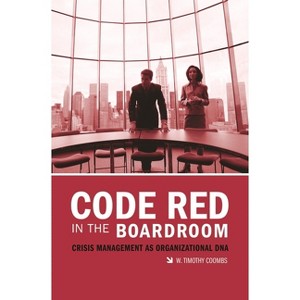
Code Red in the Boardroom - Annotated by  W Timothy Coombs (Hardcover) - 1 of 1

Code Red in the Boardroom - Annotated by W Timothy Coombs (Hardcover)

$80.99
 

In Stock

Free & easy returns
Free & easy returns
Return this item by mail or in store within 90 days for a full refund.
Eligible for registries and wish lists
Save 5% every day
With Target Circle™ Card (restrictions apply)

About this item

Highlights

  • Even several years after the terrorist attacks of September 11, 2001, many organizations are ill-prepared to deal with crises, often opting to deal with them only after the fact.
  • About the Author: W. TIMOTHY COOMBS is Associate Professor in the Communication Studies Department, Eastern Illinois University, where he teaches courses in crisis management, corporate communications, and public relations.
  • 152 Pages
  • Business & Economics, Business Communication

Description


About the Book


Even several years after the terrorist attacks of September 11, 2001, many organizations are ill-prepared to deal with crises, often opting to deal with them only after the fact. In Code Red in the Boardroom, Tim Coombs argues that crisis management should be a variety of activities that the organization performs daily to prevent crises from occurring. He defines the types of crises an organization might experience (both internal and external), draws from a wide variety of case examples, and showcases cutting-edge techniques that are being tested in the public and private sectors to demonstrate how crisis management can be hardwired into the corporate DNA, so that sensing, preventing, and responding quickly to crises become everyone's responsibility. In the process, he explores evolving roles for executives, managers, and front-line employees in communicating and implementing crisis plans. Ultimately, the book shows readers how proactive crisis management makes the company stronger, more resilient, and adaptable to change. A glossary of key terms and templates for establishing a crisis management program make this book an essential resource for all organizations.

Even several years after the terrorist attacks of September 11, 2001, many organizations delude themselves about crisis management. Some enterprises, especially smaller ones, still believe that a crisis cannot happen to them. Others have gone through the steps of creating a crisis management plan, but really pay no more than lip service to the program, and may, in fact, be creating a false sense of security that leaves the company even more vulnerable to attack, accident, crime, or other sources of crisis. Tim Coombs argues that crisis management should not just be something you do when a crisis hits. It should be a variety of activities that the organization performs daily to prevent crises from ocurring.

In Code Red in the Boardroom, Coombs defines the types of crises an organization might experience (both internal and external), draws from a wide variety of case examples, and showcases cutting-edge techniques that are being tested in the public and private sectors to demonstrate how crisis management can be hardwired into the corporate DNA--so that sensing, preventing, and responding quickly to crises become everyone's responsibility. In the process, he explores evolving roles for executives, managers, and front-line employees in communicating and implementing crisis plans. Ultimately, the book shows readers how proactive crisis management makes the company stronger, more resilient, and adaptable to change. A glossary of key terms and templates for establishing a crisis management program make this book an essential resource for all organizations.


Book Synopsis


Even several years after the terrorist attacks of September 11, 2001, many organizations are ill-prepared to deal with crises, often opting to deal with them only after the fact. In Code Red in the Boardroom, Tim Coombs argues that crisis management should be a variety of activities that the organization performs daily to prevent crises from occurring. He defines the types of crises an organization might experience (both internal and external), draws from a wide variety of case examples, and showcases cutting-edge techniques that are being tested in the public and private sectors to demonstrate how crisis management can be hardwired into the corporate DNA, so that sensing, preventing, and responding quickly to crises become everyone's responsibility. In the process, he explores evolving roles for executives, managers, and front-line employees in communicating and implementing crisis plans. Ultimately, the book shows readers how proactive crisis management makes the company stronger, more resilient, and adaptable to change. A glossary of key terms and templates for establishing a crisis management program make this book an essential resource for all organizations.

Even several years after the terrorist attacks of September 11, 2001, many organizations delude themselves about crisis management. Some enterprises, especially smaller ones, still believe that a crisis cannot happen to them. Others have gone through the steps of creating a crisis management plan, but really pay no more than lip service to the program, and may, in fact, be creating a false sense of security that leaves the company even more vulnerable to attack, accident, crime, or other sources of crisis. Tim Coombs argues that crisis management should not just be something you do when a crisis hits. It should be a variety of activities that the organization performs daily to prevent crises from ocurring.

In Code Red in the Boardroom, Coombs defines the types of crises an organization might experience (both internal and external), draws from a wide variety of case examples, and showcases cutting-edge techniques that are being tested in the public and private sectors to demonstrate how crisis management can be hardwired into the corporate DNA--so that sensing, preventing, and responding quickly to crises become everyone's responsibility. In the process, he explores evolving roles for executives, managers, and front-line employees in communicating and implementing crisis plans. Ultimately, the book shows readers how proactive crisis management makes the company stronger, more resilient, and adaptable to change. A glossary of key terms and templates for establishing a crisis management program make this book an essential resource for all organizations.


Review Quotes


"This compact, clearly written, and well-documented primer is especially useful for those undertaking crisis planning for the first time, particularly small organizations, including nonprofits that do not maintain in-house legal and public relations experts. While large, experienced organizations can certainly benefit from the author's emphasis on integrating crisis management into the organizational DNA, the expository style and the case studies make it particularly helpful for novice crisis planners. In part 1 Coombs examines major crisis types: attacks on organizations, such as computer hacking or product tampering; product defects or other organizational failures, such as industrial accidents; and organizational wrongdoing in the form of financial fraud (e.g., Tyco, Enron) or failure to obey or enforce government regulations. Part 2 focuses on crisis management tools: maintaining a crisis-sensing network and a living crisis management plan; overcoming resistance to change; and integrating crisis management into the organization's culture--or organizational DNA, as Coombs calls it. This part includes practical guidelines, based on organizational change literature and sound communication practices. The book ends with two appendixes: the elements of a sample crisis management plan and a US Department of Homeland Security fact sheet for crisis planning. Recommended. Upper-division undergraduate through professional collections." --Choice

"Many corporations operate under the rather nave assumption that until something terrible happens, and someone in charge declares it to be a crisis, no one needs to use the word, much less think about it. Coombs advocates building crisis management into the daily life of an organization with the goal of preventing as many crises as possible and lessening the impact of those that cannot be foreseen. He describes the types of crises organizations are most likely to encounter, including attacks from without and misbehavior from within, the features of a crisis-sensing network, the benefits of a crisis management plan that serves as a living document, and methods to ensure crisis management is part of the daily corporate culture. Coombs is unflinching in his case studies, describing such crises as product liability, misconduct and boycott, and provides helpful recording instruments and strategy checklists." --Reference & Research Book News


About the Author


W. TIMOTHY COOMBS is Associate Professor in the Communication Studies Department, Eastern Illinois University, where he teaches courses in crisis management, corporate communications, and public relations. Previously on the faculty of Wayne State University, Clemson University, and Illinois State University, he is the author or coauthor of two textbooks, Ongoing Crisis Communication and Today's Public Relations, and dozens of articles in such publications as Public Relations Review, Management Communication Quarterly, and the Journal of Public Affairs. He also consults on issues of crisis management, communication, and public relations for clients in the petrochemical, construction/engineering, and healthcare industries.
Dimensions (Overall): 9.54 Inches (H) x 6.36 Inches (W) x .69 Inches (D)
Weight: .86 Pounds
Suggested Age: 22 Years and Up
Number of Pages: 152
Genre: Business & Economics
Sub-Genre: Business Communication
Publisher: Praeger
Theme: General
Edition: Annotated
Format: Hardcover
Author: W Timothy Coombs
Language: English
Street Date: March 1, 2006
TCIN: 1015595897
UPC: 9780275989125
Item Number (DPCI): 247-58-3462
Origin: Made in the USA or Imported
If the item details aren’t accurate or complete, we want to know about it.

Shipping details

Estimated ship dimensions: 0.69 inches length x 6.36 inches width x 9.54 inches height
Estimated ship weight: 0.86 pounds
We regret that this item cannot be shipped to PO Boxes.
This item cannot be shipped to the following locations: American Samoa (see also separate entry under AS), Guam (see also separate entry under GU), Northern Mariana Islands, Puerto Rico (see also separate entry under PR), United States Minor Outlying Islands, Virgin Islands, U.S., APO/FPO, Alaska, Hawaii

Return details

This item can be returned to any Target store or Target.com.
This item must be returned within 90 days of the date it was purchased in store, delivered to the guest, delivered by a Shipt shopper, or picked up by the guest.
See the return policy for complete information.

Additional product information and recommendations

Discover more options

Skip to next section

Best-selling Business & Law Books

Skip to next section

Get top deals, latest trends, and more.