Target New ArrivalsBack to SchoolCollegeClothing, Shoes & AccessoriesHome & DecorKitchen & DiningOutdoor Living & GardenGroceryHousehold EssentialsBabyBeautyPersonal CareSports & OutdoorsHealthWellnessSchool & Office SuppliesToys & GamesElectronics & TechVideo GamesMovies, Music & BooksParty SuppliesGift IdeasGift CardsPetsUlta Beauty at TargetShop by CommunityTarget OpticalDealsClearanceNew ArrivalsBack to SchoolCollegeTop DealsTarget Circle DealsWeekly AdShop Order PickupShop Same Day DeliveryRegistryRedCardTarget CircleFind Stores
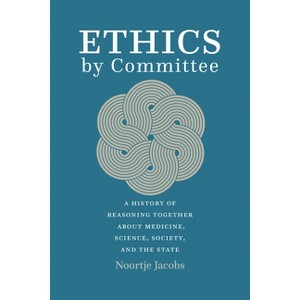
Ethics by Committee - by  Noortje Jacobs (Paperback) - 1 of 1

Ethics by Committee - by Noortje Jacobs (Paperback)

$35.00

In Stock

Free & easy returns
Free & easy returns
Return this item by mail or in store within 90 days for a full refund.
Eligible for registries and wish lists

About this item

Highlights

  • How liberal democracies in the late twentieth century have sought to resolve public concerns over charged issues in medicine and science.
  • About the Author: Noortje Jacobs is a historian in the Department of Medical Ethics, Philosophy, and History of Medicine at the Erasmus University Medical Center in Rotterdam, Netherlands.
  • 264 Pages
  • Medical, History

Description


About the Book


"Ethics boards have become obligatory passage points in today's medical science, and we forget how novel they really are. The use of humans in experiments is an age-old practice that records show goes back to at least the third century BC and, since the early modern period, as a practice it has become increasingly popular. Yet, in most countries around the world, hardly any formal checks and balances existed to govern the communal oversight of experiments involving human subjects until at least the 1960s. Ethics by Committee traces the rise of ethics boards for human experimentation in the second half of the twentieth century. Using the Netherlands as a case-study, Noortje Jacobs shows how the authority of physicians to make decisions about clinical research gave way in most developed nations to formal mechanisms of communal decision-making that served to regiment the behavior of individual researchers. This historically unprecedented change in scientific governance came out of a growing international wariness of medical research in the decades after World War II. Research ethics committees were originally intended not only to make human experimentation more ethical but also to raise its epistemic quality. By examining complex negotiations over the appropriate governance of human subjects research, Ethics by Committee advances our understanding not only of the history of research ethics and the randomized controlled trial but also, more broadly, of how liberal democracies in the late twentieth century have sought to resolve public concerns over charged issues in medicine and science"--


Book Synopsis


How liberal democracies in the late twentieth century have sought to resolve public concerns over charged issues in medicine and science.

Ethics boards have become obligatory passage points in today's medical science, and we forget how novel they really are. The use of humans in experiments is an age-old practice that records show goes back to at least the third century BC, and it has been popular as a practice since the early modern period. Yet in most countries around the world, hardly any formal checks and balances existed to govern the communal oversight of experiments involving human subjects until at least the 1960s. Ethics by Committee traces the rise of ethics boards for human experimentation in the second half of the twentieth century.

Using the Netherlands as a case study, historian Noortje Jacobs shows how the authority of physicians to make decisions about clinical research in this period gave way in most developed nations to formal mechanisms of communal decision-making that served to regiment the behavior of individual researchers. This historically unprecedented change in scientific governance came out of the growing international wariness of medical research in the decades after World War II and was meant to solidify a new way of reasoning together in liberal democracies about medicine and science. But what reasoning together meant, and who was invited to participate, changed drastically over time. In detailing this history, Jacobs shows that research ethics committees were originally intended not only to make human experimentation more ethical but also to raise its epistemic quality and intensify the use of new clinical research methods. By examining complex negotiations over the appropriate governance of human subjects research, Ethics by Committee is an important contribution to our understanding of the randomized controlled trial and the history of research ethics and bioethics more generally.


Review Quotes


"Jacobs' history of the Dutch research ethics committees is an impressive, conceptually aware discussion of policy debates, a socio-political analysis with focus on institutions, committees and public discourses..."-- "Low Countries Historical Review"

"In Ethics by Committee: A History of Reasoning Together about Medicine, Science, Society, and the State the historian Noortje Jacobs charts the Dutch contribution to the emergence of our contemporary international regime of ethical regulation in which governmental committees have tried and often failed to regulate and implement ethical research reviews . . . Jacobs's skill as a writer is clear in her ability to guide the reader through the administrative labyrinth of late twentieth-century Dutch science governance while always relating this back to national debates in the medical and popular press."-- "Isis"

"An important new contribution to the history of bioethics and research ethics. Jacobs does more than simply fill a historiographical gap: the focus on the Netherlands allows her to convincingly argue that bioethics and research ethics do not have a singular history, and that we need to examine the historically specific interplay between medicine, society, and the state if we want to explain developments in specific times and places. Her insights and conclusions significantly add to our understanding of the mechanisms and schools of thought in medicine, philosophy, and politics that caused research ethics and bioethics more broadly to become global phenomena in recent decades."--Duncan Wilson, University of Manchester


About the Author


Noortje Jacobs is a historian in the Department of Medical Ethics, Philosophy, and History of Medicine at the Erasmus University Medical Center in Rotterdam, Netherlands.
Dimensions (Overall): 9.0 Inches (H) x 6.0 Inches (W) x .69 Inches (D)
Weight: .99 Pounds
Suggested Age: 22 Years and Up
Number of Pages: 264
Genre: Medical
Sub-Genre: History
Publisher: University of Chicago Press
Format: Paperback
Author: Noortje Jacobs
Language: English
Street Date: August 26, 2022
TCIN: 1012218408
UPC: 9780226819327
Item Number (DPCI): 247-23-4120
Origin: Made in the USA or Imported
If the item details aren’t accurate or complete, we want to know about it.

Shipping details

Estimated ship dimensions: 0.69 inches length x 6 inches width x 9 inches height
Estimated ship weight: 0.99 pounds
We regret that this item cannot be shipped to PO Boxes.
This item cannot be shipped to the following locations: American Samoa (see also separate entry under AS), Guam (see also separate entry under GU), Northern Mariana Islands, Puerto Rico (see also separate entry under PR), United States Minor Outlying Islands, Virgin Islands, U.S., APO/FPO, Alaska, Hawaii

Return details

This item can be returned to any Target store or Target.com.
This item must be returned within 90 days of the date it was purchased in store, delivered to the guest, delivered by a Shipt shopper, or picked up by the guest.
See the return policy for complete information.

Additional product information and recommendations

Discover more options

Best-selling Diet, Health & Fitness Books

Get top deals, latest trends, and more.