Target New ArrivalsHalloweenChristmasGift IdeasClothing, Shoes & AccessoriesHome & DecorKitchen & DiningPatio, Lawn & GardenGroceryHousehold EssentialsBabyBeautyTarget Beauty StudioPersonal CareSports & OutdoorsPetsHealthWellnessSchool & Office SuppliesToys & GamesElectronics & TechVideo GamesBooks, Music & MoviesParty SuppliesGift CardsShop by CommunityTarget OpticalDealsClearanceNew ArrivalsHalloweenChristmasGift IdeasTop DealsTarget Circle DealsWeekly AdShop Order PickupShop Same Day DeliveryRegistryRedCardTarget CircleFind Stores
Introduction to Crispr-Cas9 Techniques - (Learning Materials in Biosciences) (Paperback) - 1 of 1

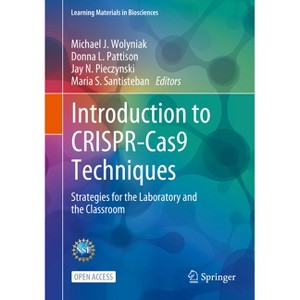
Introduction to Crispr-Cas9 Techniques - (Learning Materials in Biosciences) (Paperback)

$89.99
 

In Stock

Free & easy returns
Free & easy returns
Return this item by mail or in store within 90 days for a full refund.
Eligible for registries and wish lists
Save 5% every day
With Target Circle™ Card (restrictions apply)

About this item

Highlights

  • This open-access textbook provides an in-depth introduction into the CRISPR-cas9 technology and explores its use across the gamut of biological model systems.
  • About the Author: Dr. Michael Wolyniak studied genetics and biochemistry at Cornell University in Ithaca, New York, USA, and received his Ph.D. in 2004.
  • 213 Pages
  • Science, Life Sciences
  • Series Name: Learning Materials in Biosciences

Description


Book Synopsis


This open-access textbook provides an in-depth introduction into the CRISPR-cas9 technology and explores its use across the gamut of biological model systems. As the subject has risen from a significant new discovery to a mainstream molecular biology practice, it is essential that students of molecular biology understand the fundamentals behind CRISPR-Cas9 technology and how it may be employed efficiently and ethically in research.

This volume, edited by experts in both, molecular biology and undergraduate education, will teach not only the fundamentals of using CRISPR-Cas9, but also how to successfully employ this technology in classroom settings.

The book is written for undergraduates and advanced high school classes in the area of molecular biology, genetics, genomics and biological engineering and will provide a perfect tool for undergraduate lecturers to prepare their classes.


From the Back Cover


This open-access textbook provides an in-depth introduction into the CRISPR-cas9 technology and explores its use across the gamut of biological model systems. As the subject has risen from a significant new discovery to a mainstream molecular biology practice, it is essential that students of molecular biology understand the fundamentals behind CRISPR-Cas9 technology and how it may be employed efficiently and ethically in research.

This volume, edited by experts in both, molecular biology and undergraduate education, will teach not only the fundamentals of using CRISPR-Cas9, but also how to successfully employ this technology in classroom settings.

The book is written for undergraduates and advanced high school classes in the area of molecular biology, genetics, genomics and biological engineering and will provide a perfect tool for undergraduate lecturers to prepare their classes.


About the Author


Dr. Michael Wolyniak studied genetics and biochemistry at Cornell University in Ithaca, New York, USA, and received his Ph.D. in 2004. He did postdoctoral work at the Geisel School of Medicine at Dartmouth, Hanover, New Hampshire, USA in microbiology and immunology from 2004-2007 and in cell biology and genetics from 2007-2009. In the latter years of his time at Dartmouth, Wolyniak was a Howard Hughes Medical Institute postdoctoral teaching fellow, giving him the opportunity to teach coursework in cancer biology and first-year composition while conducting his research. In 2009, Wolyniak accepted an appointment to the Biology Department at Hampden-Sydney College in Farmville, Virginia, USA. He is currently the McGavacks Professor of Biology and Director of Undergraduate Research at Hampden-Sydney. He has received several National Science Foundation grants in support of projects associated with undergraduate research in the STEM classroom, including the "CRISPR in the Classroom" project that is the inspiration for this volume. Wolyniak has also served on committees for the American Society for Cell Biology, the American Society for Biochemistry and Molecular Biology, the Council on Undergraduate Research, and the Virginia Academy of Science.

Dr. Donna Pattison earned her PhD in Biochemistry and Cell Biology at Rice University and postdoctoral work at Baylor College of Medicine in the Department of Molecular Virology and Microbiology. Prior to her graduate work, she obtained an undergraduate degree in Curriculum & Instruction from the University of Maryland, College Park. She taught middle school science for 3 years, serving as the 8th grade faculty team leader and as a district curriculum writer. Dr. Pattison has taught at the University of Houston in the Department of Biology and Biochemistry since 2006, currently serving as an Instructional Professor, Coordinator of the Undergraduate Biochemistry Teaching Laboratory courses, and Assistant Dean for Student Success in the College of Natural Sciences and Mathematics. She is the current primary investigator for the CRISPR in the Classroom Network, a Research Coordination Network-Undergraduate Biology Education funded through the National Science Foundation. Dr. Pattison's research is in the area of development and assessment of student success programs to improve student learning outcomes and improve undergraduate retention and graduation rates. Dr. Pattison has been an active member of the Association for Biology Laboratory Education, since 2009, serving as Co-Vice President (2015-2017) and as a Member-at-Large on the Board of Directors from 2019-2024.

Dr. Jay Pieczynski is an Associate Professor and Chair of Biology at Rollins College in Winter Park, FL. He obtained his Ph.D. in Biological Chemistry from the University of Michigan in 2010 in the laboratory of Dr. Benjamin Margolis, studying the mechanisms of epithelial cell polarity. From 2010-2012, he was a post-doctoral trainee in the lab of Dr. Bradley Yoder at the University of Alabama-Birmingham where he began using C. elegans as an in vivo model to study neuronal cell development and cilia biology. Prior to joining the faculty at Rollins, he held teaching positions at the University of Michigan and Vassar College. At Rollins, he teaches General Biology for both majors and non-majors and Molecular Biology. Dr. Pieczynski's laboratory research uses the power of C. elegans biology to understand how kinesin motor proteins and microtubules function in vivo. In addition, he also performs molecular genetics field research, developing and deploying CRISPR-based diagnostic tools as they apply to conservation biology, specifically the expansion of hybrid populations and loss of species diversity due to global climate change and human impacts. In the classroom, his pedagogy research involves the development of cost-effective course-based undergraduate research experiences (CUREs) as mechanisms to introduce students to independent research.

Dr. Maria Santisteban is a Professor in UNC Pembroke's Biology Department, joining in 2007 to teach Microbiology, Cell Biology, Molecular Biology, Genetics, and Genomics. Originally from Spain, she earned a B.S. in Biochemistry from the University of the Basque Country and completed her DEA and PhD in Cellular Biology at Grenoble's Université Joseph Fourier in France, focusing on chromatin structure/function under Dr. Gérald Brugal. Before UNC Pembroke, she conducted postdoctoral studies in Yeast Molecular Genetics at the University of Virginia under Dr. Mitch Smith.

Currently, Dr. Santisteban's research explores the histone H2A.Z variant's impact on gene expression in Saccharomyces cerevisiae, involving undergraduates. She is dedicated to integrating research into the classroom through collaborative initiatives such as the Genomics Education Partnership (GEP), Molecular Biotechnology Laboratory Education Modules (MBLEMs), and the "CRISPR in the classroom" project, which she co-founded.

At UNC Pembroke, she directs the COMPASS program, an NSF S-STEM initiative supporting low-income STEM students for a decade. She actively promotes STEM education through roles in the North Carolina Academy of Science and the NC Student Academy of Science. Dr. Santisteban contributes as a reviewer for NSF panels and as a judge in student competitions, demonstrating her commitment to advancing science education and research integration in academia.

Dimensions (Overall): 9.61 Inches (H) x 6.69 Inches (W) x .48 Inches (D)
Weight: .81 Pounds
Suggested Age: 22 Years and Up
Number of Pages: 213
Genre: Science
Sub-Genre: Life Sciences
Series Title: Learning Materials in Biosciences
Publisher: Springer
Theme: Cell Biology
Format: Paperback
Author: Michael J Wolyniak & Donna L Pattison & Jay N Pieczynski & Maria S Santisteban
Language: English
Street Date: February 18, 2025
TCIN: 1014056499
UPC: 9783031737336
Item Number (DPCI): 247-64-0446
Origin: Made in the USA or Imported
If the item details aren’t accurate or complete, we want to know about it.

Shipping details

Estimated ship dimensions: 0.48 inches length x 6.69 inches width x 9.61 inches height
Estimated ship weight: 0.81 pounds
We regret that this item cannot be shipped to PO Boxes.
This item cannot be shipped to the following locations: American Samoa (see also separate entry under AS), Guam (see also separate entry under GU), Northern Mariana Islands, Puerto Rico (see also separate entry under PR), United States Minor Outlying Islands, Virgin Islands, U.S., APO/FPO, Alaska, Hawaii

Return details

This item can be returned to any Target store or Target.com.
This item must be returned within 90 days of the date it was purchased in store, delivered to the guest, delivered by a Shipt shopper, or picked up by the guest.
See the return policy for complete information.

Additional product information and recommendations

Discover more options

Skip to next section

Best-selling Adult Non-Fiction Books

Skip to next section

Get top deals, latest trends, and more.