Target New ArrivalsChristmasGift IdeasHoliday Kids CatalogHome & DecorKitchen & DiningToys & GamesElectronics & TechVideo GamesGift CardsClothing, Shoes & AccessoriesGroceryBabyBeautyTarget Beauty StudioPersonal CareHousehold EssentialsHealthWellnessBooks, Music & MoviesSports & OutdoorsPetsSchool & Office SuppliesParty SuppliesAutomotiveTarget OpticalClearanceNew ArrivalsChristmasGift IdeasTop DealsTarget Circle DealsWeekly AdShop Order PickupShop Same Day DeliveryRegistryRedCardTarget CircleFind Stores
Modernity's Corruption - by  Nicholas Hoover Wilson (Paperback) - 1 of 1

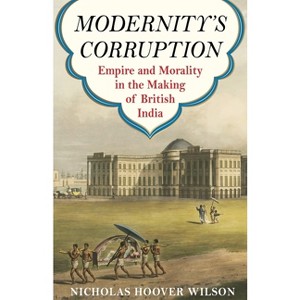
Modernity's Corruption - by Nicholas Hoover Wilson (Paperback)

$35.49

In Stock

Free & easy returns
Free & easy returns
Return this item by mail or in store within 90 days for a full refund.
Eligible for registries and wish lists
Save 5% every day
With Target Circle™ Card (restrictions apply)

About this item

Highlights

  • Honorable Mention, 2024 Outstanding Published Book Award, Altruism, Morality, and Social Solidarity Section, American Sociological Association Honorable Mention, 2024 Allan Sharlin Memorial Book Award, Social Science History Association Today, "corruption" generally refers to pursuing personal interests at the expense of one's responsibilities, the law, or the common good.
  • About the Author: Nicholas Hoover Wilson is associate professor of sociology at Stony Brook University.
  • 312 Pages
  • Business & Economics, Economic History

Description


About the Book


Nicholas Hoover Wilson develops a new account of the changing category of corruption by examining the English East India Company and its transformation from a largely commercial enterprise to a militarized offshoot of British empire in the eighteenth and nineteenth centuries.


Book Synopsis


Honorable Mention, 2024 Outstanding Published Book Award, Altruism, Morality, and Social Solidarity Section, American Sociological Association

Honorable Mention, 2024 Allan Sharlin Memorial Book Award, Social Science History Association

Today, "corruption" generally refers to pursuing personal interests at the expense of one's responsibilities, the law, or the common good. It calls to mind some official violating their public duty for private gain, suggesting seamy bureaucracies taking payoffs, kickbacks, and bribes. Yet at other times, notions of corruption were rooted in a more expansive view of the causes of people's behavior and the appropriate ways to regulate conduct. In this understanding, to be "corrupt" meant losing a delicate balance among competing appetites under specific circumstances and in the eyes of peers. Why did a narrower definition of corruption become dominant?

Nicholas Hoover Wilson develops a new account of the changing category of corruption by examining the English East India Company and its transformation from a largely commercial enterprise to a militarized offshoot of British empire in the eighteenth and nineteenth centuries. He argues that the modern idea of corruption arose as an unintended consequence of conflicts among company officials and the changing audiences to which they justified themselves in Britain. This new understanding unified an imperial elite at risk of fragmenting into irreconcilable moral worlds and, in the process, helped redefine the boundaries of state, society, and economy. Modernity's Corruption is at once a novel historical sociology of imperial administration and its contradictions, a fresh argument about the nature of corruption and its political and organizational effects, and a reinvigoration of classic arguments about the nature and consequences of global modernity.


Review Quotes


There is much to admire in this ambitious account of the shifting moral terrain of company administration. Its emphasis on the changing meanings of corruption leads to fresh reassessments of familiar episodes.-- "Journal of Asian Studies"

The book deserves a broad readership as a thoughtful and insightful contribution to our understanding of an organization that played such an important role in the making of the modern world.-- "European Legacy"

An instructive and attractively written study that is in many ways an exemplary work of historical sociology, -- "American Journal of Sociology"

An exemplary work of historical sociology.-- "Sociology of Race and Ethnicity"

Modernity's Corruption is model work of historical sociology. Wilson asks a wonderfully rich and puzzling question: Why were notions of corruption transformed from situational ones to more abstract and universal concepts? By focusing on the case of England's East India Company in the late eighteenth century, Wilson advances the claim that the transformation had everything to do with imperial governance, and the fact that ruling at a distance necessitated the implementation of more abstract and political economic standards. What makes Wilson's work so compelling is that these broad theoretical claims, claims that have implications for how we understand the development of moral claims more generally, are so carefully situated in a deep engagement with the archival and pamphlet literature of the era. Empire, in Wilson's hands, becomes a central engine of modernity.--Steve Pincus, author of 1688: The First Modern Revolution

A brilliant dovetailing of theory and history, Modernity's Corruption is also a deeply generative work for social scientists who work in a broad range of areas--moralities of power, states and societies, and the politics of administration--pertinent to the present day.--Julia Adams, author of The Familial State: Ruling Families and Merchant Capitalism in Early Modern Europe

This book will generate a good deal of interest from historians as well as sociologists. It offers a perceptive study of the East India Company when it was frequently under fire for corruption. It persuasively argues that shock at self-interested behavior helped to promote a more 'modern, ' public duty-centered ideal for officials.--Mark Knights, author of Trust and Distrust: Corruption in Office in Britain and its Empire, 1600-1850

This welcome study of corruption reflects on fundamental distinctions between public and private, abstract and particular, and on how standards of appropriateness emerge. Wilson grounds his analysis in careful research about the English East India Company, that famous organization from the early modern global economy. There is much here to think about.--Bruce G. Carruthers, author of The Economy of Promises: Trust, Power, and Credit in America

What is 'corruption'? And what does it have to do with 'modernity'? In this carefully constructed and rigorously argued new book, Nicholas Hoover Wilson traces the historical genesis of modern-day understandings to internecine battles within the shapeshifting architectures of the British East India Company. An exemplary work of social science history.--Philip Gorski, Frederick and Laura Goff Professor, Yale University


About the Author


Nicholas Hoover Wilson is associate professor of sociology at Stony Brook University.
Dimensions (Overall): 8.4 Inches (H) x 5.4 Inches (W) x .9 Inches (D)
Weight: 1.1 Pounds
Suggested Age: 22 Years and Up
Number of Pages: 312
Genre: Business & Economics
Sub-Genre: Economic History
Publisher: Columbia University Press
Format: Paperback
Author: Nicholas Hoover Wilson
Language: English
Street Date: May 16, 2023
TCIN: 1011123637
UPC: 9780231192194
Item Number (DPCI): 247-44-4080
Origin: Made in the USA or Imported
If the item details aren’t accurate or complete, we want to know about it.

Shipping details

Estimated ship dimensions: 0.9 inches length x 5.4 inches width x 8.4 inches height
Estimated ship weight: 1.1 pounds
We regret that this item cannot be shipped to PO Boxes.
This item cannot be shipped to the following locations: American Samoa (see also separate entry under AS), Guam (see also separate entry under GU), Northern Mariana Islands, Puerto Rico (see also separate entry under PR), United States Minor Outlying Islands, Virgin Islands, U.S., APO/FPO, Alaska, Hawaii

Return details

This item can be returned to any Target store or Target.com.
This item must be returned within 90 days of the date it was purchased in store, delivered to the guest, delivered by a Shipt shopper, or picked up by the guest.
See the return policy for complete information.

Additional product information and recommendations

Best-selling Business & Law Books

Skip to next section

Get top deals, latest trends, and more.