Target New ArrivalsBack to SchoolCollegeClothing, Shoes & AccessoriesHome & DecorKitchen & DiningOutdoor Living & GardenGroceryHousehold EssentialsBabyBeautyPersonal CareSports & OutdoorsHealthWellnessSchool & Office SuppliesToys & GamesElectronics & TechVideo GamesMovies, Music & BooksParty SuppliesGift IdeasGift CardsPetsUlta Beauty at TargetShop by CommunityTarget OpticalDealsClearanceNew ArrivalsBack to SchoolCollegeTop DealsTarget Circle DealsWeekly AdShop Order PickupShop Same Day DeliveryRegistryRedCardTarget CircleFind Stores
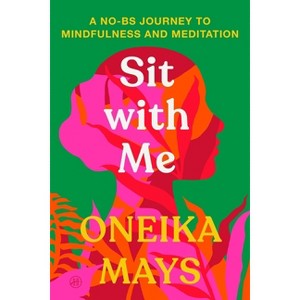
Sit with Me - by  Oneika Mays (Paperback) - 1 of 1

Sit with Me - by Oneika Mays (Paperback)

$15.99Save $4.00 (20% off)

In Stock

Free & easy returns
Free & easy returns
Return this item by mail or in store within 90 days for a full refund.
Eligible for registries and wish lists

About this item

Highlights

  • "I spent over a decade volunteering and working at Rikers Correctional Facility as their first-ever Mindfulness Coach.
  • Author(s): Oneika Mays
  • 256 Pages
  • Mind, Body, Spirit, Mindfulness & Meditation

Description


Book Synopsis


"I spent over a decade volunteering and working at Rikers Correctional Facility as their first-ever Mindfulness Coach. It was the most powerful and challenging work I would ever do. This is what I learned..."

Oneika Mays will help you heal, improve your communication skills, process forgiveness, discover self-worth while teaching you lovingkindness meditation.

Sit with Me invites readers to learn how to:


  • Incorporate metta, meditation and lovingkindness into your life and discover how to deepen love for others
  • Expand your circles and mind
  • Authentically contribute to personal and societal healing
  • Build bridges to unite people, and learn how to be a better human


After spending over a decade volunteering and working at Rikers Island Correctional Facility, Oneika saw what happens to people who feel like they've been tossed aside. And before Rikers, Oneika spent two decades as a B&N bookseller offering new worlds to seekers and language for exploration. She has a gifted ability to take big ideas and distill them down into understandable and relatable learnings allowing her to show up as a conduit for transformation. Oneika is your teacher, your auntie, your friend, and an intuitive soul here for the work of personal collective liberation.

Sit with Me is a gift to those who feel disconnected or lost, but know they want something to change. If you've ever felt left out, forgotten, judged, misunderstood or mistreated, this book is for you.

"Loving everyone is essential; liking them isn't necessary. This book is both a love letter to presence and a field guide for finding your way back to it when you've wandered far from home."


Review Quotes


Sit with Me is one of those rare books that doesn't just ask you to read. It asks you to reckon with yourself. Oneika Mays has given us something real, something necessary, something that reminds us that healing isn't lofty or distant. It's gritty, tender, and within reach. This book, this meditation, this prayer is for the ones carrying shame, the ones searching for wholeness, the ones who have been told to give to everyone but themselves. It's for those of us who know we can't be free until we learn to sit with all of who we are. - Darnell Lamont Walker, Death Doula and author of Never Can Say Goodbye

Before she was a mindfulness teacher, yoga instructor, and author, Oneika Mays was a bookseller, spending nearly two decades in the industry. Mindfulness was something she practiced but not yet something she relied on.

When a personal tragedy struck, something shifted for Mays. She became a certified yoga and mindfulness teacher and became interested in ways to offer those practices to marginalized communities that lacked access or felt unwelcome in traditional wellness spaces. After volunteering at Rikers Island Correctional Facility, she became the first full- time mindfulness coach employed there. She moved on from that position in 2023 but continues to be a no-nonsense champion of making practice accessible to all...Tricycle contributor Alex Tzelnic spoke with Mays about accessibility, metta, and what it really means to practice amidst the day-to-day richness of our lives.

The subtitle of your book promises a "no-BS journey to mindfulness." What's the biggest piece of BS around mindfulness culture that you wanted to push back against? There's a lot of dogma that can make people feel like they need years of experience before they're "allowed" to practice mindfulness. Or that they need a fully established routine before they can even begin.

We tend to overintellectualize mindfulness, especially when it's tied to Buddhism. There's often so much theory before people even start practicing. That can be really intimidating for people.

When I was studying meditation, I noticed there was a lot of discussion before we even got to actually doing the practice. As a teacher, I want to take those concepts and make them tangible and practical. That's what I mean by "no BS."

So how do you actually make mindfulness feel real and accessible for people? It starts small. There's this idea that practice has to be grand or structured--like sitting for forty-five minutes a day. I don't think that's necessary for most people. If you're a busy parent and the only mindful moment you get is while washing your hands with your kids banging on the door, that's enough.

We also have to be realistic about where people are. Sometimes I don't even feel like sitting because there's just so much happening in the world. So how do we meet people where they are?

And there's accessibility too. Not everyone can sit upright or be still. I was diagnosed with ADHD as an adult. I'm fidgety. So how do I work with my body and access stillness internally?

That's the question I'm always trying to answer when I teach.... Meditation is training the mind.
So we have to acknowledge what we're doing. When people start to feel empowered--like, "I practiced mindfulness for twenty seconds while washing my hands"--that builds over time.

I saw this a lot when I was teaching at Rikers Island. Finding a quiet place to sit isn't going to happen there. So how do you work with the circumstances you have and recognize that you are practicing in that moment? That's where the shift starts.

Did working at Rikers Island act as an amplifier for ideas like suffering, metta, and liberation? It put a spotlight on my own stuff immediately. I volunteered there for about six years, and then I worked there full-time for almost five. Those were two very different experiences. As a volunteer, I learned a lot about suffering, and a lot about myself.

And this is a little embarrassing to admit, but I had a savior mindset. I had found yoga and meditation, and they changed my life, and I became one of those people who thought everyone should do it. I was insufferable. You can ask my friends and family.

But then I went inside and realized it wasn't about that. I read an essay called "Helping, Fixing or Serving?" by Rachel Naomi Remen, and it completely changed how I saw the work. It talks about how helping can come from seeing people as broken, while serving comes from seeing people as whole. That really woke me up.

There was a moment that stayed with me. I was in a unit with someone who had allegedly done something that most people would consider terrible. And I felt my body tighten when I heard that. Later, during a class, I saw his humanity in a way that I couldn't ignore. And I felt shame. Here I was, thinking I didn't judge people, and suddenly I was caught in judgment.

I realized if I believe in unconditional love, that has to include everyone. Otherwise, what am I doing?... When I started working there full-time, things got more intense. There were people I didn't like. But that didn't mean I didn't love them.

You write about metta helping you to hold multiple truths without flattening people into either good or bad. How has that shaped how you navigate conflict? Rikers was a training ground for that. People want to label others--this person is a murderer, this person did this or that. But when you sit with someone, they're a person. They have hopes and fears. And I don't know that I wouldn't do something similar under certain circumstances.

Metta helps me hold that complexity. Right now, I can feel joy about what's happening with my book, and at the same time feel devastated about what's happening in the world. Both are true.

There are also moments where I feel guilt that I'm not still doing the work I was doing at Rikers, because that felt like a very direct way of contributing. That's another truth I hold.

Metta allows me to ask: What's the one thing I can do right now to cause a little less harm?

Before, I was very attached to the things I was fighting against--racism, homophobia. That became part of my identity. And when I started to loosen that attachment, I realized I was afraid of who I'd be without it. Metta gave me space. It helped me invite in tenderness instead of constantly holding on to what I was pushing against.

You also describe tension around working in that system and engaging with people who've done harm. How do you respond to people who struggle with that? I've heard that question a lot--how can you work with people who've done terrible things? My response is usually: How do you know your neighbor hasn't done something terrible and just hasn't been caught?

We all do things we're not proud of. Some people are just caught. Some people live in overpoliced environments. That's part of the reality... I think we're quick to label people as good or bad, but that's often rooted in how we judge ourselves. If we can sit with the parts of ourselves we're ashamed of and hold them with some tenderness, we create more space to see humanity in others.

You make a distinction between enlightenment and liberation. Why was that important for you? I'd seen a lot of the love and light from the spiritual world and the yoga world. Yet enlightenment is talked about as this thing that you want to attain, and it's focused on the individual. What things can I do to get myself to this place, rather than how can I be free?

If we're truly connected, then my freedom is tied to yours. It becomes less about me and more about us. And if I become free, I have a responsibility to make sure you have what you need to become free too.

Your teaching style feels very grounded and human. How do you square that with more traditional or rigid Buddhist spaces? That's why I call myself "Buddhish." Because those spaces have often felt triggering for me. These practices helped me love myself and embrace my life and feel OK being childlike again as well as appreciating wisdom. So I teach in a way that reflects that. I'm not trying to sound scholarly; I'm trying to be real.

I still feel insecure sometimes in more academic environments. I may not be a teacher for everybody, but my practice has also made me OK with that. This is the only way I know how to teach, and I've learned to trust that.

As a Black queer woman entering spaces that are often predominantly white, how do you think those spaces need to evolve? We need to allow people to teach from who they are. There's often this idea that teachers shouldn't be "political."... If we're truly talking about this idea that we are all one, then my experiences need to matter to you. You may not relate to them, but you need to acknowledge them. That's the place from which we can truly appreciate what these practices are for.

I felt really empowered when Lama Rod Owens talked about how mindfulness should help us tell the truth of who we are. Mindfulness should help us move toward justice and liberation, not away from it.

You've said the book isn't about giving answers but helping people ask better questions. What kinds of questions do you hope readers begin asking? I'd like people to ask themselves: Why do I think the way that I do about certain things? Do I love myself completely? Do I love other people? What stops me from doing that?

If questions come up after a practice, can you answer them? What are you going to do about it? Because you have to do something. We can't just think and think and think. It's like bell hooks tells us, love is an action word, and we have to be doing something. - Alex Tzelnic, TRICYCLE: THE BUDDHIST REVIEW

'When we can look past our need to like one another and get down to the business of loving one another, ' writes Oneika Mays, 'that's when the real work of building a better world can begin.' In her new book, Sit with Me: A No-BS Journey to Mindfulness and Meditation (HarperOne), Mays discusses her path as a practitioner of metta, or loving-kindness. She tells the story of her time as a meditation and yoga coach at New York City's notorious Riker's Island jail complex, where prisoners are often treated as if they don't deserve peace, comfort, quiet, or love. Part memoir, part meditation guide, Mays uses her experience at Rikers as a reference point to explore the benefits of a loving-kindness approach. Whether you're a practiced meditator or a novice, whether you've been incarcerated or not, this book will speak to you as a human being who's worthy of love. - Jessica Little, LION'S ROAR

'When we can look past our need to like one another and get down to the business of loving one another, ' writes Oneika Mays, 'that's when the real work of building a better world can begin.' In her new book, Sit with Me: A No-BS Journey to Mindfulness and Meditation (HarperOne), Mays discusses her path as a practitioner of metta, or loving-kindness. She tells the story of her time as a meditation and yoga coach at New York City's notorious Riker's Island jail complex, where prisoners are often treated as if they don't deserve peace, comfort, quiet, or love. Part memoir, part meditation guide, Mays uses her experience at Rikers as a reference point to explore the benefits of a loving-kindness approach. Whether you're a practiced meditator or a novice, whether you've been incarcerated or not, this book will speak to you as a human being who's worthy of love. - Jessica Little, LION'S ROAR


Dimensions (Overall): 8.0 Inches (H) x 5.31 Inches (W) x .64 Inches (D)
Weight: .65 Pounds
Suggested Age: 22 Years and Up
Number of Pages: 256
Genre: Mind, Body, Spirit
Sub-Genre: Mindfulness & Meditation
Publisher: HarperOne
Format: Paperback
Author: Oneika Mays
Language: English
Street Date: March 3, 2026
TCIN: 1004137727
UPC: 9780063435551
Item Number (DPCI): 247-26-7751
Origin: Made in the USA or Imported
If the item details aren’t accurate or complete, we want to know about it.

Shipping details

Estimated ship dimensions: 0.64 inches length x 5.31 inches width x 8 inches height
Estimated ship weight: 0.65 pounds
We regret that this item cannot be shipped to PO Boxes.
This item cannot be shipped to the following locations: American Samoa (see also separate entry under AS), Guam (see also separate entry under GU), Northern Mariana Islands, Puerto Rico (see also separate entry under PR), United States Minor Outlying Islands, Virgin Islands, U.S., APO/FPO, Alaska, Hawaii

Return details

This item can be returned to any Target store or Target.com.
This item must be returned within 90 days of the date it was purchased in store, delivered to the guest, delivered by a Shipt shopper, or picked up by the guest.
See the return policy for complete information.

Additional product information and recommendations

Best-selling Diet, Health & Fitness Books

Get top deals, latest trends, and more.