Target New ArrivalsHalloweenChristmasGift IdeasClothing, Shoes & AccessoriesHome & DecorKitchen & DiningPatio, Lawn & GardenGroceryHousehold EssentialsBabyBeautyTarget Beauty StudioPersonal CareSports & OutdoorsPetsHealthWellnessSchool & Office SuppliesToys & GamesElectronics & TechVideo GamesBooks, Music & MoviesParty SuppliesGift CardsShop by CommunityTarget OpticalDealsClearanceNew ArrivalsHalloweenChristmasGift IdeasTop DealsTarget Circle DealsWeekly AdShop Order PickupShop Same Day DeliveryRegistryRedCardTarget CircleFind Stores
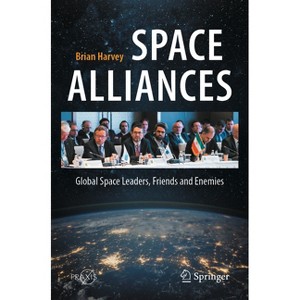
Space Alliances - by  Brian Harvey (Paperback) - 1 of 1

Space Alliances - by Brian Harvey (Paperback)

$32.99
 

Pre-order

Free & easy returns
Free & easy returns
Return this item by mail or in store within 90 days for a full refund.
Eligible for registries and wish lists

About this item

Highlights

  • From the start, space exploration was a field of rivalry between the superpowers as they built alliances to involve and reward their friends, consolidate their influence and frustrate their enemies.
  • About the Author: Brian Harvey has been a writer and broadcaster on spaceflight since the early 1970s.
  • 513 Pages
  • Science, Space Science

Description


Book Synopsis


From the start, space exploration was a field of rivalry between the superpowers as they built alliances to involve and reward their friends, consolidate their influence and frustrate their enemies. Space diplomacy became a diplomatic instrument, ever more sophisticated as new countries and regions developed their own rockets, satellites and industries.

This book examines the role, contours, shifting nature and purposes of space alliances from the early days to now; the formation of new alliances and the dissolution of old ones; the scientific and other benefits arising; and, alongside the competition, understated strands of cooperation. It tells the story of 'cross alliances' - some improbable - where quite opposite countries cooperated across political divides and ideology. It illustrates how on the sidelines, allies and opponents fought over satellite broadcasting rights and the location of ground stations. It shows how they used 'soft power' to impress the uncommitted, like astronaut tours, Moon rock displays and exhibitions.

The book describes the alliances built up by the United States, the first country to do so, especially with Europe; the USSR (Interkosmos); China, especially with the global south; India, Japan and other, less well-known space powers. It examines the projects that brought them together, like the International Space Station. It records how in the new race to the Moon in the tense 2020s, the world divided sharply between the United States and its friends on one side, with China, Russia and theirs on the other. Several countries formed 'space forces'.

This book identifies the political and scientific personalities that made cooperation and alliances work, the institutions that they established, the ideas that drove them, the skills and techniques that they used. There were people who stopped cooperation too, 'what if?' moments, alliances that never happened and others that ended in tears.


From the Back Cover


From the start, space exploration was a field of rivalry between the superpowers as they built alliances to involve and reward their friends, consolidate their influence and frustrate their enemies. Space diplomacy became a diplomatic instrument, ever more sophisticated as new countries and regions developed their own rockets, satellites and industries.

This book examines the role, contours, shifting nature and purposes of space alliances from the early days to now; the formation of new alliances and the dissolution of old ones; the scientific and other benefits arising; and, alongside the competition, understated strands of cooperation. It tells the story of 'cross alliances' - some improbable - where quite opposite countries cooperated across political divides and ideology. It illustrates how on the sidelines, allies and opponents fought over satellite broadcasting rights and the location of ground stations. It shows how they used 'soft power' to impress the uncommitted, like astronaut tours, Moon rock displays and exhibitions.

The book describes the alliances built up by the United States, the first country to do so, especially with Europe; the USSR (Interkosmos); China, especially with the global south; India, Japan and other, less well-known space powers. It examines the projects that brought them together, like the International Space Station. It records how in the new race to the Moon in the tense 2020s, the world divided sharply between the United States and its friends on one side, with China, Russia and theirs on the other. Several countries formed 'space forces'.

This book identifies the political and scientific personalities that made cooperation and alliances work, the institutions that they established, the ideas that drove them, the skills and techniques that they used. There were people who stopped cooperation too, 'what if?' moments, alliances that never happened and others that ended in tears.


About the Author


Brian Harvey has been a writer and broadcaster on spaceflight since the early 1970s. His articles have appeared in Spaceflight, Space Chronicle, Quest, Orbit, Astronomy & Space, Go Taikonauts! and ROOM. He has contributed to radio programs on BBC (Radio 4, Radio 5, World Service, Northern Ireland), Voice of America, Radio Free Europe, Future Tense (Australia) and to television and film programs for the Canadian Broadcasting Corporation, Discovery Channel, Danish TV and China CCTV (Dialogue - ideas matter). His first book was a history of the Soviet space program (Ellis Horwood, 1988), with three subsequent editions, followed by histories of Soviet lunar exploration, Soviet planetary exploration, Russian space science, the American Explorer program as well as histories of the European, Japanese and Indian space programs (all published by Praxis, later Praxis/Springer). He has written four histories of China's space program, the most recent also published in Chinese. He contributed chapters to Space Sleuths (Praxis, 2012) and a book on Yuri Galperin, published by the Academy of Sciences in Moscow (2012).

Dimensions (Overall): 9.25 Inches (H) x 6.1 Inches (W)
Suggested Age: 22 Years and Up
Number of Pages: 513
Genre: Science
Sub-Genre: Space Science
Publisher: Springer
Theme: General
Format: Paperback
Author: Brian Harvey
Language: English
Street Date: December 17, 2026
TCIN: 1013624887
UPC: 9783032344076
Item Number (DPCI): 247-63-6424
Origin: Made in the USA or Imported
If the item details aren’t accurate or complete, we want to know about it.

Shipping details

Estimated ship dimensions: 1 inches length x 6.1 inches width x 9.25 inches height
Estimated ship weight: 1 pounds
We regret that this item cannot be shipped to PO Boxes.
This item cannot be shipped to the following locations: American Samoa (see also separate entry under AS), Guam (see also separate entry under GU), Northern Mariana Islands, Puerto Rico (see also separate entry under PR), United States Minor Outlying Islands, Virgin Islands, U.S., APO/FPO, Alaska, Hawaii

Return details

This item can be returned to any Target store or Target.com.
This item must be returned within 90 days of the date it was purchased in store, delivered to the guest, delivered by a Shipt shopper, or picked up by the guest.
See the return policy for complete information.

Additional product information and recommendations

Discover more options

Skip to next section

Best-selling Adult Non-Fiction Books

Skip to next section

Get top deals, latest trends, and more.