The human and political sides of this decades-long odyssey are as intriguing and essential as understanding the essence of cancer itself.

About the Author: David Rasnick received his PhD in chemistry from Georgia Tech in 1978.
240 Pages
Health & Fitness, Diseases & Conditions
Description
Book Synopsis
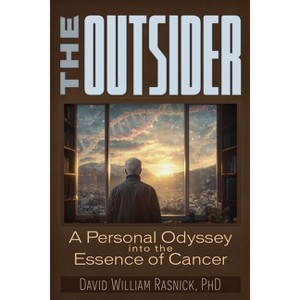
The human and political sides of this decades-long odyssey are as intriguing and essential as understanding the essence of cancer itself. Consequently, The Outsider's Advantage is much more than The Chromosomal Imbalance Theory of Cancer the author wrote for cancer researchers. Presented are the combined results of more than a century of the on-again, off-again efforts to understand what cancer really is, how it comes about, and what to do about it. The goal is to demystify the whole process and make it accessible to all. Along the way you'll learn about the personal and professional costs of confronting dogma: lost friendships, relentless personal attacks, and attempts at the highest levels of government to punish and silence dissent. The pharmaceutical industry's Sisyphean pursuit of anti-cancer drugs is almost exclusively focused on genes thought to cause cancer. However, there are no culprit genes and proteins responsible for cancer! By the late 19th Century, cancer cells were known to have massively unbalanced chromosomes. Aneuploidy is the fancy word for unbalanced chromosomes. For nearly a century, there was no definite way to settle the question of whether aneuploidy caused cancer or was simply collateral damage caused by cancer. But as the 20th Century was about to expire, professor Peter Duesberg at the University of California at Berkeley and David Rasnick overcame tremendous institutional obstacles and personal attacks to prove cancer is a disease of unbalanced chromosomes. Unbalanced chromosomes are unstable. Without chromosomal instability, there is no cancer, no progression, no metastasis, no drug resistance. Progression to cancer results from the continual scrambling of unbalanced chromosomes as the cells divide. Massively unbalanced chromosomes turn normal cells into cancer cells by disrupting the organized interactions of the many tens of thousands of cellular components. From the aneuploid cell's point of view, chromosomal instability is both a curse and a blessing. A curse because aneuploid cells are damaged and almost always die before they reach the level of aneuploidy necessary for cancer. A blessing because chromosomal instability can provide a rare escape from oblivion. If the aneuploid cells manage to survive, chromosomal instability gives them the freedom to evolve and progress each time they divide. The progression to cancer is slow because aneuploidy damages cells, making them less vigorous than normal healthy cells. It takes years for aneuploid cells to progress to leukemia and other blood cancers, and decades for solid tumors to appear. Since aneuploidy damages cancer cells, exposure to radiation and toxic chemotherapy kills cancer cells faster than normal cells. The rapid shrinkage of the tumor following the initial toxic therapy gives the impression the treatment is working. Unfortunately, radiation and chemotherapy kill billions of normal cells in the process. Chromosomal instability creates a population of cancer cells, of which no two are identical. In such a population there will always be a residue of cancer cells resistant to radiation and any combination of toxic drugs. When toxic therapy is stopped-- as it must-- the resistant cancer cells can proliferate and almost always return with a vengeance. The reduced viability inherent in aneuploid cells accounts for the well-documented fact that untreated cancers can-- on rare occasions-- go away spontaneously, never to return. Research into therapies that exploit the inherent diminished viability of aneuploid cancer cells without harming the host is urgently needed. The prospects are excellent for this strategy. There are many different types of carcinogens, but one way or another they all cause cancer by unbalancing the chromosomes of cells. Repeated exposure to carcinogens increases the pool of aneuploid cells, thus increasing a person's likelihood of getting cancer. The theory of chro
About the Author
David Rasnick received his PhD in chemistry from Georgia Tech in 1978. He worked 20 years in pharmaceutical/biotech industry and founded 4 biotech companies. He developed inhibitors against the enzymes responsible for the tissue destruction caused by cancer, emphysema, and arthritis. The same class of inhibitors are powerful anti-parasitic agents. Dave left the pharmaceutical-biotech industry in 1996 and joined UC Berkeley Professor Peter Duesberg's fight against the blatantly wrong dogma that HIV causes AIDS. Dave is former President of Rethinking AIDS: the Group for the Scientific Reappraisal of the HIV Hypothesis and former President of the International Coalition for Medical Justice. He was also a member of President Thabo Mbeki's Presidential AIDS Advisory Panel of South Africa. Along the way, Peter and Dave proved the aneuploidy (chromosomal imbalance) theory of cancer. Since February 2020, Dave has been working with people around the world fighting the COVID-initiated global coup d'é tat. Full CV and 4 decades of information are available on Rasnick's website: www.davidrasnick.com
Dimensions (Overall): 9.01 Inches (H) x 5.81 Inches (W) x .61 Inches (D)
Weight: .7 Pounds
Suggested Age: 22 Years and Up
Number of Pages: 240
Genre: Health & Fitness
Sub-Genre: Diseases & Conditions
Publisher: Credos
Theme: Cancer
Format: Paperback
Author: David William Rasnick
Language: English
Street Date: April 9, 2026
TCIN: 1011993866
UPC: 9781634245227
Item Number (DPCI): 247-38-5945
Origin: Made in the USA or Imported
If the item details aren’t accurate or complete, we want to know about it.
Shipping details
Estimated ship dimensions: 0.61 inches length x 5.81 inches width x 9.01 inches height
Estimated ship weight: 0.7 pounds
We regret that this item cannot be shipped to PO Boxes.
This item cannot be shipped to the following locations: American Samoa (see also separate entry under AS), Guam (see also separate entry under GU), Northern Mariana Islands, Puerto Rico (see also separate entry under PR), United States Minor Outlying Islands, Virgin Islands, U.S., APO/FPO, Alaska, Hawaii
Return details
This item can be returned to any Target store or Target.com.
This item must be returned within 90 days of the date it was purchased in store, delivered to the guest, delivered by a Shipt shopper, or picked up by the guest.