Target New ArrivalsHalloweenChristmasGift IdeasClothing, Shoes & AccessoriesHome & DecorKitchen & DiningPatio, Lawn & GardenGroceryHousehold EssentialsBabyBeautyTarget Beauty StudioPersonal CareSports & OutdoorsPetsHealthWellnessSchool & Office SuppliesToys & GamesElectronics & TechVideo GamesBooks, Music & MoviesParty SuppliesGift CardsShop by CommunityTarget OpticalDealsClearanceNew ArrivalsHalloweenChristmasGift IdeasTop DealsTarget Circle DealsWeekly AdShop Order PickupShop Same Day DeliveryRegistryRedCardTarget CircleFind Stores
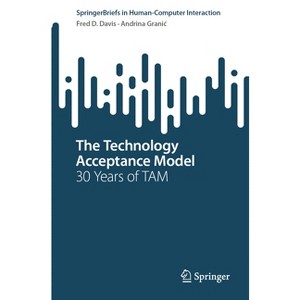
The Technology Acceptance Model - by  Fred D Davis & Andrina Granic (Paperback) - 1 of 1

The Technology Acceptance Model - by Fred D Davis & Andrina Granic (Paperback)

$59.99
 

In Stock

Free & easy returns
Free & easy returns
Return this item by mail or in store within 90 days for a full refund.
Eligible for registries and wish lists
Save 5% every day
With Target Circle™ Card (restrictions apply)

About this item

Highlights

  • This SpringerBrief discusses the origins, emergence, evolution, and future of the Technology Acceptance Model (TAM).
  • About the Author: Fred D. Davis holds the Bobby G. Stevenson Chair in Information Technology and is a Professor at the Rawls College of Business, Texas Tech University, USA.
  • 117 Pages
  • Computers, User Interfaces

Description


Book Synopsis


This SpringerBrief discusses the origins, emergence, evolution, and future of the Technology Acceptance Model (TAM). TAM, simple yet powerful, has been extensively validated, standing as a leading scientific paradigm and a reliable model for explaining, predicting, and improving user acceptance across a spectrum of technological deployments. Over more than three decades since the introduction of TAM, numerous extensions have emerged, incorporating additional variables and collectively referred to as "TAM++". However, perceived usefulness and perceived ease of use remain the basic beliefs of the core TAM model.

The introductory chapter "Once upon a TAM" focuses on the challenging search for a user acceptance crystal ball, showing that it is indeed possible to consistently predict, explain, and improve user acceptance. "Evolution of TAM" traces the model's growth and adaptability, exploring the proliferation of selected TAM-related behavioural intention models, several integrated theoretical approaches, the quest for other behavioural intention antecedents, and TAM's versatile applications in various contexts. "Revolution of TAM" presents an in-depth systematic review, encompassing a meta-analysis of selected TAM reviews and meta-analyses, and a narrative review of representative primary studies, providing a thorough and extensive understanding of the TAM universe. The epilogue "What will the Future of TAM be Like?" provides insights into its dynamic future. This SpringerBrief concludes with seven actionable principles, serving as a strategic guide for those aiming to customize the TAM++ body of knowledge for application-oriented studies within a particular context. This comprehensive overview of TAM is a valuable source of information for researchers, practitioners, and all interested readers, especially those new to the field.


From the Back Cover


This SpringerBrief discusses the origins, emergence, evolution, and future of the Technology Acceptance Model (TAM). TAM, simple yet powerful, has been extensively validated, standing as a leading scientific paradigm and a reliable model for explaining, predicting, and improving user acceptance across a spectrum of technological deployments. Over more than three decades since the introduction of TAM, numerous extensions have emerged, incorporating additional variables and collectively referred to as "TAM++". However, perceived usefulness and perceived ease of use remain the basic beliefs of the core TAM model.

The introductory chapter "Once upon a TAM" focuses on the challenging search for a user acceptance crystal ball, showing that it is indeed possible to consistently predict, explain, and improve user acceptance. "Evolution of TAM" traces the model's growth and adaptability, exploring the proliferation of selected TAM-related behavioural intention models, several integrated theoretical approaches, the quest for other behavioural intention antecedents, and TAM's versatile applications in various contexts. "Revolution of TAM" presents an in-depth systematic review, encompassing a meta-analysis of selected TAM reviews and meta-analyses, and a narrative review of representative primary studies, providing a thorough and extensive understanding of the TAM universe. The epilogue "What will the Future of TAM be Like?" provides insights into its dynamic future. This SpringerBrief concludes with seven actionable principles, serving as a strategic guide for those aiming to customize the TAM++ body of knowledge for application-oriented studies within a particular context. This comprehensive overview of TAM is a valuable source of information for researchers, practitioners, and all interested readers, especially those new to the field.


About the Author


Fred D. Davis holds the Bobby G. Stevenson Chair in Information Technology and is a Professor at the Rawls College of Business, Texas Tech University, USA. He received his PhD from the Massachusetts Institute of Technology and served on the business school faculties at the Universities of Michigan, Minnesota, Maryland, and Arkansas. His research interests include user acceptance of information technology, technology supported decision making, skill acquisition, and NeuroIS. He has been a co-organizer of the Gmunden Retreat on NeuroIS since 2009. His research has been published in MIS Quarterly, Information Systems Research, Management Science, Journal of Applied Psychology, Journal of MIS, Journal of the AIS, Information Systems Journal, Computers in Human Behavior, and other journals.
Andrina Granic holds a tenured position as a Professor in Computer Science at the Faculty of Science, University of Split, Croatia. She received her PhD from the University of Zagreb, Croatia. Her research interests include human-computer interaction, interaction design, technology-enhanced learning, and acceptance of technology. Her research has been published in Technology in Society, Universal Access in the Information Society, Computers & Education, Education and Information Technologies, British Journal of Educational Technology, and other journals. She holds positions on several editorial boards, actively engages in various national and international projects, serves as the Croatian representative in IFIP TC13 on Human-Computer Interaction, and is a member of the IEEE Computer Society.
Dimensions (Overall): 9.21 Inches (H) x 6.14 Inches (W) x .28 Inches (D)
Weight: .43 Pounds
Suggested Age: 22 Years and Up
Number of Pages: 117
Genre: Computers
Sub-Genre: User Interfaces
Publisher: Springer
Format: Paperback
Author: Fred D Davis & Andrina Granic
Language: English
Street Date: March 5, 2024
TCIN: 1014463359
UPC: 9783030452735
Item Number (DPCI): 247-35-4616
Origin: Made in the USA or Imported
If the item details aren’t accurate or complete, we want to know about it.

Shipping details

Estimated ship dimensions: 0.28 inches length x 6.14 inches width x 9.21 inches height
Estimated ship weight: 0.43 pounds
We regret that this item cannot be shipped to PO Boxes.
This item cannot be shipped to the following locations: American Samoa (see also separate entry under AS), Guam (see also separate entry under GU), Northern Mariana Islands, Puerto Rico (see also separate entry under PR), United States Minor Outlying Islands, Virgin Islands, U.S., APO/FPO, Alaska, Hawaii

Return details

This item can be returned to any Target store or Target.com.
This item must be returned within 90 days of the date it was purchased in store, delivered to the guest, delivered by a Shipt shopper, or picked up by the guest.
See the return policy for complete information.

Additional product information and recommendations

Discover more options

Skip to next section

Best-selling Computers & Technology Books

Skip to next section

Get top deals, latest trends, and more.