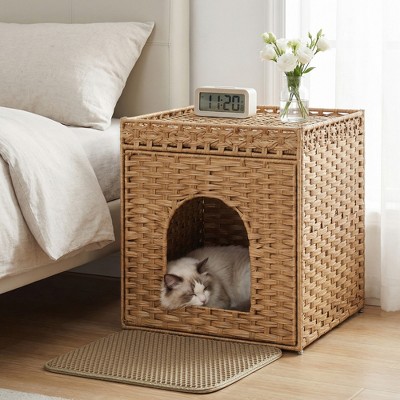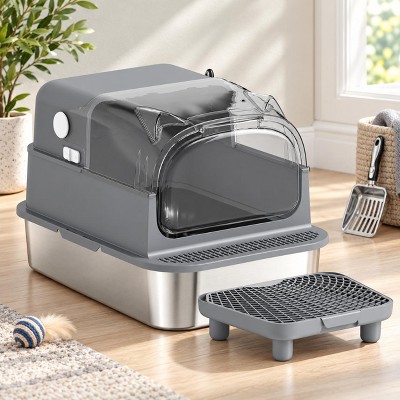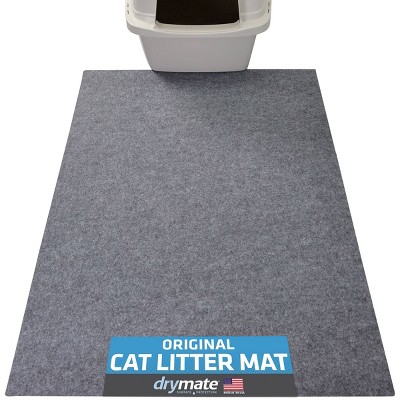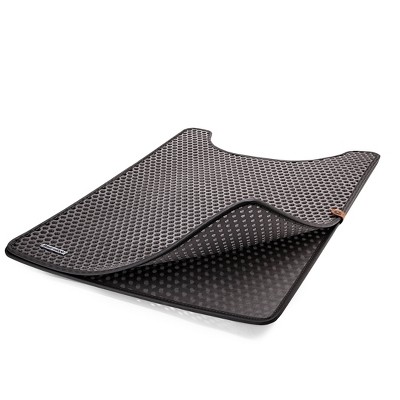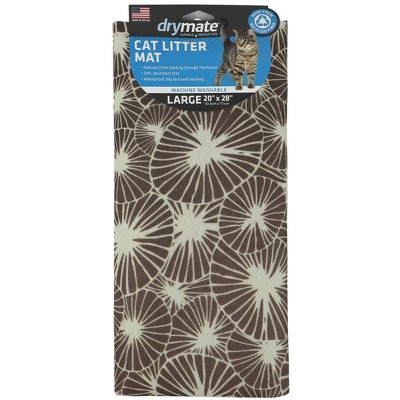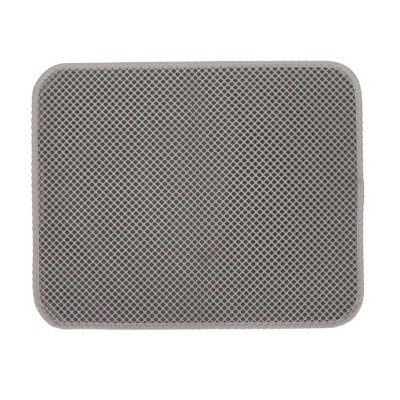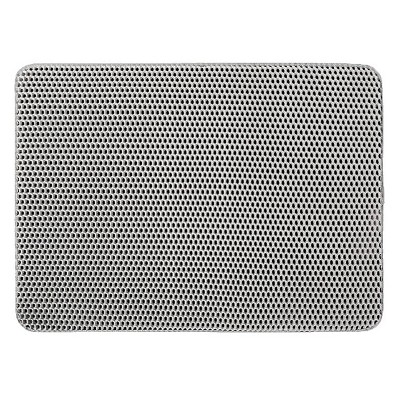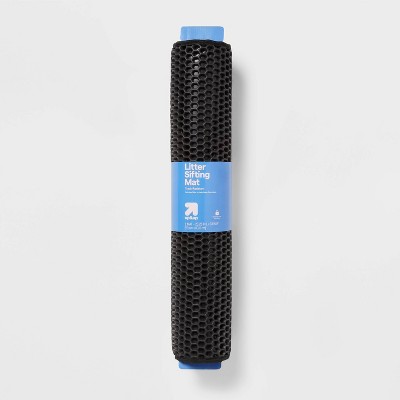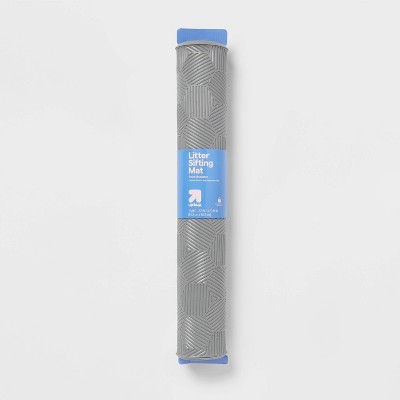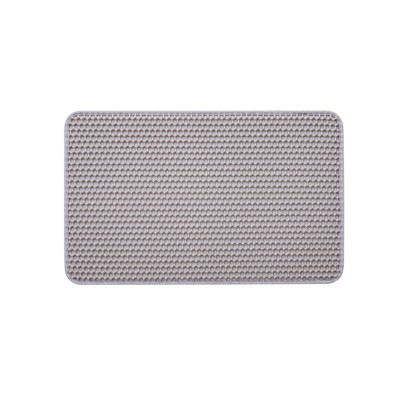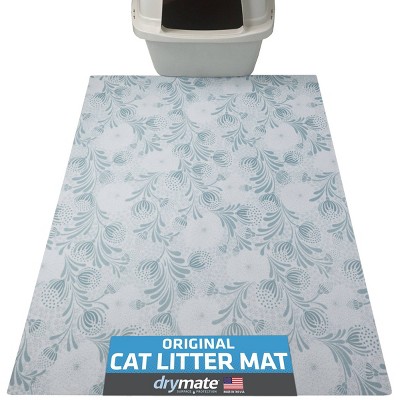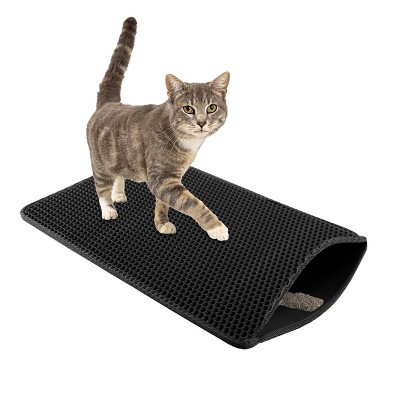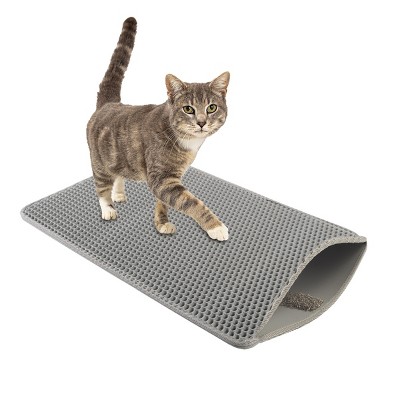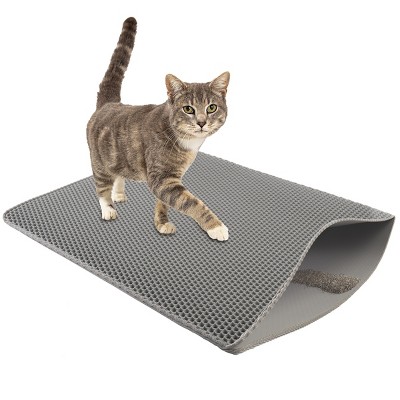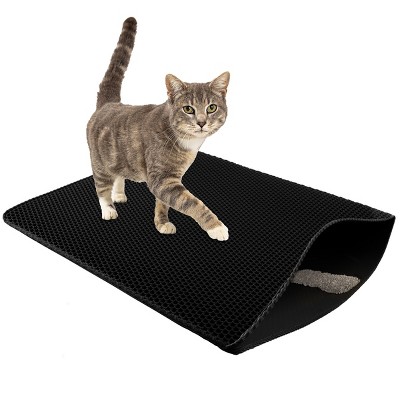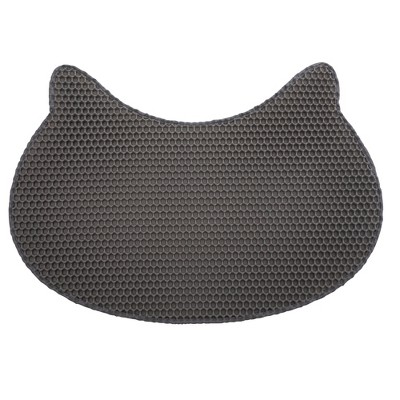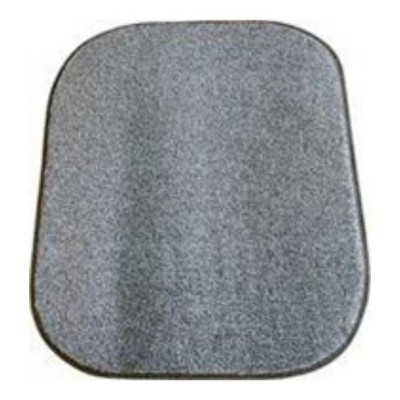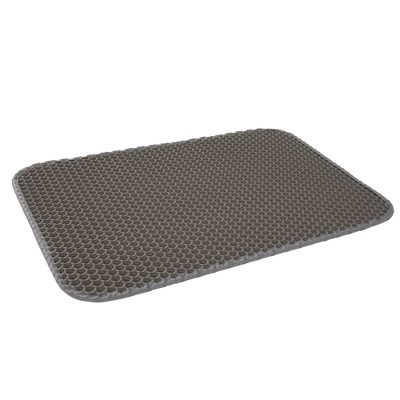

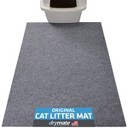
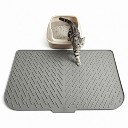
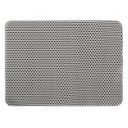
A textured top layer with holes or honeycomb cells lets loose litter fall through into a lower collection layer, where it is held until you empty the mat. This two-layer design keeps tracked litter off the floor and contained in the bottom layer.
Many mats include a waterproof bottom layer or backing described as 'urine-proof' to prevent leaks, and they often combine that with a non-slip or slip-resistant backing to protect floors and keep the mat in place.
Listings commonly state compatibility with clumping litter, crystal litter, and pellet-style litters, indicating those mat designs can capture loose particles from these types.
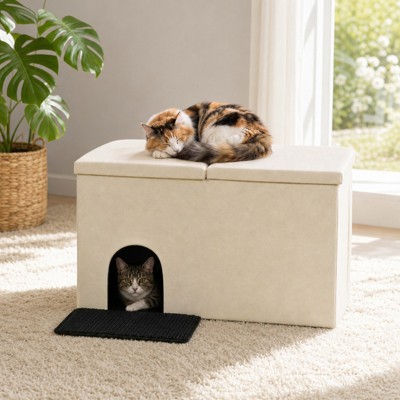
Mats use slip-resistant or textured bottoms and sometimes adhesive strips or anti-slip pads to grip the floor. These features reduce movement when cats step on the mat and help keep it positioned under the litter box.
Listings show a variety of plastics and foams, including silicone, PVC (polyvinyl chloride), PEVA, polyethylene, polyester, polyurethane foam, EVA, and other generic plastic materials.
Common sizes shown in listings include 21 × 14 in, 24 × 15 in, and 30 × 24 in. Overall, options generally range from about 21 × 14 inches up to roughly 30 × 24 inches, with 24 × 15 appearing frequently.
For routine maintenance, lift or separate the mat to pour trapped litter back into the box or trash and spot-clean or wipe as needed. For deeper cleaning, rinse or handwash the mat with soap and water when necessary.
Listings typically describe a top honeycomb or gridded surface that pulls loose litter into a lower layer or pockets for collection. Some mention open-back or elevated-ridge designs to contain debris; trapped litter can be poured back into the box, and mats can be rinsed or handwashed for cleaning.