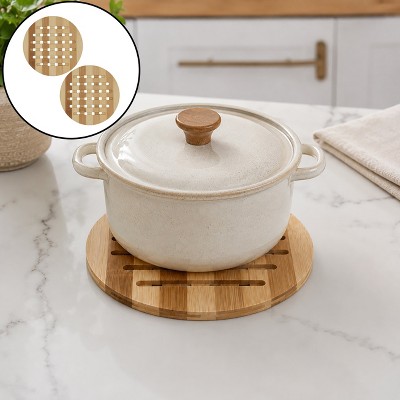
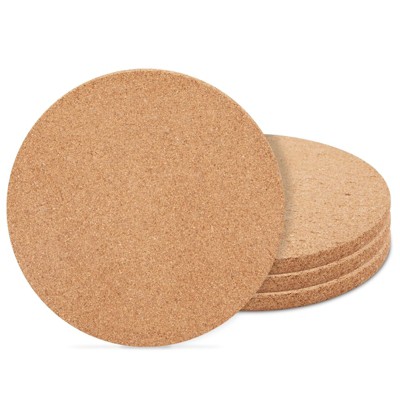
Most listings describe cork trivets as made of natural cork (often called high‑density or “natural oak” cork). Some listings note recycled cork, and one product spec also lists bamboo as a material option.
Listings describe cork trivets as heat-resistant and effective at insulating hot dishes. One product explicitly contrasts cork with silicone, noting cork won’t melt and can offer higher heat resistance in some uses.
Descriptions commonly call cork trivets thick or extra thick and note they’re sturdy. Many listings explain that greater thickness boosts heat resistance while still allowing some flexibility.
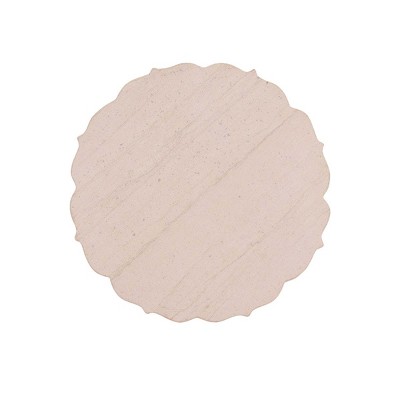
Yes. Several listings note blank or laser‑engravable cork surfaces that you can paint, write on, or laser‑engrave—making them suitable for crafts and personalized projects.
Many listings are sold as 4‑piece sets; some options are offered in larger multi‑packs, such as 16‑piece sets.
Most descriptions recommend wiping the trivet with a dry or damp cloth. Several listings explicitly advise avoiding the dishwasher and microwave; one product lists care as “Spot or Wipe Clean.”
Common alternate uses include drying mats, plant mats or bases for potted plants, utensil rests, placemats or coasters, and materials for arts‑and‑crafts or DIY decorating projects.
Magnetic or specialty trivets are described as having a magnetic center—often set in heat‑resistant silicone—to connect with compatible stainless‑steel cookware and serve as compact support mats. Regular cork trivets are heat‑resistant cork pads intended to insulate and protect tabletops and countertops.