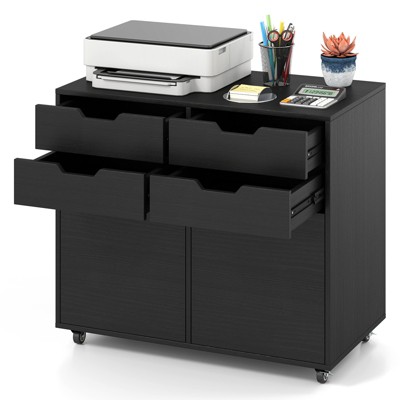
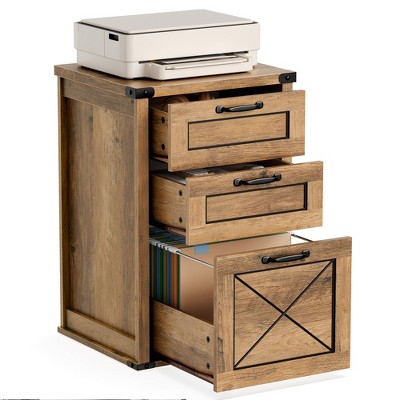
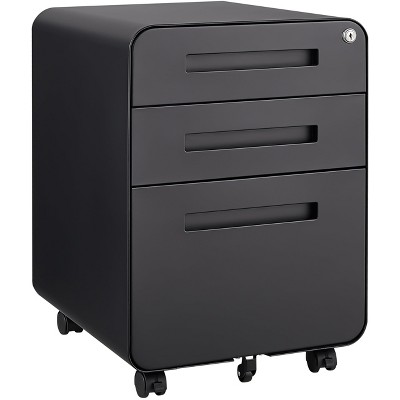
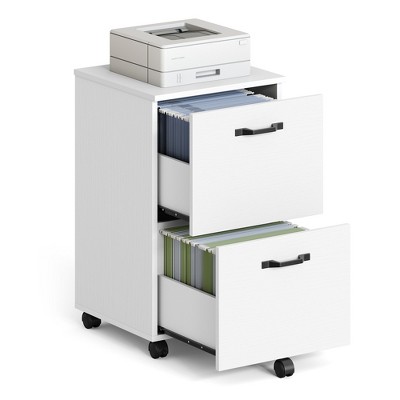
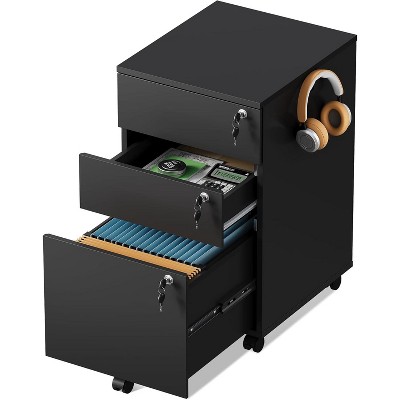
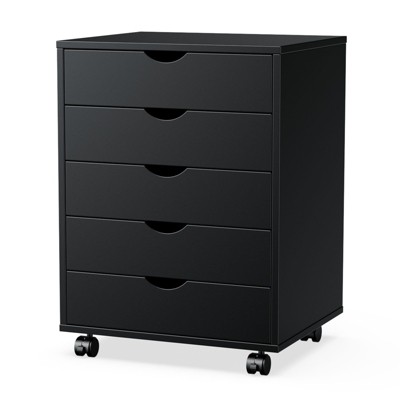
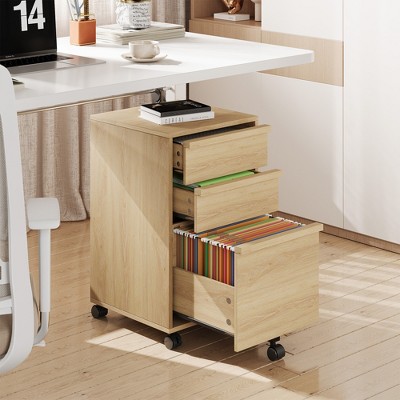
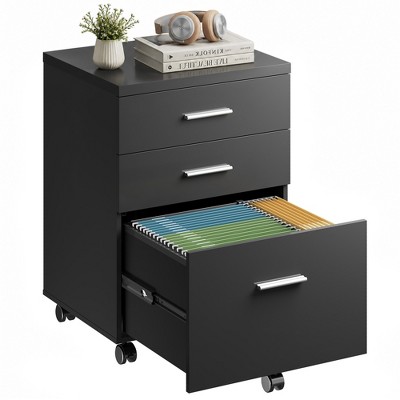
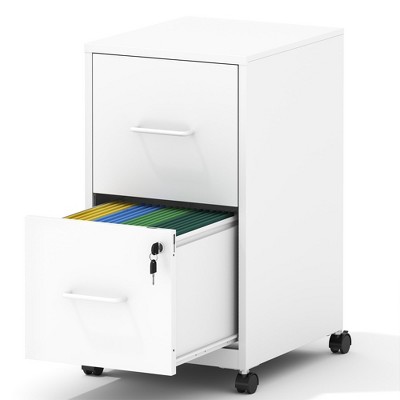
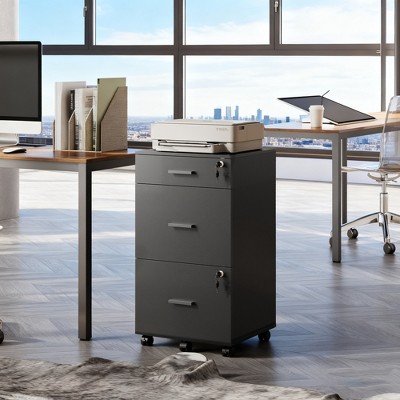
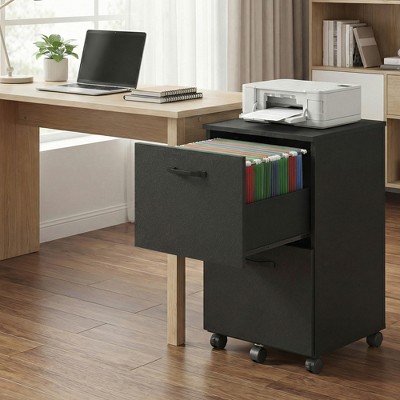
Typical options include lockable casters or integrated locking brakes that park the cabinet securely. Some models also provide removable wheels so the cabinet can be converted to a non-mobile unit.
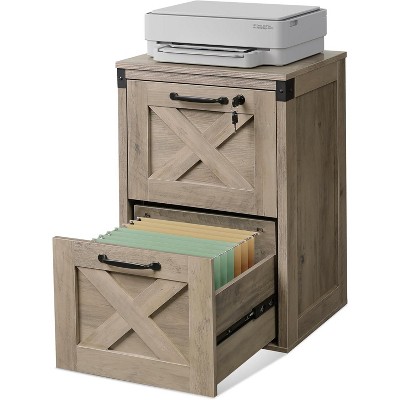
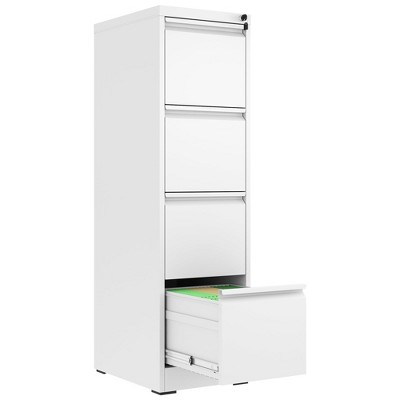
Rolling file cabinets may include anti-tilt wheels or anti-tipping wheels and reinforced interlocking drawer mechanisms that limit how far drawers can open. These features work together to reduce the risk of tipping when drawers are extended.
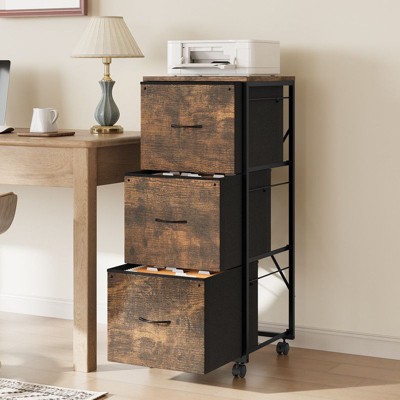
Many cabinets arrive fully assembled except for the casters, which are described as easy to attach on delivery and removable if you prefer a stationary setup. Product listings commonly indicate whether the wheels are preinstalled or removable.
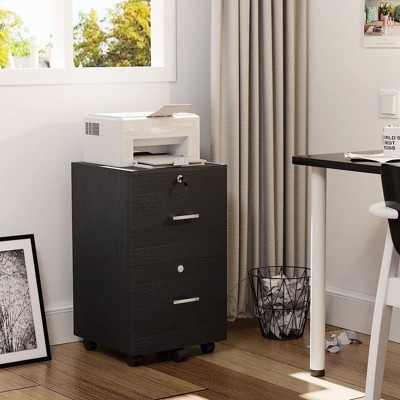
With swivel casters, wheeled file cabinets are described as gliding smoothly across hardwood, tile, carpet, and even uneven concrete, making them suitable for a variety of floor types.
Stability features tied to wheels include anti-tilt or anti-tipping wheels, interlocking drawer mechanisms that limit drawer extension, and locking brakes on front casters to hold the cabinet in place under load.
Workshop rolling cabinets typically use heavy-duty swivel casters—often four 360° swivel wheels—with two wheels fitted with brakes for secure parking.
Some cabinets include trolley-style wheels with brakes and guardrails to prevent items from falling during movement, along with lockable casters to keep the unit stationary when needed.