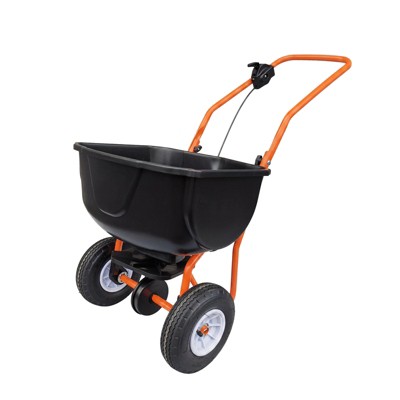
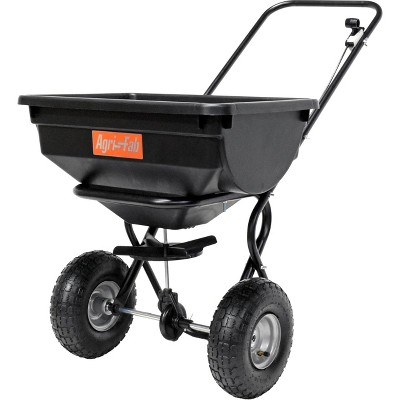
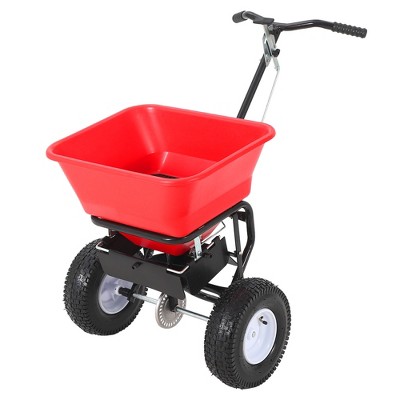
Spreaders in these results range from very small handheld tubs (~0.9 gallon) through mid-size push hoppers (10–24 gallons) to large tow‑behind hoppers (around 85 gallons). Some compost/roller-style units report volume in cubic feet (for example, 2.7 cu ft).
Models offer several types of flow and spread controls: multi-step adjustable settings (examples include 18 steps), infinite or numbered setting dials (e.g., 30-position), rotary granular controllers, multi-speed dials, and multi-level flow-rate baffles to handle different material sizes.
These spreaders handle a wide range of granular or coarse materials, including compost, peat moss, manure, topsoil, sand, seed, fertilizer, salt/ice‑melt, and similar products; some listings also note uses such as herbicide/weed‑control applications and livestock feed for specific models.
The results show three common types: metal‑mesh compost/peat‑moss rollers, tow‑behind or push hoppers for tractors/UTVs, and cordless handheld motorized spreaders.
Hoppers and frames commonly use powder‑coated steel or other metal frames (including metal‑mesh rollers). Impact‑resistant plastics are also common for hoppers, and some handheld units list ABS plastic construction.
Power options include battery‑powered cordless handheld models (examples list 20V cordless units) and manual/no‑battery models for push or tow use (specs may show "Battery: No Battery Used").
Reported spread widths vary by model: cordless handhelds can cover about 5 ft, many push/tow or roller‑style units list widths roughly in the 11–24 ft range, and some heavy‑duty tow‑behind listings report maximum throws up to about 120 ft. Exact coverage depends on material and model.
Many spreaders require adult assembly; some include tools while others are tool‑free. For storage and upkeep, listings note compact designs for shed storage, easy cleanup by rinsing, and a few models that can be hung on a wall.