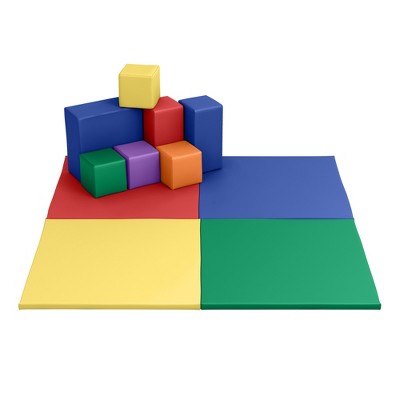
Many playmats meet toy and child-safety standards such as ASTM, CPSIA, and EN71.
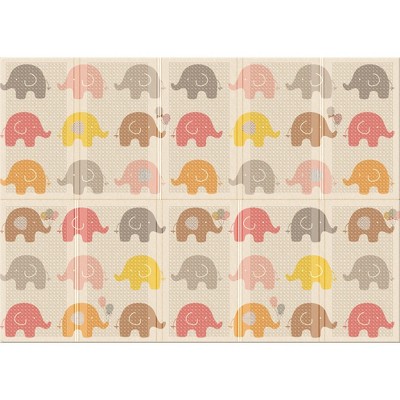
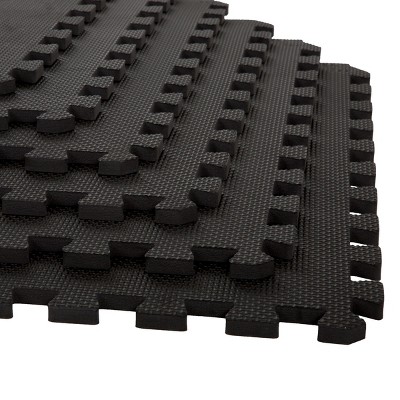
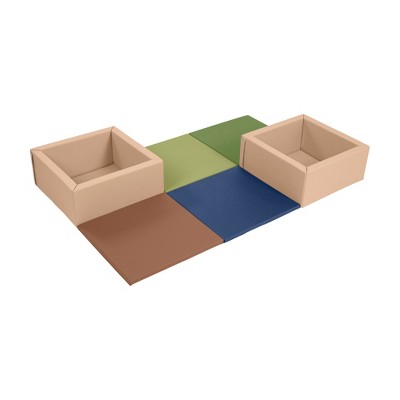
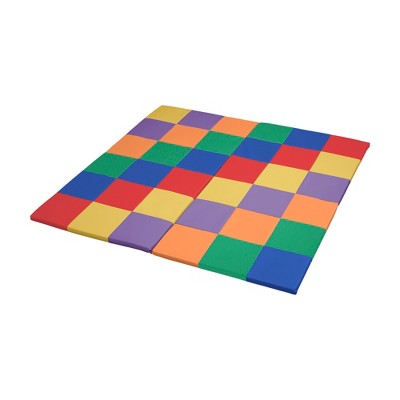
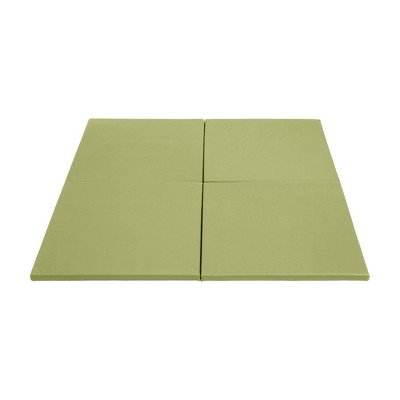
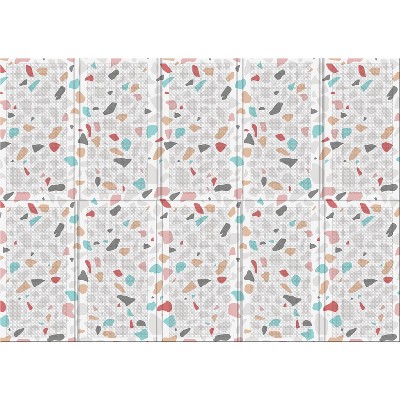
Cushioning varies by product: many playmats emphasize extra-thick, soft foam padding (often described as 'soft' or 'squishy'). Some foam-tile sets specify thickness—for example, one set lists 0.47 inches—so check product details for exact padding.
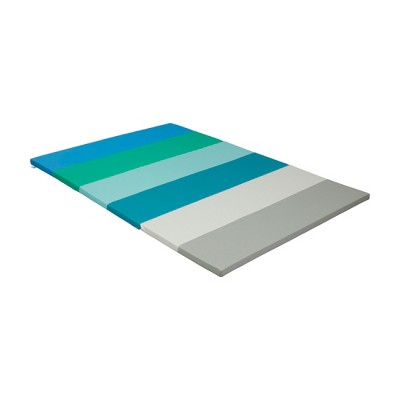
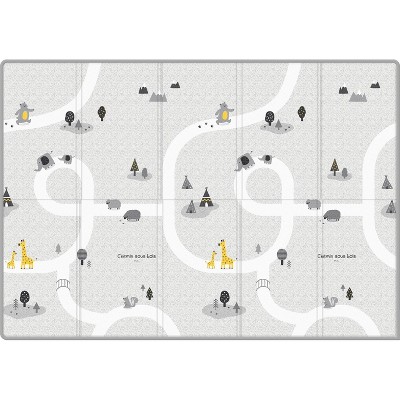
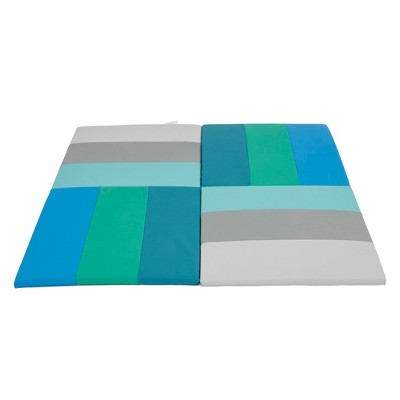
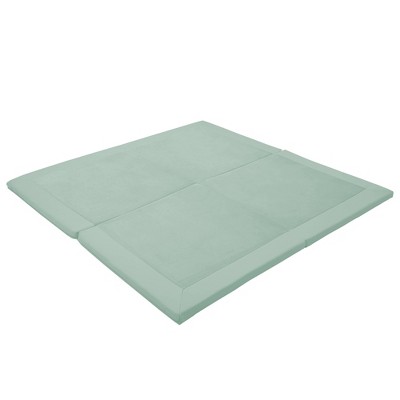
Many playmats are designed to fold, roll, or collapse for easy transport and storage. Descriptions often mention foldable designs, carrying handles or bags, and compact folding for room-to-room use or travel.
Suitability varies: some mats are marketed for both indoor and outdoor use and include water-resistant coatings; others—especially foam puzzle mats—advise indoor use only and recommend avoiding direct sunlight.
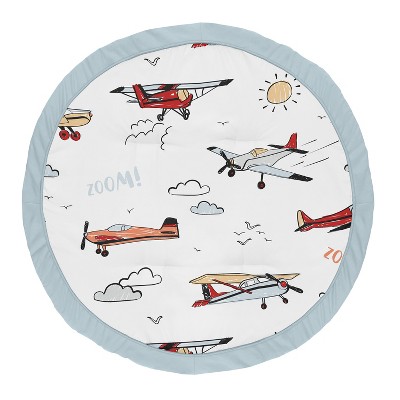
Common materials include foam (EVA foam and polyethylene foam), fabric or polyester, plastic, and options that combine organic cotton with recycled polyester.
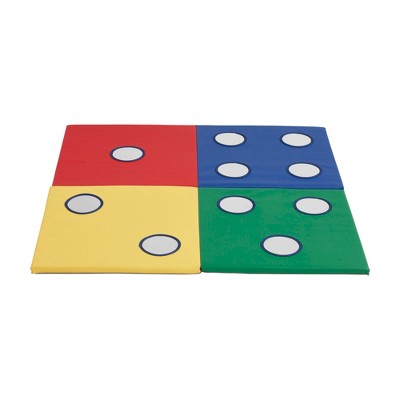
Sizes vary widely: individual tiles are about 17–17.5 inches each, assembled sets can measure around 51 × 51 inches, and single mats commonly measure in the mid‑30s to high‑50s of inches across (examples: 35 in, 57.8 in). Some specialty mats list sizes such as a 31 × 69 inch piano mat.
Many playmats list suitability from 0–36 months or from 0 months+, some are labeled for all ages, and at least one musical/dance mat is recommended for ages 3 years and up.
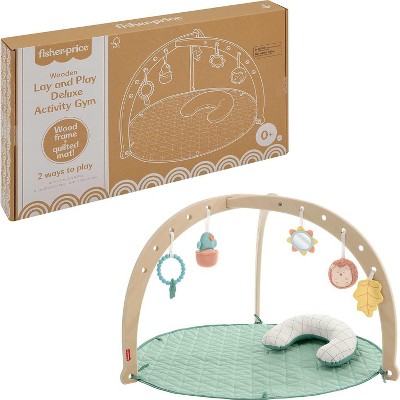
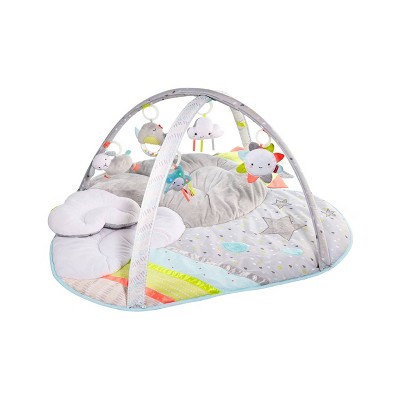
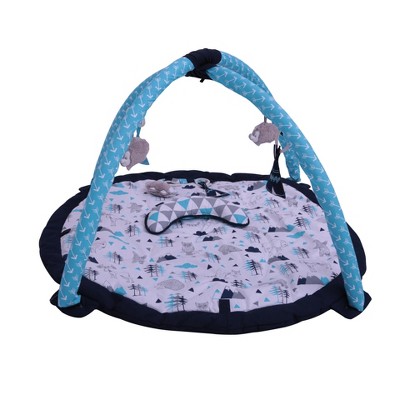
Activity mats commonly include detachable or repositionable toys (mirrors, rattles, teethers, plush toys), toy arches or wooden toy bars, musical features like light‑up piano keys and sound/light effects, plus practical elements such as foldable mats, removable/machine‑washable covers, and built‑in handles for transport.
Electronic playmats list specific battery requirements (examples: '3 AA Zinc Carbon' and '4 AA Alkaline'), while many mats indicate 'No Battery Used.' Check the product listing for exact power or battery requirements.