Target New ArrivalsFourth of JulyBack to SchoolCollegeClothing, Shoes & AccessoriesHome & DecorKitchen & DiningOutdoor Living & GardenGroceryHousehold EssentialsBabyBeautyPersonal CareSports & OutdoorsHealthWellnessSchool & Office SuppliesToys & GamesElectronicsVideo GamesMovies, Music & BooksParty SuppliesGift IdeasGift CardsPetsUlta Beauty at TargetShop by CommunityTarget OpticalDealsClearanceNew ArrivalsBack to SchoolCollegeTop DealsTarget Circle DealsWeekly AdShop Order PickupShop Same Day DeliveryRegistryRedCardTarget CircleFind Stores
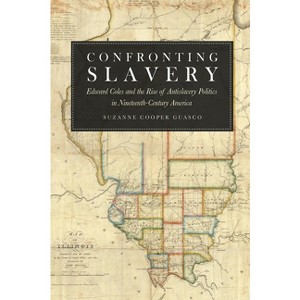
Confronting Slavery - by  Suzanne Cooper Guasco (Paperback) - 1 of 1

Confronting Slavery - by Suzanne Cooper Guasco (Paperback)

$24.49Save $8.46 (26% off)

In Stock

Free & easy returns
Free & easy returns
Return this item by mail or in store within 90 days for a full refund.
Eligible for registries and wish lists

About this item

Highlights

  • Edward Coles, who lived from 1786-1868, is most often remembered for his antislavery correspondence with Thomas Jefferson in 1814, freeing his slaves in 1819, and leading the campaign against the legalization of slavery in Illinois during the 1823-24 convention contest.In this new full-length biography Suzanne Cooper Guasco demonstrates for the first time how Edward Coles continued to confront slavery for nearly forty years after his time in Illinois.
  • Midwest Book Award (MIPA) (Biography) 2014 1st Winner
  • About the Author: Suzanne Cooper Guasco is the Robert Haywood Morrison Associate Professor and Chair of History at Queens University of Charlotte.
  • 300 Pages
  • Biography + Autobiography, Historical

Description


About the Book


Edward Coles, who lived from 1786-1868, is most often remembered for his antislavery correspondence with Thomas Jefferson in 1814, freeing his slaves in 1819, and leading the campaign against the legalization of slavery in Illinois during the 1823-24 convention contest. In this new full-length biography Suzanne Cooper Guasco demonstrates for the first time how Edward Coles continued to confront slavery for nearly forty years after his time in Illinois. Not only did he attempt to shape the slavery debates in Virginia immediately before and after Nat Turner's rebellion, he also consistently entered national political discussions about slavery throughout the 1830s, 40s, and 50s. On each occasion Coles promoted a vision of the nation that combined a celebration of America's antislavery past with an endorsement of free labor ideology and colonization, a broad appeal that was designed to mollify his fellow-countrymen's sense of economic self-interest and virulent anti-black prejudice. As Cooper Guasco persuasively shows, Coles's antislavery nationalism, first crafted in Illinois in the 1820s, became the foundation of the Republican Party platform and ultimately contributed to the destruction of slavery. By exploring his entire life, readers come to see Edward Coles as a vital link between the unfulfilled antislavery sensibility of men like Thomas Jefferson and the pragmatic antislavery politics of Abraham Lincoln. In Edward Coles' life-long confrontation with slavery, as well, we witness the rise of antislavery politics in nineteenth-century America and come to understand the central role politics played in the fight against slavery.


Book Synopsis


Edward Coles, who lived from 1786-1868, is most often remembered for his antislavery correspondence with Thomas Jefferson in 1814, freeing his slaves in 1819, and leading the campaign against the legalization of slavery in Illinois during the 1823-24 convention contest.

In this new full-length biography Suzanne Cooper Guasco demonstrates for the first time how Edward Coles continued to confront slavery for nearly forty years after his time in Illinois. Not only did he attempt to shape the slavery debates in Virginia immediately before and after Nat Turner's rebellion, he also consistently entered national political discussions about slavery throughout the 1830s, 40s, and 50s. On each occasion Coles promoted a vision of the nation that combined a celebration of America's antislavery past with an endorsement of free labor ideology and colonization, a broad appeal that was designed to mollify his fellow-countrymen's sense of economic self-interest and virulent anti-black prejudice. As Cooper Guasco persuasively shows, Coles's antislavery nationalism, first crafted in Illinois in the 1820s, became the foundation of the Republican Party platform and ultimately contributed to the destruction of slavery.

By exploring his entire life, readers come to see Edward Coles as a vital link between the unfulfilled antislavery sensibility of men like Thomas Jefferson and the pragmatic antislavery politics of Abraham Lincoln. In Edward Coles' life-long confrontation with slavery, as well, we witness the rise of antislavery politics in nineteenth-century America and come to understand the central role politics played in the fight against slavery.


Review Quotes


Suzanne Cooper Guasco ably illuminates the debate over slavery and race from the revolutionary era through the early Reconstruction years, bridging important historiographic gaps in the process.

-- "The Journal of American History"

Suzanne Cooper Guasco... tells Coles's story as a 'life-long confrontation with slavery.' Her account is fascinating, inspiring, and tragic all at once.

-- "Claremont Review of Books"

Suzanne Cooper Guasco's elegantly written study of Edward Coles, second governor of Illinois, proves that his life story merits historians' attention. Cooper Guasco has a gift for selecting diverting examples, and she adeptly depicts how throughout his long public life Coles battled sectionalism, sought national unity, and tirelessly argued that the United States' founders opposed slavery.

-- "Middle West Review"

The book's major strengths lie in Guasco's recognition that Coles's life and antislavery politics span eras, regions, and ideologies that historians often examine in isolation, preventing them from seeing nineteenth-century social and political histories as deeply intertwined. She effectively makes the case for Coles's own trajectory, demonstrates the development of antislavery politics over several decades, and thereby brings Coles more fully into the historiography of antislavery.

-- "Ohio Valley History"


About the Author


Suzanne Cooper Guasco is the Robert Haywood Morrison Associate Professor and Chair of History at Queens University of Charlotte.

Dimensions (Overall): 8.9 Inches (H) x 6.0 Inches (W) x .9 Inches (D)
Weight: 1.15 Pounds
Suggested Age: 22 Years and Up
Number of Pages: 300
Genre: Biography + Autobiography
Sub-Genre: Historical
Publisher: Northern Illinois University Press
Format: Paperback
Author: Suzanne Cooper Guasco
Language: English
Street Date: March 15, 2013
TCIN: 1010987582
UPC: 9780875806891
Item Number (DPCI): 247-11-7450
Origin: Made in the USA or Imported
If the item details aren’t accurate or complete, we want to know about it.

Shipping details

Estimated ship dimensions: 0.9 inches length x 6 inches width x 8.9 inches height
Estimated ship weight: 1.15 pounds
We regret that this item cannot be shipped to PO Boxes.
This item cannot be shipped to the following locations: American Samoa (see also separate entry under AS), Guam (see also separate entry under GU), Northern Mariana Islands, Puerto Rico (see also separate entry under PR), United States Minor Outlying Islands, Virgin Islands, U.S., APO/FPO, Alaska, Hawaii

Return details

This item can be returned to any Target store or Target.com.
This item must be returned within 90 days of the date it was purchased in store, delivered to the guest, delivered by a Shipt shopper, or picked up by the guest.
See the return policy for complete information.

Q: What impact did Coles have on the Republican Party?

submitted by AI Shopping Assistant - 2 months ago
  • A: Coles' antislavery nationalism contributed to the formation of the Republican Party platform and the fight against slavery.

    submitted byAI Shopping Assistant - 2 months ago
    Ai generated

Q: Who is the author of this biography?

submitted by AI Shopping Assistant - 2 months ago
  • A: The author is Suzanne Cooper Guasco, a history professor at Queens University of Charlotte.

    submitted byAI Shopping Assistant - 2 months ago
    Ai generated

Q: How did Coles engage in national politics?

submitted by AI Shopping Assistant - 2 months ago
  • A: He entered national discussions on slavery notably during the 1830s, 40s, and 50s, advocating for antislavery positions.

    submitted byAI Shopping Assistant - 2 months ago
    Ai generated

Q: What historical period does the book cover?

submitted by AI Shopping Assistant - 2 months ago
  • A: The book spans from Edward Coles' life in the late 18th century to the early Reconstruction era.

    submitted byAI Shopping Assistant - 2 months ago
    Ai generated

Q: What is the main focus of Edward Coles' biography?

submitted by AI Shopping Assistant - 2 months ago
  • A: The biography highlights Edward Coles' lifelong confrontation with slavery and his political efforts against it.

    submitted byAI Shopping Assistant - 2 months ago
    Ai generated

Additional product information and recommendations

Discover more options

Best-selling Biography & Autobiography

Get top deals, latest trends, and more.