Target New ArrivalsGift Ideas for MomClothing, Shoes & AccessoriesHome & DecorKitchen & DiningOutdoor Living & GardenGroceryHousehold EssentialsBabyBeautyPersonal CareHealthWellnessLuggageSports & OutdoorsToysElectronicsVideo GamesMovies, Music & BooksSchool & Office SuppliesParty SuppliesGift IdeasGift CardsPetsUlta Beauty at TargetShop by CommunityTarget OpticalDealsClearanceTarget New ArrivalsSpring OutfitsGift Ideas for MomWomen’s Festival OutfitsTop DealsTarget Circle DealsWeekly AdShop Order PickupShop Same Day DeliveryRegistryRedCardTarget CircleFind Stores
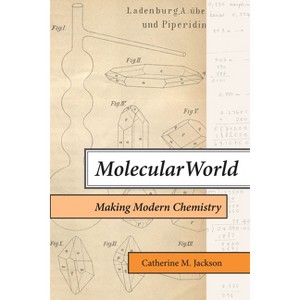
Molecular World - by  Catherine M Jackson (Paperback) - 1 of 1

Molecular World - by Catherine M Jackson (Paperback)

$75.00

In Stock

Free & easy returns

Free & easy returns

Return this item by mail or in store within 90 days for a full refund.
Eligible for registries and wish lists

About this item

Highlights

  • A compelling and innovative account that reshapes our view of nineteenth-century chemistry, explaining a critical period in chemistry's quest to understand and manipulate organic nature.
  • About the Author: Catherine M. Jackson is Associate Professor of the History of Science at the University of Oxford, Peck Fellow in History at Harris Manchester College, and Director of the Oxford Centre for the History of Science, Medicine, and Technology.
  • 460 Pages
  • Science, History

Description


About the Book


"Looks at the history of synthetic organic chemistry and challenges long-held beliefs that theory drove the experiments, asserting that it was actually the lab work that birthed the theory"--


Book Synopsis


A compelling and innovative account that reshapes our view of nineteenth-century chemistry, explaining a critical period in chemistry's quest to understand and manipulate organic nature.

According to existing histories, theory drove chemistry's remarkable nineteenth-century development. In Molecular World, Catherine M. Jackson shows instead how novel experimental approaches combined with what she calls "laboratory reasoning" enabled chemists to bridge wet chemistry and abstract concepts and, in so doing, create the molecular world. Jackson introduces a series of practice-based breakthroughs that include chemistry's move into lampworked glassware, the field's turn to synthesis and subsequent struggles to characterize and differentiate the products of synthesis, and the gradual development of institutional chemical laboratories, an advance accelerated by synthesis and the dangers it introduced.

Jackson's historical reassessment emerges from the investigation of alkaloids by German chemists Justus Liebig, August Wilhelm Hofmann, and Albert Ladenburg. Stymied in his own research, Liebig steered his student Hofmann into pioneering synthesis as a new investigative method. Hofmann's practice-based laboratory reasoning produced a major theoretical advance, but he failed to make alkaloids. That landmark fell to Ladenburg, who turned to cutting-edge theory only after his successful synthesis.

In telling the story of these scientists and their peers, Jackson reveals organic synthesis as the ground chemists stood upon to forge a new relationship between experiment and theory--with far-reaching consequences for chemistry as a discipline.


Review Quotes


"It will change the discussion of 19th century chemistry forever."
--Gary Patterson, Bulletin for the History of Chemistry

"...many historians have stressed the role of theory in organic chemistry. But Catherine Jackson emphasizes experimental reasoning."
--Andrew Robinson, Nature

"Jackson has written a history that takes into account not only instruments and experimental methods but also detailed theoretical chemical knowledge and even personal and institutional context. Many authors highlight the importance of practice in chemistry, but only a few can provide such a detailed look into laboratory reasoning that the readers can truly realize this importance for themselves."
--Sarah Hijmans, H-Net Reviews


"Careful, precise, and well documented in extensive notes and a rich bibliography, this book will be valuable for decades to come.""
--CHOICE


About the Author


Catherine M. Jackson is Associate Professor of the History of Science at the University of Oxford, Peck Fellow in History at Harris Manchester College, and Director of the Oxford Centre for the History of Science, Medicine, and Technology.
Dimensions (Overall): 8.9 Inches (H) x 6.0 Inches (W) x 1.1 Inches (D)
Weight: 1.6 Pounds
Suggested Age: 22 Years and Up
Number of Pages: 460
Genre: Science
Sub-Genre: History
Publisher: MIT Press
Format: Paperback
Author: Catherine M Jackson
Language: English
Street Date: July 4, 2023
TCIN: 1008646283
UPC: 9780262545549
Item Number (DPCI): 247-15-4225
Origin: Made in the USA or Imported
If the item details aren’t accurate or complete, we want to know about it.

Shipping details

Estimated ship dimensions: 1.1 inches length x 6 inches width x 8.9 inches height
Estimated ship weight: 1.6 pounds
We regret that this item cannot be shipped to PO Boxes.
This item cannot be shipped to the following locations: American Samoa (see also separate entry under AS), Guam (see also separate entry under GU), Northern Mariana Islands, Puerto Rico (see also separate entry under PR), United States Minor Outlying Islands, Virgin Islands, U.S., APO/FPO, Alaska, Hawaii

Return details

This item can be returned to any Target store or Target.com.
This item must be returned within 90 days of the date it was purchased in store, delivered to the guest, delivered by a Shipt shopper, or picked up by the guest.
See the return policy for complete information.

Q: What does the book reveal about organic synthesis?

submitted by AI Shopping Assistant - 2 months ago
  • A: It illustrates how organic synthesis allowed chemists to forge new relationships between experiment and theory.

    submitted byAI Shopping Assistant - 2 months ago
    Ai generated

Q: What historical period does the book focus on?

submitted by AI Shopping Assistant - 2 months ago
  • A: The book focuses on the critical period of nineteenth-century chemistry and its developments.

    submitted byAI Shopping Assistant - 2 months ago
    Ai generated

Q: How many pages does the book contain?

submitted by AI Shopping Assistant - 2 months ago
  • A: The book contains a total of 460 pages, offering an in-depth exploration of its themes.

    submitted byAI Shopping Assistant - 2 months ago
    Ai generated

Q: Who is the author of the book?

submitted by AI Shopping Assistant - 2 months ago
  • A: The author is Catherine M. Jackson, an Associate Professor of the History of Science at Oxford.

    submitted byAI Shopping Assistant - 2 months ago
    Ai generated

Q: What unique perspective does the book provide about chemistry?

submitted by AI Shopping Assistant - 2 months ago
  • A: It challenges the belief that theory drove experiments, asserting that laboratory work birthed theoretical advancements.

    submitted byAI Shopping Assistant - 2 months ago
    Ai generated

Additional product information and recommendations
Discover more options

Trending Education Books

Get top deals, latest trends, and more.

Privacy policy