Sponsored
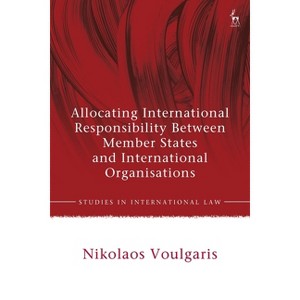
Allocating International Responsibility Between Member States and International Organisations - (Studies in International Law) (Hardcover)
In Stock
Sponsored
About this item
Highlights
- The ever-growing interaction between member States and international organisations results, all too often, in situations of non-conformity with international law (eg peacekeeping operations, international economic adjustment programmes, counter-terrorism sanctions).
- About the Author: Nikolaos Voulgaris is a lecturer at the European Law and Governance School and Head of the Treaty Division of the European Public Law Organization.
- 264 Pages
- Freedom + Security / Law Enforcement, International
- Series Name: Studies in International Law
Description
About the Book
"The ever-growing interaction between member States and International Organisations results, all the more often, in situations of non-conformity with international law (eg peacekeeping operations, international economic adjustment programmes, counter-terrorism sanctions). Seven years after the finalisation of the International Law Commission's Articles on the Responsibility of International Organisations (ARIO), international law on the allocation of international responsibility between these actors still remains unsettled. The confusion around the nature and normative calibre of the relevant rules, the paucity of relevant international practice supporting them and the lack of a clear and principled framework for their elaboration impair their application and dent their ability to act as effective regulatory formulas. This study aims to offer doctrinal clarity in this area of law and purports to serve as a point of reference for all those with a vested interest in the topic. For the first time after the publication of the ARIO all international responsibility issues dealing with interactions between member States and International Organisations are put together in one book under a common approach. Structured around a systematisation of the interactions between these actors, the study provides an analytical framework for the regulation of indirect responsibility scenarios. Based on the ideas of the intellectual fathers of international law, such as G Scelle's 'dâedoublement fonctionnel theory' and R Ago's 'derivative responsibility' model, the book employs old ideas to offer original argumentation to a topic that has been dealt with extensively by recent commentators"--Book Synopsis
The ever-growing interaction between member States and international organisations results, all too often, in situations of non-conformity with international law (eg peacekeeping operations, international economic adjustment programmes, counter-terrorism sanctions). Seven years after the finalisation of the International Law Commission's Articles on the Responsibility of International Organisations (ARIO), international law on the allocation of international responsibility between these actors still remains unsettled. The confusion around the nature and normative calibre of the relevant rules, the paucity of relevant international practice supporting them and the lack of a clear and principled framework for their elaboration impairs their application and restricts their ability to act as effective regulatory formulas.
This study aims to offer doctrinal clarity in this area of law and purports to serve as a point of reference for all those with a vested interest in the topic. For the first time since the publication of the ARIO, all international responsibility issues dealing with interactions between member States and international organisations are put together in one book under a common approach. Structured around a systematisation of the interactions between these actors, the study provides an analytical framework for the regulation of indirect responsibility scenarios. Based on the ideas of the intellectual fathers of international law, such as Scelle's 'dédoublement fonctionnel' theory and Ago's 'derivative responsibility' model, the book employs old ideas to add original argumentation to a topic that has been dealt with extensively by recent commentators.About the Author
Nikolaos Voulgaris is a lecturer at the European Law and Governance School and Head of the Treaty Division of the European Public Law Organization. He is also a teaching assistant of the LLM in public international law at the University of Athens and a Fellow at the Athens Public International Law Centre.Shipping details
Return details
Frequently bought together



Trending Non-Fiction





Discover more options