Sponsored
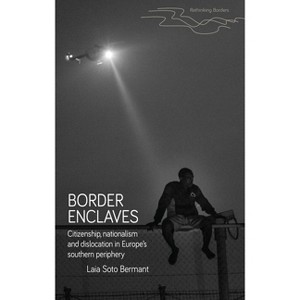
Border Enclaves - (Rethinking Borders) by Laia Soto Bermant (Hardcover)
Pre-order
Sponsored
About this item
Highlights
- Border enclaves examines the Spanish enclave of Melilla as a prism for understanding Europe's contemporary dislocations.
- About the Author: Dr. Laia Soto Bermant is a social anthropologist and Kone Research Fellow at the University of Helsinki
- 240 Pages
- Social Science, Anthropology
- Series Name: Rethinking Borders
Description
About the Book
An ethnographic study of Melilla, a Spanish enclave in North Africa, revealing how borders, sovereignty and belonging are negotiated through everyday life, illicit economies and symbolic performances at Europe's margins.Book Synopsis
Border enclaves examines the Spanish enclave of Melilla as a prism for understanding Europe's contemporary dislocations. Based on over a decade of ethnographic research, it explores how borders are enforced, contested and inhabited in a city suspended between Africa and Europe, colonial legacies and modern regimes. Through a polyphonic narrative following smugglers, migrants, teachers and politicians, it reveals how everyday practices and symbolic performances shape life in the enclave. Selective visibility--who is seen or erased--structures authority and exclusion.
Situating Melilla within broader processes like Spain's colonial history and Europe's border restructuring, the book argues that its fragmented sovereignties and external dependencies make it a paradigmatic site for grasping Europe's precarious margins. It calls for an ethnographic lens attuned to dislocation as both lived experience and analytic tool.
From the Back Cover
Border enclaves examines the Spanish enclave of Melilla as a prism through which to understand the dislocations of contemporary Europe. Drawing on more than a decade of ethnographic research, it traces how borders are enforced, contested and inhabited in a city suspended between Africa and Europe, colonial legacies and present-day border regimes. Melilla emerges not simply as a fortified frontier but as a dislocated space where sovereignty, belonging and mobility are constantly negotiated.
Through a polyphonic narrative that follows interlocutors as diverse as smugglers, migrants, teachers, street children and local politicians, the book reveals how everyday practices, illicit economies and symbolic performances converge to shape life in the enclave. It demonstrates how selective visibility--who is seen, counted, or erased--structures both political authority and social exclusion. At the same time, it situates Melilla within wider regional and global processes: Spain's colonial history in North Africa, the restructuring of Europe's external borders, the collapse of informal economies and the emergence of new economies of control.
The book argues that Melilla's dependence on external resources, coupled with its fragmented sovereignties and zones of exception, makes it a paradigmatic site for understanding the precarious geographies of Europe's margins. By foregrounding ambiguity, contradiction, and coexistence, it calls for an ethnographic practice attentive to dislocation as both lived experience and analytic lens.
Review Quotes
In the hands of a gifted ethnographer such as Laia Soto Bermant, stories about a place such as Melila challenge so many of the taken for granted presuppositions of scholarship on borders, on being European or North African, on religious co-habitation, on the spaces in between. To read this book is to be transported into a nest of contradictions that ever so satisfyingly reveal how fragile and thus transformable modern-day social classification can be. -- Ilana Gershon, Herbert S. Autrey professor of anthropology, Rice University
About the Author
Dr. Laia Soto Bermant is a social anthropologist and Kone Research Fellow at the University of HelsinkiShipping details
Return details
Trending Non-Fiction