Sponsored
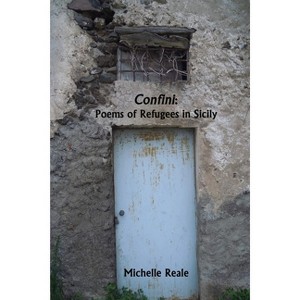
Confini - by Michelle Reale (Paperback)
In Stock
Sponsored
About this item
Highlights
- A powerful collection, Confini offers a rare and intimate portrait of refugee life in Sicily, showcasing the complex nuances and heart-wrenching realities of lives displaced.
- Author(s): Michelle Reale
- 50 Pages
- Poetry, General
Description
About the Book
A powerful collection, Confini offers a rare and intimate portrait of refugee life in Sicily...
Book Synopsis
A powerful collection, Confini offers a rare and intimate portrait of refugee life in Sicily, showcasing the complex nuances and heart-wrenching realities of lives displaced. Written with raw honesty and startling compassion, these tender, lyrical poems transport readers from the camps of Lampedusa to the streets of Siracusa, portraying the experiences of those navigating the treachery and hardship of life in a new country as they struggle to obtain work and legal status. Driven from their homelands because of severe poverty, economic turmoil, and the brutalities of war, these souls remain preserved in their agency and dignity as they seek to earn a new life free from violence and turmoil. Wrought with hope and compassion, Confini is an essential collection that should be read by anyone who values a deeper understanding of Italy's ongoing refugee crisis.
-Olivia Kate Cerrone, Author of The Hunger Saint
Review Quotes
Many Italians see the refugees and migrant workers arriving on Italian shores, mainly in Sicily, as a threat to Italy's economy, culture, demographics, and even its national identity. But who are the actual human beings who often are reduced to a horde of faceless invaders? In Confini: Poems of Refugees in Sicily, Michelle Reale lets us hear their voices by turning the interviews she conducted in Sicily into poetry. In the 27 poems she has created from the refugees' accounts, they tell us of the traumas that forced them to leave their home countries and how they nonetheless yearn for the familiar places (and people) they likely will never see again. They tell of the suffering they endured crossing the Mediterranean in unseaworthy vessels. They speak of the experience of being stateless, homeless, without work. "My cap is the only roof over my head," says "Suleiman." Their voices are anguished, ironic, matter-of-fact, and angry as they recount the quotidian but disorienting realities of adjusting to a new and often hostile society. Reale acknowledges her status as a privileged outsider. In one poem, she bears the brunt of "Ibrahim's" anger at "you white people with your notebooks and microphones." Reale has no illusions that the poems will save "the world or even the people that I wrote them about." But she hopes that they will promote understanding and compassion and ultimately help change inhumane policies.
-George De Stefano, author and journalist
A powerful collection, Confini offers a rare and intimate portrait of refugee life in Sicily, showcasing the complex nuances and heart-wrenching realities of lives displaced. Written with raw honesty and startling compassion, these tender, lyrical poems transport readers from the camps of Lampedusa to the streets of Siracusa, portraying the experiences of those navigating the treachery and hardship of life in a new country as they struggle to obtain work and legal status. Driven from their homelands because of severe poverty, economic turmoil, and the brutalities of war, these souls remain preserved in their agency and dignity as they seek to earn a new life free from violence and turmoil. Wrought with hope and compassion, Confini is an essential collection that should be read by anyone who values a deeper understanding of Italy's ongoing refugee crisis.
-Olivia Kate Cerrone, Author of The Hunger Saint
Here are cameos of rescued Africans in Sicilian camps. And here is a call to action via her poems. We listen, rapt and dismayed, to the (translated) anguished soliloquies and dialogues of refugees-as they are pulled out of the Sea of Death, barely alive, confronted on the streets with indifference or hostility, in state offices, in the food line, in maternity wards, in work fields-with just enough caritas to permit survival, little more. The ennui and smarrimento that take hold represent the stillness of post-trauma, sometimes alternating with moments of joy and reprieve: dancing to Bob Marley, "patron saint of the struggle." Michelle Reale has insightfully captured all of this baffling human tragedy with poignancy and solidarity, even braving the ireful rebukes of the ethnographic project: "you white people with your notebooks and microphones! [...] you want me to tell a fairy tale or a story of hard luck. Get out!"
-Luisa Del Giudice, Independent Scholar, Los Angeles