Sponsored
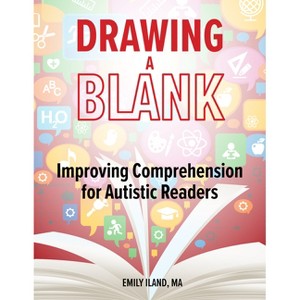
Drawing a Blank - 2nd Edition by Emily D Iland (Paperback)
Pre-order
Sponsored
About this item
Highlights
- A lot of kids with autism have problems with reading comprehension.
- Author(s): Emily D Iland
- 390 Pages
- Education, Special Education
Description
Book Synopsis
A lot of kids with autism have problems with reading comprehension. This book provides practical, easy-to-teach methods for improving both vocabulary and comprehension. Some of the tools include teaching synonyms, looking up pictures on the internet to teach nouns, and using lists of words with different shades of emotional meaning such as naughty, bad, and evil. I highly recommend this book for use with all individuals who have problems with reading comprehension. -- Temple Grandin, Ph.D., author of Thinking in Pictures and The Way I See It series
Help Autistic Individuals Improve Reading Comprehension
Although they may be excellent readers, those with autism often need support for comprehension. Comprehension difficulties are subtle, qualitative, and difficult to tease out. As a result, reading comprehension problems are often overlooked or unaddressed. Many students struggle in silence.
This is where Drawing a Blank comes in. Even the most competent educational professionals in general education and special education have limited training and experience helping autistic readers. Using a clearly stated and well-organized approach, Drawing a Blank provides educational professionals and parents with the tools to improve comprehension for good readers who have comprehension difficulties.
This book explains where and why comprehension failure occurs and offers evidence-based and promising practices to use, based on a thorough assessment of a student's needs. The information can also be helpful for readers who struggle with both decoding and comprehension.
This second edition describes new evidence-based interventions and 15 new research summaries on how to implement them.
Review Quotes
I get asked by parents all the time about their child's problems with reading comprehension. This book provides lots of practical, easy-to-teach methods for improving vocabulary and comprehension. Some of the teaching tools include teaching synonyms, looking up pictures on the Internet to teach nouns, and using lists of words with different shades of emotional meaning such as naughty, bad, and evil. I highly recommend this book for use with all individuals who have problems with reading comprehension. -- Temple Grandin, Ph.D., author of Autism and Education and Developing Talents: Careers for Individuals with Autism
This is the book we have been waiting for! Until now, little information has been available about teaching reading to students with autism spectrum disorders. In Drawing a Blank, Emily Iland has not only provided dozens of useful ideas for the classroom and home but also a concise review of the literature and a compelling story of her own quest to secure appropriate supports for her son. Every reading teacher in K-12 schools needs two copies one to keep and one to pass on to a colleague. -- Paula Kluth, Ph.D., author of You're Going to Love This Kid: Teaching Students with Autism in the Inclusive Classroom
Drawing a Blank offers practitioners and families practical strategies for supporting reading comprehension for learners with ASD. The text format is easy to read and well structured to support quick access to specific strategies and ideas. Most importantly, Emily Iland recognizes the limited research on reading comprehension and ASD, while offering suggestions for making sound, individualized instructional decisions. This text will be a wonderful resource for parents, teachers, and many others! -- Christina Carnahan, Ed.D., associate professor of special education, the University of Cincinnati, and co-editor of Quality Literacy Instruction for Students with Autism Spectrum Disorders
In Drawing a Blank, Emily Iland makes the case that children on the autism spectrum are particularly likely to be hyperlexic and then proceeds to provide a rich collection of research-based instructional recommendations to guide the teaching of these very special children. A must read for any parent or teacher responsible for these kids. -- Timothy Shanahan, Distinguished Professor Emeritus, University of Illinois at Chicago
This book is accessible and spot on! The author unpacks the link between hyperlexia and autism, drawing on her journey as a mother, educator, and researcher. What began as a passion project has become an invaluable resource for all educators who want to better understand and effectively teach hyperlexic learners of any age. Packed with practical tools, case studies, and evidence-based strategies, this book offers explicit and comprehensive guidance for boosting reading comprehension and lifelong learning. -- Marcy Dann, Ed.D. retired board certified educational therapist (BCET)
Drawing a Blank remains the essential guide to uncovering and addressing the hidden comprehension challenges of autistic students who can read fluently, but struggle to understand. You know the students who decode like a 12th grader but comprehend like a 4th grader? Blending decades of research, professional expertise and lived experience, Emily Iland empowers teachers and parents to recognize unseen learning needs and demand meaningful supports to help autistic readers move beyond decoding to true comprehension. A must for any advocate's bookshelf! -- Rachel Ford, Parent of two
Drawing a Blank by Emily Iland is an insightful and practical resource for helping individuals on the autism spectrum improve reading comprehension. The book illuminates why individuals often struggle to grasp meaning, especially when language is abstract or socially complex, and offers practical strategies to help readers make sense of what they read. The tools and examples are easy to implement in classrooms or at home, supporting comprehension instruction that is structured and effective. -- Christina R. Carnahan, Ed Professor of Special Education and Director of the IDD Center at the University of Cincinnati
Shipping details
Return details
Frequently bought together

Trending Non-Fiction




Discover more options