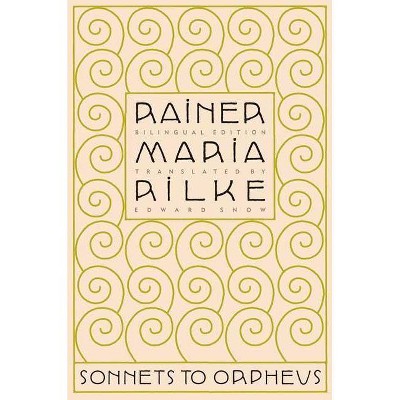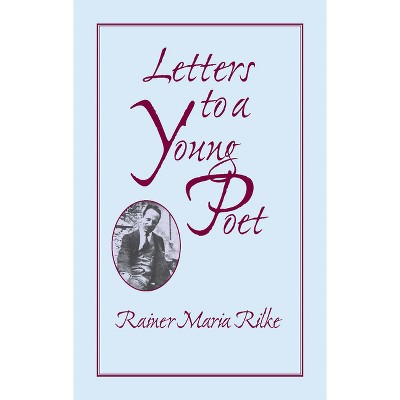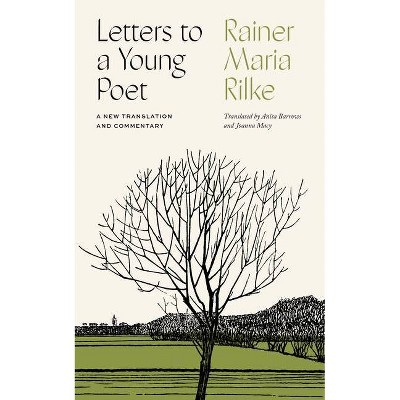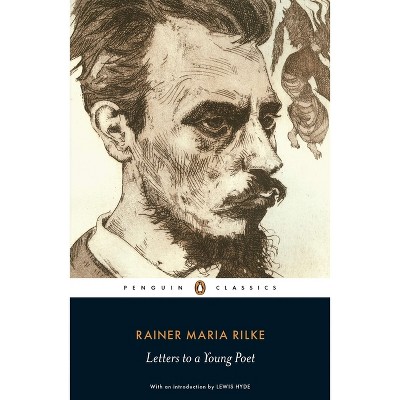
Return this item by mail or in store within 90 days for a full refund.
Eligible for registries and wish lists
About this item
Highlights
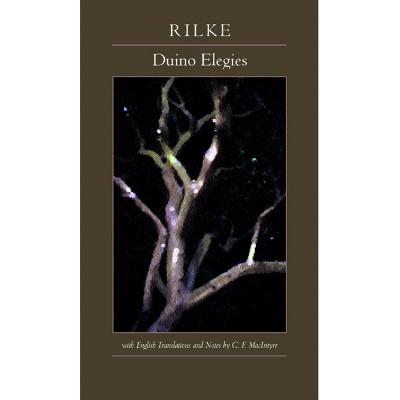
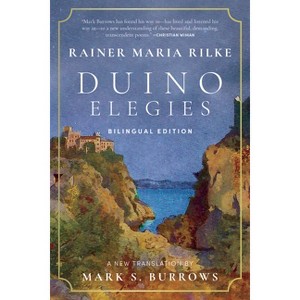
The Duino Elegies stand as the capstone of Rilke's poetic work.He began work on them at Schloss Duino, an Italian seaside village, during the winter of 1912, completing them a decade later in 1922.
About the Author: Rainer Maria Rilke (1875-1926) is widely considered the most significant German-language lyric poet of the 20th century.
156 Pages
Poetry, Subjects & Themes
Description
Book Synopsis
The Duino Elegies stand as the capstone of Rilke's poetic work.
He began work on them at Schloss Duino, an Italian seaside village, during the winter of 1912, completing them a decade later in 1922. These poems articulate Rilke's hope, voiced in the Tenth Elegy, "that I, one day, standing at the end of this harsh vision, / might sing out with joy and praise to the assenting angels." They stand as his "final testament" as a writer, an epic work which traces "the long experience of love" that shapes our lives. Across the span of these poems we find ourselves in a visionary landscape where love and death, suffering and rejoicing, anguish and celebration together constitute "the Whole." Rilke invites us to practice what he once called "heart-work," a way of living by which we learn to see how "being-here is magnificent."
Amid the chorus of translators who have approached this cycle, Mark S. Burrows' version stands out in capturing the peculiar power of his images while also honoring the luminous strangeness of his voice. This elegant, original translation by this distinguished Rilke scholar includes an introduction, an afterword that explores the themes central to the poet's mystical vision, and explanatory notes to the text. It also includes a selection of Rilke's letters and journal entries in which he addresses the poems' complexities, elucidates otherwise cryptic allusions found in the elegies, and comments on the personal circumstances of its composition.
This edition celebrates the centenary of the poet's death in 1926.
Review Quotes
"These are elegant translations of Rilke's Duino Elegies that weave the inexplicable dance of how death engages with the ecstasies of being alive. 'Our heart endures between / the hammers like the tongue / between the teeth, still / praising in spite of this.' Our lives are caught between arrival and departure, and Mark S. Burrows is an exquisite translator--and extraordinary teacher--of Rilke's passions, insights, vulnerabilities, and lessons. As always, Burrows' scholarship is evident in the faithful transportation of Rilke's German into English: musical, whimsical, fierce, and memorable. For those new to Rilke, Burrows' introduction and explanatory notes provide a rich artistic pathway into the life and drives of that most musical and spiritual of poets who embraces the contradictions of everything that occurs between birth and death. Reading these ten elegies you will observe the speaker climbing alone 'into the mountains of Ancient Sorrow' and there, witness what the 'unendingly dead' point us toward: the 'rain that falls on the dark earth in Spring.'" --Pádraig Ó Tuama, host of "Poetry Unbound" and author of Kitchen Hymns: Poems
"Rilke's Duino Elegies are among the most important poetic projects of the twentieth century, but it's been famously difficult for translators to get their throwback grandeur into English, which makes the present volume all the more impressive. Burrows renders here not an invisible translation, but a faithful one, the poems given space finally to mean what they can. His own sense of the musical qualities of both languages creates ground against which this monumental garden of European verse grows to its sumptuous and sometimes terrifying heights. A staggering achievement." --Mischa Willett, author of The Elegy Beta and This Gift Card Has Already Been Redeemed
"Mark Burrows has found his way in--has lived and listened his way in--to a new understanding of these beautiful, demanding, transcendent poems. Anyone who loves Rilke will want to have these versions, and for anyone coming to the Duino Elegies for the first time, this is a perfect introduction." --Christian Wiman, author of Zero at the Bone and Hammer Is the Prayer
"Mark Burrows has lived with and into Rilke's Duino Elegies for most of his life. Ten years in the making, his translation is masterful. Burrows, a poet and scholar of medieval mysticism, has all the requisite talents for this undertaking: as his introductory essay, afterword, and notes make clear, he understands the intimate connections between suffering and praise that are intertwined in the Sonnets to Orpheus and the Elegies, between the deaths of young men in WWI and Rilke's need to 'speak and bear witness' and somehow to both accept the perishing world and 'transform it within.' Finally, Burrows knows what not to do: smooth over Rilke's odd choices of diction and syntax to remove the difficulty of reading the Elegies. He chooses instead to create a kind of 'gateway' to those places in Rilke that ask the reader to experience the contradictions and dichotomies life forces on us. Why?--so we may enter what Rilke calls 'the open world.' And with this truly excellent translation we can." --Robert Cording, poet and author of What's Possible: New and Selected Poems
"For decades now Mark S. Burrows hast gifted us with his subtle expertise and profound research on Rilke's poetic cosmos. As a poet himself he is deeply aware of the place and the chance poetry can take in this world: to touch the unsayable, the unknowable with human words, so that mystery and awe can unfold their playful work. To encounter this transformative power in poems like Rilke's, in the original language, is quite a challenge; the attempt to carry it into another language an even mightier one - one that at times it seems impossible. Burrows' translations of the Duino Elegies are a masterpiece in this. They offer a rare testimony to Rilke's voice, holding to the mystery of his poems while avoiding the temptation of resolving them as one might with a riddle. They thus convey the Elegies' provocative potential which calls for our own engagement and involvement. A major test in heeding this conviction is it to face the depths--and often the abyss--that is always present in the Duino Elegies, challenging anyone who dares to translate them. Burrows stands his ground, taking on this challenge with unseen mastership, knowing that Rilke's vision will always find its way beyond the unsayable, shaken loose from the turmoil of these ungraspable depths. Burrows frees these poems to let us experience them as still singing in the silences that surround and exceed words." --Gotthard Fermor, PhD, Professor at the Protestant University of Applied Sciences, Bochum (Germany) and editor of the three-volume collector's edition of Das Stunden-Buch (Gütersloh, 2014-18)
"In this brilliant new translation of Rilke's Duino Elegies--one of the seminal poetic sequences of the twentieth century--Mark S. Burrows likens reading them to scaling a mountain. Every serious Rilke climber/reader needs a sherpa: miraculously, Burrows is the perfect Rilke guide--combining the roles of poet, German scholar, translator, mythographer, and theologian to produce this wondrous text. He points out that Rilke's poems are not to just be read, but to be lived; and that we must, as Rilke says, 'listen to the blowing, / the unbroken message that shapes itself out of the stillness.' Burrows creates a necessary stillness in the reader by presenting an elegant, explicatory introduction and afterword, giving us the best possible chance to hear these extraordinary poems. His notes are also deeply illuminating, giving context to Rilke's personal life and the likes of Etruscan funerary art, the Greek background to the laurel, and the significance of the Sybil. This is the complete package: Burrows has squared up to the world of the Elegies with their 'terrifying angels' and 'living presence of the dead' and, using his own formidable gifts, has created a work of enduring, luminous art." --James Harpur, poet and author, most recently, of Dazzling Darkness: The Lives and Afterlives of the Christian Mystics
"Mark S. Burrows' new translation of Rainer Maria Rilke's Duino Elegies is an invaluable contribution, delineating a cinematic aspect of Rilke's images and lyricism reminiscent of Jean Cocteau's La Belle et Bete (Beauty and the Beast). What separates Burrows' translation from others is his scholarly but lively inclusion of letters concerning the Elegies that Rilke wrote to friends and colleagues, including the lengthy one, written in a single paragraph, to his Polish translator Witold Hulewicz, where Rilke addresses the challenges and difficulties involved in writing these elegies as well as his satisfaction and gratitude at completing them. The volume also includes well-spotted explanatory notes to references and themes found in these poems. What Burrows deserves credit for is his clarity of purpose, his historical overview (actually from various points of view), and the essence of one of the more fluid translations of Duino Elegies that I have read since first reading it fifty-five years ago. Although we have had some fine and wonderful translations of Duino Elegies, I don't believe we've had such clarity, not only in the English translation but also in presenting a clear calculus of understanding the poems themselves." --Wally Swist, poet, translator, and author of Discovering What to Say: Poems and If You're the Dreamer, I'm the Dream: Selected Translations from Rilke's Book of Hours
"These Elegies feel like urgent invitations to open, to touch the unsayable, to be curious about our own innerness, to turn toward death so we might live our brief lives more fully. In a time when humans seem hellbent on destruction, it feels more essential than ever to read this poet who met war, depression and loss in his own time and let himself be transformed by the breaking, this poet who 'sat terrified before the curtain of his heart' and still insisted 'being-here matters so much' and 'to have been earthly seems irrevocable.' What a gift to receive a translation from scholar and poet Mark S. Burrows who spent decades internalizing and being wrestled by these poems so that he might offer us all the complexity and mystery of Rilke's original voice--in an edition that includes meticulous historical background, insightful biographical notes and intuitive poetic guidance. The foreword, afterword, and explanatory notes are generous lanterns that help us experience more wholly the 'radiant darkness' of these Elegies. This book is treasure." --Rosemerry Wahtola Trommer, author of The Unfolding and host of The Poetic Path
"With this new translation of Rilke's Duino Elegies, we finally have an English rendering of these sublime poems that they have long deserved. Mark S. Burrows is undoubtedly our finest Rilke translator into English. It is more than his bilingual skills--which so many translators lack. It is his deep and authentic understanding of 'innerness' that only a true poet himself can illuminate for all readers." --Stephanie Dowrick, author of In the Company of Rilke and Your Name Is Not Anxious
"Rilke's Duino Elegies are one of the towering achievements of world literature. In this new translation, Mark S. Burrows rises to the challenge Rilke sets for both reader and translator, showing us how the poet unveils a world full with the here-and-now, yet illuminated by the eternal. Burrows' translation allows us to read afresh the immediacy of Rilke's concerns to our current age, and our need for hope. As Burrows beautifully tells us, 'Here is the time of the sayable, here its homeland. Speak and bear witness.'" --Hilary Davies, poet and author of Compass Light: Poems
About the Author
Rainer Maria Rilke (1875-1926) is widely considered the most significant German-language lyric poet of the 20th century.
After decades of university teaching in Germany and the U.S., the focus of Mark S. Burrows' work explores the intersection of spirituality and the arts, mysticism and poetics. He travels the world lecturing and offering retreats and workshops. A winner of the Wytter Bynner Prize in Poetry and numerous nominations for a Pushcart, his own poems have been published in books and journals in the U.S., Europe, Australia, and India. As a translator of German into English, his long interest in Rilke includes translations of Prayers of a Young Poet (2013) and Sonnets to Orpheus (2024). Burrows has also coauthored four books of Meister Eckhart poems with Jon M. Sweeney since 2017, the most recent of which is Meister Eckhart's Book of Darkness and Light (2023).
Dimensions (Overall): 9.0 Inches (H) x 6.0 Inches (W)
Suggested Age: 22 Years and Up
Number of Pages: 156
Genre: Poetry
Sub-Genre: Subjects & Themes
Publisher: Monkfish Book Publishing
Theme: Religious
Format: Paperback
Author: Rainer Maria Rilke
Language: English
Street Date: September 22, 2026
TCIN: 1009312990
UPC: 9781966608479
Item Number (DPCI): 247-52-6744
Origin: Made in the USA or Imported
If the item details aren’t accurate or complete, we want to know about it.
Shipping details
Estimated ship dimensions: 1 inches length x 6 inches width x 9 inches height
Estimated ship weight: 1 pounds
We regret that this item cannot be shipped to PO Boxes.
This item cannot be shipped to the following locations: American Samoa (see also separate entry under AS), Guam (see also separate entry under GU), Northern Mariana Islands, Puerto Rico (see also separate entry under PR), United States Minor Outlying Islands, Virgin Islands, U.S., APO/FPO, Alaska, Hawaii
Return details
This item can be returned to any Target store or Target.com.
This item must be returned within 90 days of the date it was purchased in store, delivered to the guest, delivered by a Shipt shopper, or picked up by the guest.