Sponsored
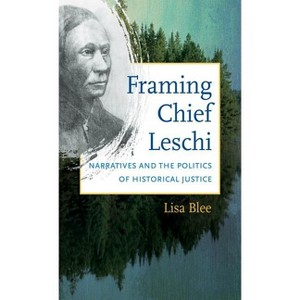
Framing Chief Leschi - by Lisa Blee (Paperback)
In Stock
Sponsored
About this item
Highlights
- In 1855 in the South Puget Sound, war broke out between Washington settlers and Nisqually Indians.
- Author(s): Lisa Blee
- 320 Pages
- Social Science, Ethnic Studies
Description
About the Book
Framing Chief Leschi: Narratives and the Politics of Historical JusticeBook Synopsis
In 1855 in the South Puget Sound, war broke out between Washington settlers and Nisqually Indians. A party of militiamen traveling through Nisqually country was ambushed, and two men were shot from behind and fatally wounded. After the war, Chief Leschi, a Nisqually leader, was found guilty of murder by a jury of settlers and hanged in the territory's first judicial execution. But some 150 years later, in 2004, the Historical Court of Justice, a symbolic tribunal that convened in a Tacoma museum, reexamined Leschi's murder conviction and posthumously exonerated him. In Framing Chief Leschi, Lisa Blee uses this fascinating case to uncover the powerful, lasting implications of the United States' colonial past.
Though the Historical Court's verdict was celebrated by Nisqually people and many non-Indian citizens of Washington, Blee argues that the proceedings masked fundamental limits on justice for Indigenous people seeking self-determination. Underscoring critical questions about history and memory, Framing Chief Leschi challenges readers to consider whether liberal legal structures can accommodate competing narratives and account for the legacies of colonialism to promote social justice today.
Review Quotes
"Framing Chief Leschi adds to the already-impressive multipress series, First Peoples: New Directions in Indigenous Studies." -- Journal of American History
"Blee uses the Historical Court as an opening for nuanced and sophisticated discussions of the framing of war, violence, dispossession, memory, and justice under a liberal colonial regime." -- NAIS
"Blee's study of contested history and an Indian leader's evolving significance illustrates in fresh, compelling ways the complex nature and importance of the endeavor we call history. It will no doubt be useful to scholars in several fields, particularly American Indian, public, Pacific Northwest, or Western history. It could be a valuable teaching tool for students of historical method and historical memory, both graduate and undergraduate." -- Alexandra Harmon, author of Rich Indians: Native People and the Problem of Wealth in American History
"Provides a nuanced look at historical memory and the search for historical justice. . . . Readers interested in the study of historical memory, oral traditions, colonialism, justice, law, and American Indians will find the book a valuable case study." -- Ohio Historical Quarterly
"Serves as an example of the ways in which symbolic actions can promote and encourage change, altering the public mentality and reaffirming Native agency in the rewriting of American history." -- ##Pacific Northwestern Quarterly#
Shipping details
Return details
Trending Non-Fiction





Discover more options