Sponsored
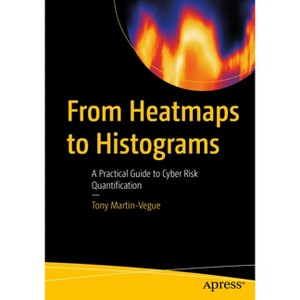
From Heatmaps to Histograms - by Tony Martin-Vegue (Paperback)
Pre-order
Sponsored
About this item
Highlights
- Cyber risk quantification (CRQ) is the practice of measuring cybersecurity risk using numbers --not colors or guesswork.
- About the Author: Tony Martin-Vegue is a cybersecurity and technology risk expert with over 25 years of experience helping Fortune 500 companies build and scale quantitative risk programs.
- Computers + Internet, Security
Description
Book Synopsis
Cyber risk quantification (CRQ) is the practice of measuring cybersecurity risk using numbers --not colors or guesswork. Instead of labeling risks "high," "medium," or "low," CRQ uses probabilities, ranges, and impact estimates to help organizations make better, data-informed decisions about risk.
In a world where ransomware gangs operate like small businesses, every core function of an organization is digital, and Boards and regulators are demanding meaningful, defensible risk metrics, CRQ has never been more relevant than now. And thanks to AI, it's about to scale fast.
At the same time, CRQ is often misunderstood as expensive, technical, or just "voodoo math." People assume you need a stats degree, six-figure software, or a room full of analysts. This book is here to prove otherwise.
From Heatmaps to Histograms is a hands-on, plain-English guide written by a seasoned practitioner who's built CRQ programs at top global companies. It's packed with step-by-step instructions, practical tips, templates, shortcuts, AI prompts, and plenty of myth-busting to take you from CRQ skeptic to CRQ champion--even if you've never cracked open a statistics book.
All techniques in this book can be performed in Excel or Google Sheets--no coding required. But for readers who want to go further, you'll find dozens of GenAI prompts that help you generate risk scenarios, clean messy data, or even "vibe-code" your way through a Monte Carlo simulation in Python or R. You'll also get guidance on when to not use AI, how to spot hallucinations, and how to integrate it responsibly into your risk practice.
CRQ is no longer optional. This is your roadmap for making it work--cheaply, ethically, and effectively.
What You Will Learn:
- A beginner-friendly introduction to the statistical foundations of CRQ, including Monte Carlo simulations, credible intervals, Bayesian reasoning, and simple methods for summarizing uncertainty--without requiring a math or coding background
- Gather, vet, and work with data--even when it's scarce, messy, or missing
- Perform full end-to-end quantitative risk assessments using only Excel or Google Sheets
- Harness the power of generative AI to supercharge risk analysis workflows
- Apply CRQ and GenAI responsibly and ethically, with clear guidance on common pitfalls, misuse scenarios, and ensure transparency, fairness, and trustworthiness in your analysis and reporting
Who This Book Is For
Beginner/intermediate in the cyber/technology risk management field
From the Back Cover
Cyber risk quantification (CRQ) is the practice of measuring cybersecurity risk using numbers --not colors or guesswork. Instead of labeling risks "high," "medium," or "low," CRQ uses probabilities, ranges, and impact estimates to help organizations make better, data-informed decisions about risk.
In a world where ransomware gangs operate like small businesses, every core function of an organization is digital, and Boards and regulators are demanding meaningful, defensible risk metrics, CRQ has never been more relevant than now. And thanks to AI, it's about to scale fast.
At the same time, CRQ is often misunderstood as expensive, technical, or just "voodoo math." People assume you need a stats degree, six-figure software, or a room full of analysts. This book is here to prove otherwise.
From Heatmaps to Histograms is a hands-on, plain-English guide written by a seasoned practitioner who's built CRQ programs at top global companies. It's packed with step-by-step instructions, practical tips, templates, shortcuts, AI prompts, and plenty of myth-busting to take you from CRQ skeptic to CRQ champion--even if you've never cracked open a statistics book.
All techniques in this book can be performed in Excel or Google Sheets--no coding required. But for readers who want to go further, you'll find dozens of GenAI prompts that help you generate risk scenarios, clean messy data, or even "vibe-code" your way through a Monte Carlo simulation in Python or R. You'll also get guidance on when to not use AI, how to spot hallucinations, and how to integrate it responsibly into your risk practice.
CRQ is no longer optional. This is your roadmap for making it work--cheaply, ethically, and effectively.
What You Will Learn
- A beginner-friendly introduction to the statistical foundations of CRQ, including Monte Carlo simulations, credible intervals, Bayesian reasoning, and simple methods for summarizing uncertainty--without requiring a math or coding background
- Gather, vet, and work with data--even when it's scarce, messy, or missing
- Perform full end-to-end quantitative risk assessments using only Excel or Google Sheets
- Harness the power of generative AI to supercharge risk analysis workflows
- Apply CRQ and GenAI responsibly and ethically, with clear guidance on common pitfalls, misuse scenarios, and ensure transparency, fairness, and trustworthiness in your analysis and reporting
About the Author
Tony Martin-Vegue is a cybersecurity and technology risk expert with over 25 years of experience helping Fortune 500 companies build and scale quantitative risk programs. He writes and speaks prolifically on the topic of risk and decision science, and is known for his new ways of thinking about old problems.
A hands-on practitioner as much as a leader, Tony has performed an estimated 1,000 quantitative risk assessments across domains including cyber, fraud, operations, and enterprise risk. He's a frequent speaker at FAIRcon, SIRAcon, RSA, various Security BSides, and ISACA events. He also chairs the San Francisco Chapter of the FAIR Institute, a global organization dedicated to advancing risk quantification practices, and was honored with the FAIR Ambassador Award in 2020. He has been published in numerous publications such as the ISACA journal, Risk.net, and regularly blogs at tonym-v.com on the topics of risk, quantification, and security economics.
Tony lives with his family on an island in the San Francisco Bay (not Alcatraz)--though he has swum from Alcatraz to San Francisco ten times.
Shipping details
Return details
Trending Book Pre-Orders


Discover more options