Sponsored
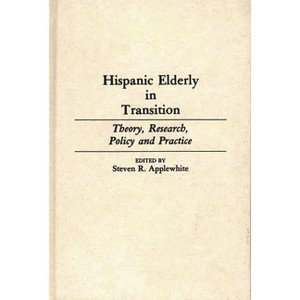
Hispanic Elderly in Transition - (Contributions to the Study of Aging) by Steven R Applewhite (Hardcover)
In Stock
Sponsored
About this item
Highlights
- An outstanding examination of the cross-cultural apsects in social work practice and service dealing with Hispanic elderly, in particular Puerto Ricans, Cubans, and Mexicans.
- About the Author: STEVEN R. APPLEWHITE is an Assistant Professor in the School of Social Work at Arizona State University, Tempe.
- 252 Pages
- Political Science, Public Policy
- Series Name: Contributions to the Study of Aging
Description
About the Book
An outstanding examination of the cross-cultural apsects in social work practice and service dealing with Hispanic elderly, in particular Puerto Ricans, Cubans, and Mexicans. It provides a historical as well as a sociodemographic overview of the Hispanic aged, and addresses economic, cultural, and health issues affecting their quality of life. This is certainly a notable and comprehensive study of service utilization, variations in aging, politics and public policy, and foremost a collection of research writings of ethnography of Hispanic aging patterns and variabilities. Most highly recommended for public and academic libraries and for class use. LA Red/The Net
A notable contribution to the literature dealing with ethnic variations in aging, this volume of interrelated original essays looks at how Hispanic elderly living in the United States are adapting to the present, maintaining links to the past, and determining the roles they may have in shaping the future. Addressing economic, social, cultural, and health issues that affect the quality of life of older Mexicans, Puerto Ricans, Cubans, and other Hispanics, the book offers both comprehensive analyses of selected topics and descriptive case studies of community life together with theoretical paradigms and practice models in the field of minority aging.
Book Synopsis
An outstanding examination of the cross-cultural apsects in social work practice and service dealing with Hispanic elderly, in particular Puerto Ricans, Cubans, and Mexicans. It provides a historical as well as a sociodemographic overview of the Hispanic aged, and addresses economic, cultural, and health issues affecting their quality of life. This is certainly a notable and comprehensive study of service utilization, variations in aging, politics and public policy, and foremost a collection of research writings of ethnography of Hispanic aging patterns and variabilities. Most highly recommended for public and academic libraries and for class use. LA Red/The Net
A notable contribution to the literature dealing with ethnic variations in aging, this volume of interrelated original essays looks at how Hispanic elderly living in the United States are adapting to the present, maintaining links to the past, and determining the roles they may have in shaping the future. Addressing economic, social, cultural, and health issues that affect the quality of life of older Mexicans, Puerto Ricans, Cubans, and other Hispanics, the book offers both comprehensive analyses of selected topics and descriptive case studies of community life together with theoretical paradigms and practice models in the field of minority aging.Review Quotes
?An outstanding examination of the cross-cultural aspects in social work practice and service dealing with Hispanic elderly, in particular Puerto Ricans, Cubans and Mexicans. It provides a historical as well as a sociodemographic overview of the Hispanic aged, and addresses economic, cultural, and health issues affecting their quality of life. This is certainly a notable and comprehensive study of service utilization, variations in aging, politics and public policy, and foremost a collection of research writings of ethnography of Hispanic aging patterns and variabilities. Most highly recommended for public and academic libraries and for class use.?-LA RED/THE NET
?Fourteen essays provide insight into the problems of aging Hispanics; their health, incomes, relations with bureaucracy. Most interesting of all are cultural views of death and old age, and the natural support systems of family and barrio. Valuable for anyone concerned with the elderly, especially the growing population of older Hispanics.?-Books of the Southwest
?Including contributors from western and southwestern states, this work emphasizes both the diversities and similarities among Hispanic elderly who live in distinct communities based on region, dialect, or origin. The volume consists of five parts. Part 1 offers chapters on crosscultural social work practice and on elderly Puerto Ricans in the US. The second section examines health status and health care utilization of elderly Hispanics in the Southwest. Part 3 covers group politics and income maintenance programs focusing on older Hispanics as a developing interest group. It discusses social legislation and the impact of aging policies on traditional support networks, and it concludes with a review of how work and income maintenance programs shape future trends and income prospects for Hispanic elderly. The fourth part examines the role of the elderly in extended families and provides an insightful discussion of barrio life, including natural support systems. This is followed by an ethnography of Hispanic aging, a discussion of death and dying in a rural Hispanic community, and a final chapter on marketing to Hispanics. Although ethnicity has been treated as the major analytic variable in many previous works on aging, e.g., Donald E. Gelfand's Aging: The Ethnic Factor, this is the first volume to deal exclusively with Hispanic elderly. The quality of the contributions is uniformly high. Academic libraries, community college level up.?-Choice
"An outstanding examination of the cross-cultural aspects in social work practice and service dealing with Hispanic elderly, in particular Puerto Ricans, Cubans and Mexicans. It provides a historical as well as a sociodemographic overview of the Hispanic aged, and addresses economic, cultural, and health issues affecting their quality of life. This is certainly a notable and comprehensive study of service utilization, variations in aging, politics and public policy, and foremost a collection of research writings of ethnography of Hispanic aging patterns and variabilities. Most highly recommended for public and academic libraries and for class use."-LA RED/THE NET
"Fourteen essays provide insight into the problems of aging Hispanics; their health, incomes, relations with bureaucracy. Most interesting of all are cultural views of death and old age, and the natural support systems of family and barrio. Valuable for anyone concerned with the elderly, especially the growing population of older Hispanics."-Books of the Southwest
"Including contributors from western and southwestern states, this work emphasizes both the diversities and similarities among Hispanic elderly who live in distinct communities based on region, dialect, or origin. The volume consists of five parts. Part 1 offers chapters on crosscultural social work practice and on elderly Puerto Ricans in the US. The second section examines health status and health care utilization of elderly Hispanics in the Southwest. Part 3 covers group politics and income maintenance programs focusing on older Hispanics as a developing interest group. It discusses social legislation and the impact of aging policies on traditional support networks, and it concludes with a review of how work and income maintenance programs shape future trends and income prospects for Hispanic elderly. The fourth part examines the role of the elderly in extended families and provides an insightful discussion of barrio life, including natural support systems. This is followed by an ethnography of Hispanic aging, a discussion of death and dying in a rural Hispanic community, and a final chapter on marketing to Hispanics. Although ethnicity has been treated as the major analytic variable in many previous works on aging, e.g., Donald E. Gelfand's Aging: The Ethnic Factor, this is the first volume to deal exclusively with Hispanic elderly. The quality of the contributions is uniformly high. Academic libraries, community college level up."-Choice
About the Author
STEVEN R. APPLEWHITE is an Assistant Professor in the School of Social Work at Arizona State University, Tempe. He is the author of Genetic Screening and Counseling: A Multidisciplinary Perspective as well as book chapters and monographs on the Hispanic elderly.Shipping details
Return details
Trending Non-Fiction