Target New ArrivalsHalloweenChristmasGift IdeasClothing, Shoes & AccessoriesHome & DecorKitchen & DiningPatio, Lawn & GardenGroceryHousehold EssentialsBabyBeautyTarget Beauty StudioPersonal CareSports & OutdoorsPetsHealthWellnessSchool & Office SuppliesToys & GamesElectronics & TechVideo GamesBooks, Music & MoviesParty SuppliesGift CardsShop by CommunityTarget OpticalDealsClearanceNew ArrivalsBack to SchoolCollegeTop DealsTarget Circle DealsWeekly AdShop Order PickupShop Same Day DeliveryRegistryRedCardTarget CircleFind Stores
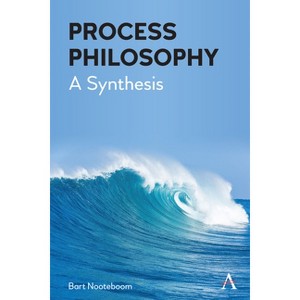
Process Philosophy - by  Bart Nooteboom (Paperback) - 1 of 1

Process Philosophy - by Bart Nooteboom (Paperback)

$35.49
 

In Stock

Free & easy returns
Free & easy returns
Return this item by mail or in store within 90 days for a full refund.
Eligible for registries and wish lists
Save 5% every day
With Target Circle™ Card (restrictions apply)

About this item

Highlights

  • Bringing together the ideas of many philosophers, among others Hegel, Kierkegaard, Bergson, Nietzsche, Heidegger, Wittgenstein, Deleuze and Derrida, the book aims to give a coherent synthesis of ideas about change and aims to see how one can take a process view of various features of humanity, such as knowledge, relations between people, language and morality, and how, vice versa, that might contribute to process philosophy.
  • About the Author: Bart Nooteboom was professor of innovation and organisation in Groningen, Rotterdam and Tilburg universities.
  • 140 Pages
  • Philosophy, General

Description


About the Book


The book analyses and compares a variety of processes of change: in evolution, learning and innovation, language and meaning, self and society and ethics and morality. Taking a realistic approach, the book is inspired by pragmatic philosophy, in particular, that of Dewey, Nietzsche, Wittgenstein and Heidegger and employs insights from economics, sociology, anthropology and social psychology.


Book Synopsis


Bringing together the ideas of many philosophers, among others Hegel, Kierkegaard, Bergson, Nietzsche, Heidegger, Wittgenstein, Deleuze and Derrida, the book aims to give a coherent synthesis of ideas about change and aims to see how one can take a process view of various features of humanity, such as knowledge, relations between people, language and morality, and how, vice versa, that might contribute to process philosophy. Beginning with evolution and moving on to consider knowledge in its dynamic aspect of learning, the book takes a process view of the individual and society.

Generalised Darwinism is discussed not only in terms of biology but also in economics, organisation, language and science in terms of interactors and replicators. The key processes of variety generation, selection and transmission are fundamentally different from those in biology. Therefore, a theory of knowledge and its change is presented that in some ways is similar to evolution but also different in important ways. This theory discusses neural Darwinism. It proposes how discovery might work, in a cycle of discovery, in an interchange of stability and change, and how differences in cognition work in the combination of different sources (cognitive distance). This theory is applied to knowledge, organisations and science. The discussion explains and applies the notions of entropy and organisational focus. Recognising that absolute, objective truth is problematic, it discusses the notion of warranted assertion. The notions of sense and reference are discussed in an explanation of meaning, and the notions of order and variety in terms of langue and parole, and the role of parole in poetry. The change of meaning is further developed in terms of the hermeneutic circle to deal with order and change of meaning. It uses the notion of a script and the hypothesis of an object bias.


Ethics and morality are explored by how the individual constructs their identity and develops in their tension between authenticity and conformity in society. Aristotle's multiple causality of action is employed to discuss power and sources of dependence and ways to deal with them. Networks as a source of identity and the decentralisation of governance to communities are discussed along with the notion of restorative justice. The concluding chapter considers the historical development and the different forms of ethics and morality, in relation to institutions, and how in evolution an instinct for benevolence has developed and is related to the intrinsic next to extrinsic value of relationships.


Review Quotes


'Bart Nooteboom has made award-winning contributions to our understanding of trust, learning, cognition, governance and innovation. In this exciting new book, Nooteboom weaves these threads together by offering a fresh philosophical look at the linguistic, epistemic and ethical foundations of the underlying social processes. Process Philosophy: A Synthesis is essential reading for social scientists and organisation theorists of all stripes.' -- David Gindis, Senior Lecturer, University of Hertfordshire, UK


'In his new book, Bart Nooteboom has once again excellently succeeded in enriching and questioning existing insights in his own discipline of science, economics, on the basis of insights gained in other scientific disciplines. His book is a wonderful example of how interdisciplinarity enriches both economics and the sciences that help this discipline to sharpen questions. Nooteboom shows very well that economists also help practitioners of other scientific disciplines to ask more precise questions about themes that play a role in their own discipline.'-- Paul van Geest, Full Professor of Economics and Theology at the Erasmus School of Philosophy, Erasmus University Rotterdam, Netherlands


"Bart Nooteboom has made award-winning contributions to our understanding of trust, learning, cognition, governance and innovation. In this exciting new book, Nooteboom weaves these threads together by offering a fresh philosophical look at the linguistic, epistemic and ethical foundations of the underlying social processes. Process Philosophy: A Synthesis is essential reading for social scientists and organisation theorists of all stripes." -- David Gindis, Senior Lecturer in Economics, University of Hertfordshire, UK


"In his new book, Bart Nooteboom has once again excellently succeeded in enriching and questioning existing insights in his own discipline of science, economics, on the basis of insights gained in other scientific disciplines. His book is a wonderful example of how interdisciplinarity enriches both economics and the sciences that help this discipline to sharpen questions. Nooteboom shows very well that economists also help practitioners of other scientific disciplines to ask more precise questions about themes that play a role in their own discipline." -- Paul van Geest, Full Professor of Economics and Theology at the Erasmus School of Philosophy (Erasmus University Rotterdam); Full Professor of Church History and History of Theology at Tilburg University; Visiting Professor of the Faculty of Theology of the Catholic University of Leuven


Process Philosophy is deeply concerned with the consequences of philosophical ideas and their relation to other research areas as well as practical matters. ... The strongest point of the book [is] urging philosophy beyond its boundaries to engage with other disciplines and to regard the practical impact of its doings.-- International Journal of Philosophical Studies


This book serves as a thought-provoking interdisciplinary primer that advances thinking on several theoretical fronts within organization studies-- Organization Studies


About the Author


Bart Nooteboom was professor of innovation and organisation in Groningen, Rotterdam and Tilburg universities. After a lifelong study of philosophy, he is now focussed on writing philosophy.

Dimensions (Overall): 9.0 Inches (H) x 6.0 Inches (W) x .33 Inches (D)
Weight: .48 Pounds
Suggested Age: 22 Years and Up
Number of Pages: 140
Genre: Philosophy
Sub-Genre: General
Publisher: Anthem Press
Format: Paperback
Author: Bart Nooteboom
Language: English
Street Date: January 14, 2025
TCIN: 1014470065
UPC: 9781839993732
Item Number (DPCI): 247-64-8000
Origin: Made in the USA or Imported
If the item details aren’t accurate or complete, we want to know about it.

Shipping details

Estimated ship dimensions: 0.33 inches length x 6 inches width x 9 inches height
Estimated ship weight: 0.48 pounds
We regret that this item cannot be shipped to PO Boxes.
This item cannot be shipped to the following locations: American Samoa (see also separate entry under AS), Guam (see also separate entry under GU), Northern Mariana Islands, Puerto Rico (see also separate entry under PR), United States Minor Outlying Islands, Virgin Islands, U.S., APO/FPO, Alaska, Hawaii

Return details

This item can be returned to any Target store or Target.com.
This item must be returned within 90 days of the date it was purchased in store, delivered to the guest, delivered by a Shipt shopper, or picked up by the guest.
See the return policy for complete information.

Additional product information and recommendations

Discover more options

Skip to next section

Best-selling Philosophy Books

Skip to next section

Get top deals, latest trends, and more.