Target New ArrivalsGift Ideas for MomClothing, Shoes & AccessoriesHome & DécorKitchen & DiningOutdoor Living & GardenFurnitureGroceryHousehold EssentialsBabyBeautyPersonal CareHealthWellnessLuggageSports & OutdoorsToysElectronicsVideo GamesMovies, Music & BooksSchool & Office SuppliesParty SuppliesGift IdeasGift CardsPetsUlta Beauty at TargetShop by CommunityTarget OpticalDealsClearanceTarget New ArrivalsSpring OutfitsGift Ideas for MomWomen’s Festival OutfitsTop DealsTarget Circle DealsWeekly AdShop Order PickupShop Same Day DeliveryRegistryRedCardTarget CircleFind Stores
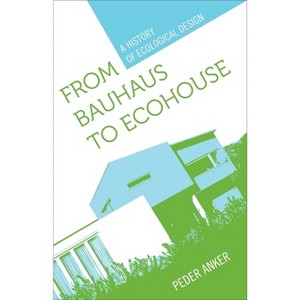
From Bauhaus to Ecohouse - by  Peder Anker (Hardcover) - 1 of 1

From Bauhaus to Ecohouse - by Peder Anker (Hardcover)

$40.00

In Stock

Eligible for registries and wish lists

About this item

Highlights

  • Global warming and concerns about sustainability recently have pushed ecological design to the forefront of architectural study and debate.
  • About the Author: Peder Anker is an associate professor of the history of science at the Gallatin School of Individualized Study and the Environmental Studies Program at New York University.
  • 208 Pages
  • Architecture, Sustainability & Green Design

Description


About the Book


Debates about environmentally sensitive architecture have been ongoing for nearly a century. From Bauhaus to Eco-House examines key moments of inspiration and exchange between designers and ecologists from the Bauhaus projects of the interwar period to the eco-arks of the late 1980s. From Bauhaus to Eco-House provides new insight into a critical period in the evolution of environmental awareness and design.


Book Synopsis


Global warming and concerns about sustainability recently have pushed ecological design to the forefront of architectural study and debate. As Peder Anker explains in From Bauhaus to Ecohouse, despite claims of novelty, debates about environmentally sensitive architecture have been ongoing for nearly a century. By exploring key moments of inspiration between designers and ecologists from the Bauhaus projects of the interwar period to the eco-arks of the 1980s, Anker traces the historical intersection of architecture and ecological science and assesses how both remain intertwined philosophically and pragmatically within the still-evolving field of ecological design.
The idea that science could improve human life attracted architects and designers who looked to the science of ecology to better their methodologies. Walter Gropius, the founder of the Bauhaus school, taught that designed form should follow the laws of nature in order to function effectively. With the Bauhaus movement, ecology and design merged and laid the foundation of modernist architecture.
Anker discusses in detail how the former faculty members of the Bauhaus school -- including László Maholy-Nagy and Herbert Bayer -- left Nazi Germany in the mid-1930s and engaged with ecologists during their "London period" and in the U.S. A subsequent generation of students and admirers of Bauhaus, such as Richard Buckminster Fuller and Ian McHarg, picked up their program, and -- under the general banner of merging art and science in the design process -- Bauhaus-minded architects began to think ecologically while some ecologists lent their ideas to design.
Anker charts complicated currents of ecological design thought spanning pre-- and post--World War II and through the cold war, including pivotal changes such as the emergence of space exploration and new theories on closed-system living in space capsules, space stations, and planetary colonies. Space ecology, Anker explains, inspired leading landscape designers of the 1970s, who used the imagined life of astronauts as a model for how humans should live in harmony with nature. Theories of how to design for extraterrestrial living impacted design and ecological thinking for earth-based living as well, as evidenced in Disney's Spaceship Earth attraction as well as in the Biosphere 2 experiments in Arizona in the early 1990s.
Illuminating important connections between theories about the relationship between humans and the built environment, Anker's provocative study provides new insight into a critical period in the evolution of environmental awareness.


About the Author


Peder Anker is an associate professor of the history of science at the Gallatin School of Individualized Study and the Environmental Studies Program at New York University. He is also the author of Imperial Ecology, Environmental Order in the British Empire, 1895--1945.

Dimensions (Overall): 8.5 Inches (H) x 5.6 Inches (W) x .9 Inches (D)
Weight: .85 Pounds
Suggested Age: 22 Years and Up
Number of Pages: 208
Genre: Architecture
Sub-Genre: Sustainability & Green Design
Publisher: LSU Press
Format: Hardcover
Author: Peder Anker
Language: English
Street Date: January 1, 2010
TCIN: 1003614285
UPC: 9780807135518
Item Number (DPCI): 247-12-2638
Origin: Made in the USA or Imported
If the item details aren’t accurate or complete, we want to know about it.

Shipping details

Estimated ship dimensions: 0.9 inches length x 5.6 inches width x 8.5 inches height
Estimated ship weight: 0.85 pounds
We regret that this item cannot be shipped to PO Boxes.
This item cannot be shipped to the following locations: American Samoa (see also separate entry under AS), Guam (see also separate entry under GU), Northern Mariana Islands, Puerto Rico (see also separate entry under PR), United States Minor Outlying Islands, Virgin Islands, U.S., APO/FPO, Alaska, Hawaii

Return details

This item can be returned to any Target store or Target.com.
This item must be returned within 90 days of the date it was purchased in store, delivered to the guest, delivered by a Shipt shopper, or picked up by the guest.
See the return policy for complete information.

Q: How does space exploration influence ecological design?

submitted by AI Shopping Assistant - 27 days ago
  • A: Theories from space exploration inspired ecological design, leading to innovative approaches for living in harmony with nature.

    submitted byAI Shopping Assistant - 27 days ago
    Ai generated

Q: What is the significance of the Bauhaus movement?

submitted by AI Shopping Assistant - 27 days ago
  • A: The Bauhaus movement laid the foundation for modernist architecture, merging design and ecological principles.

    submitted byAI Shopping Assistant - 27 days ago
    Ai generated

Q: What key concepts does the book explore?

submitted by AI Shopping Assistant - 27 days ago
  • A: The book examines the intersection of ecological design and architecture, tracing historical moments from Bauhaus to contemporary eco-architecture.

    submitted byAI Shopping Assistant - 27 days ago
    Ai generated

Q: What historical period does the book focus on?

submitted by AI Shopping Assistant - 27 days ago
  • A: It focuses on the evolution of ecological awareness and architectural design from the Bauhaus period to the eco-arks of the 1980s.

    submitted byAI Shopping Assistant - 27 days ago
    Ai generated

Q: Who is the author of this book?

submitted by AI Shopping Assistant - 27 days ago
  • A: Peder Anker is the author, serving as an associate professor at New York University.

    submitted byAI Shopping Assistant - 27 days ago
    Ai generated

Additional product information and recommendations

Get top deals, latest trends, and more.

Privacy policy

Footer

About Us

About TargetCareersNews & BlogTarget BrandsBullseye ShopSustainability & GovernancePress CenterAdvertise with UsInvestorsAffiliates & PartnersSuppliersTargetPlus

Help

Target HelpReturnsTrack OrdersRecallsContact UsFeedbackAccessibilitySecurity & FraudTeam Member ServicesLegal & Privacy

Stores

Find a StoreClinicPharmacyTarget OpticalMore In-Store Services

Services

Target Circle™Target Circle™ CardTarget Circle 360™Target AppRegistrySame Day DeliveryOrder PickupDrive UpFree 2-Day ShippingShipping & DeliveryMore Services
PinterestFacebookInstagramXYoutubeTiktokTermsCA Supply ChainPrivacy PolicyCA Privacy RightsYour Privacy ChoicesInterest Based AdsHealth Privacy Policy