Sponsored
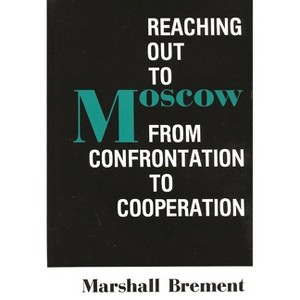
Reaching Out to Moscow - by Marshall Brement & Lsi (Hardcover)
In Stock
Sponsored
About this item
Highlights
- Developments in the Soviet Union necessitate a radical restructuring of U.S.-Soviet relations and the security system that underpins them.
- About the Author: MARSHALL BREMENT is currently Distinguished Scholar in Residence at the National Defense University.
- 208 Pages
- Technology, Military Science
Description
About the Book
Developments in the Soviet Union necessitate a radical restructuring of U.S.-Soviet relations and the security system that underpins them. Marshall Brement succinctly and masterfully chronicles the history of this relationship and offers a prescription for change in this important book. The United States can influence the power struggle within the USSR by holding out the prospect of going beyond the wary cooperation that our government espouses, to a relationship that embodies comprehensive partnership. It is only through such a relationship that we can achieve a genuine new world order guaranteeing security for decades to come and at the same time sloughing off the burden of excessive defense costs that this nation can no longer afford. The new grand strategy outlined here would demand much of the Soviets, but also offers much. It has a nuclear component, a conventional arms component, an economic component, a Third World component, and a Western Europe component. It sets out clear benchmarks and a method for moving ahead.
Past Soviet and American security policies are so interrelated that they must be changed together, not separately or in sequence. To accomplish this change, the fear doctrine of nuclear deterrence that underlies our entire defense philosophy must be abandoned. The sophistication and power of modern conventional weapons makes it possible for both sides to reduce, even eliminate, nuclear weapons. While establishing a program to eliminate nuclear weapons, we must concurrently lay down benchmarks as to what exactly will be required from both Moscow and Washington to make such a transformation possible, restructure our armed forces to make them less threatening to each other, and engage in a broad-ranging program of economic investment and cooperation in solving critical global problems. These proposals are radical, even visionary. Nevertheless, only through a comprehensive program can a fundamentally different U.S.-Soviet relationship be achieved. This book is addressed not only to the specialist in Soviet and security affairs, but also to a general audience of informed citizens.
Book Synopsis
Developments in the Soviet Union necessitate a radical restructuring of U.S.-Soviet relations and the security system that underpins them. Marshall Brement succinctly and masterfully chronicles the history of this relationship and offers a prescription for change in this important book. The United States can influence the power struggle within the USSR by holding out the prospect of going beyond the wary cooperation that our government espouses, to a relationship that embodies comprehensive partnership. It is only through such a relationship that we can achieve a genuine new world order guaranteeing security for decades to come and at the same time sloughing off the burden of excessive defense costs that this nation can no longer afford. The new grand strategy outlined here would demand much of the Soviets, but also offers much. It has a nuclear component, a conventional arms component, an economic component, a Third World component, and a Western Europe component. It sets out clear benchmarks and a method for moving ahead.
Past Soviet and American security policies are so interrelated that they must be changed together, not separately or in sequence. To accomplish this change, the fear doctrine of nuclear deterrence that underlies our entire defense philosophy must be abandoned. The sophistication and power of modern conventional weapons makes it possible for both sides to reduce, even eliminate, nuclear weapons. While establishing a program to eliminate nuclear weapons, we must concurrently lay down benchmarks as to what exactly will be required from both Moscow and Washington to make such a transformation possible, restructure our armed forces to make them less threatening to each other, and engage in a broad-ranging program of economic investment and cooperation in solving critical global problems. These proposals are radical, even visionary. Nevertheless, only through a comprehensive program can a fundamentally different U.S.-Soviet relationship be achieved. This book is addressed not only to the specialist in Soviet and security affairs, but also to a general audience of informed citizens.Review Quotes
." . . [Brement is] one of the leading Sovietologists in the world."-George J. Tenet Staff Director Senate Select Committee on Intelligence
"Ambassador Brement is a distinguished diplomat and an accomplished scholar. In this volume he presents his vision of what Soviet-American relations could and should be, one that is enduring and has not in the least been compromised by any of the dramatic changes that have recently occurred inside the Soviet Union itself."-Alvin Bernstein Director, Institute of National Strategic Studies National Defense University
"I can think of no book that better or more succinctly captures the problems and the opportunities now facing the world. This fascinating volume should be mandatory reading for anyone interested in foreign affairs."-Jon Baldvin Hannibalsson Foreign Minister of Iceland
"This is a remarkably wide-ranging and comprehensive book that presents a broad and cohesive strategy for transforming relations with the USSR. . . . It is a pleasure for me to recommend this brilliant volume to a wide audience of readers."-Senator Claiborne Pell Chairman, Foreign Relations Committee (from the preface)
?An enlightening and forthright book on a rapidly emerging subject. Brement, who was a senior Soviet specialist in the US government, provides undergraduates and others with a prescriptive analysis written in a lively style. Brement accomplishes what very few have done: to outline specific moves that both the US and the now post-Soviet leadership should take to build a cooperative security relationship. The book also looks at the European influence, global considerations, the economic aspect of this cooperation, and the impact of domestic politics in the US on prospective joint efforts. This thought-provoking essay-like examination argues strongly for a more activist approach on the part of both major parties lest a tremendous opportunity be lost. The book also has a strong bibliography and a useful index and is strongly recommended for undergraduates and graduate students looking at the nature of national security in the post-Cold War world. Brement's analysis, although unobjectionable at many joints, represents a strong point of departure for discussion and further work.?-Choice
"An enlightening and forthright book on a rapidly emerging subject. Brement, who was a senior Soviet specialist in the US government, provides undergraduates and others with a prescriptive analysis written in a lively style. Brement accomplishes what very few have done: to outline specific moves that both the US and the now post-Soviet leadership should take to build a cooperative security relationship. The book also looks at the European influence, global considerations, the economic aspect of this cooperation, and the impact of domestic politics in the US on prospective joint efforts. This thought-provoking essay-like examination argues strongly for a more activist approach on the part of both major parties lest a tremendous opportunity be lost. The book also has a strong bibliography and a useful index and is strongly recommended for undergraduates and graduate students looking at the nature of national security in the post-Cold War world. Brement's analysis, although unobjectionable at many joints, represents a strong point of departure for discussion and further work."-Choice
About the Author
MARSHALL BREMENT is currently Distinguished Scholar in Residence at the National Defense University. He also is a Resident Consultant to the Center for Naval Analyses and a member of the Department of Defense's Special Operations Policy Advisory Group. Fluent in Russian and seven other languages, Brement has served two tours in the U.S. Embassy in Moscow and has been the President's Senior Advisor on Soviet Affairs on the National Security Council Staff. He is the author of a study for the Rand Corporation, Organizing Ourselves to Deal with the Soviets, A former Ambassador to Iceland, Brement is the translator and editor of two books of modern Icelandic poetry.Shipping details
Return details
Trending Computers & Technology Books



Discover more options